-
Ecopsychology — Healing From Alienation
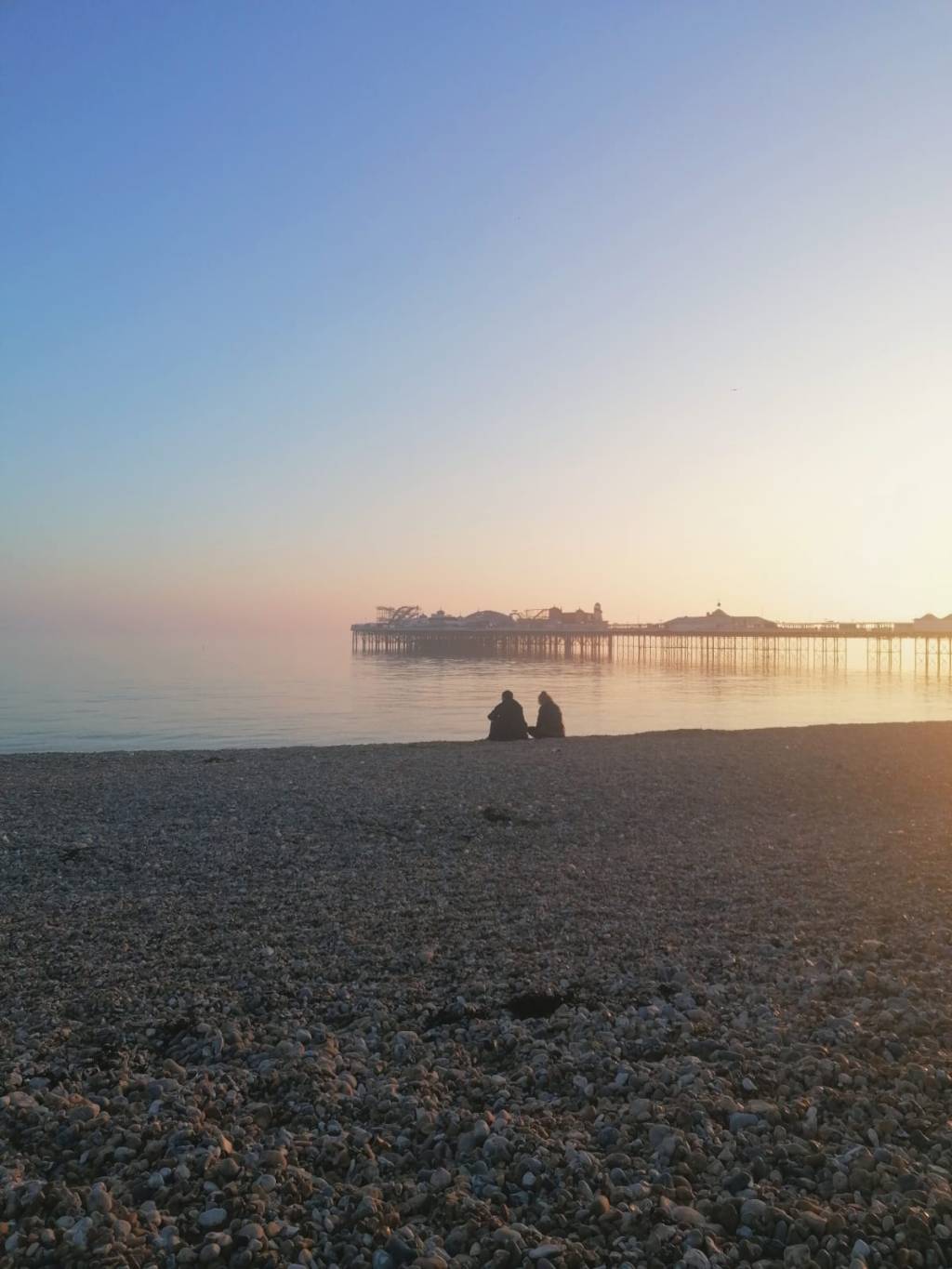
What does ecopsychology mean to me? Can I accept that all my sides, even my messy and prickly ones, are part of my whole? How do I grow compassion when I find myself stuck in egocentric living and thinking?
A heap of questions has always been my best guarantee to finding answers. Looking back to the questions I asked a year ago, after recently having relocated from Sweden to Brighton, I got everything I asked for, and more. The text below is from a piece of writing I did on Brighton, which at the time felt very identity-obsessed. (It still does.)
“Can you help me find creativity? A story to write? Someone to love? And if not, can you offer me a story to get absorbed into? An identity I can adopt? History I can borrow? A cheap surface finish to hide behind, as I continue my search for something more fulfilling, more lasting, more my Own?”
In the meantime I have initiated a relationship journey with one of my dearest friends, and therefore, in a way, with a new self. Trying to move with this new love inevitably opened up old wounds, and re-emerged behavioral patterns that clash with what I normally consider to be very strong and independent foundations of my self. Building a new existence in Brighton has been very human-centered, while gradually my spiritual and nature-centered practices fell away. I became obsessed with conforming to a version of myself I wanted to be, and carried relationship expectations that largely came from my time being a single individual. In not being able to live up to these perfectionistic visions, I at times caused chaos and even hurt. This old stuff clearly didn’t work anymore. Who was I to be, then?
The seeds I randomly (desparately) scattered to try and start co-creative projects or new habits never took root. Navigating obstacles while learning to speak a common love language with my partner became a new focus. And then, in distancing myself from noise and fear, I am re-finding that solid foundation of my own unique experience in this life. This essence has always been there, waiting for me to fall back in love with it. Or, at the very least, to become curious of the ways this essence interacts with the world. And with this little nugget of hope I left for my first weekend as a student on the course in ecopsychology. I felt messy. I felt vulnerable. I didn’t feel particularly ready. But I was soon reminded how much I love being a student.
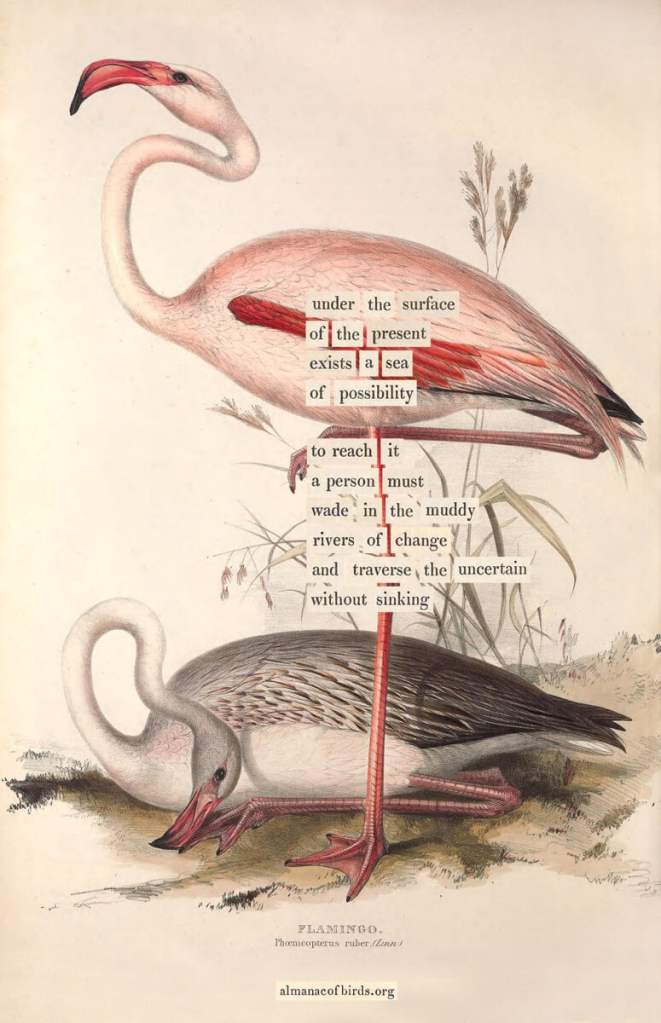
Flamingo from the Almanac of Birds by Maria Popova Development or breakdown?
Let’s shift our focus to something bigger and more external. We are amidst times of rapid transformation, turbulence and development that are pulling us in all directions. AI and technology are leaping ahead, calls for social justice are growing louder even as crises seem to grow more heartbreaking, the internet connects us to people and narratives everywhere on the globe yet freedom of speech is still under threat, or considered a threat, and seemingly holistic or ecologically-oriented initiatives are popping up while many of our futures are still being built upon the reliance of ancient systems and the burning of fossil fuels. These contradictions show our dualistic reactivity and a new paradigm emerging. If we are to be ahead of change and transform our systems for the better, we are to be wary of this reactivity.
Emerging, also, is the re-integration of the ‘natural world’ in all things human. Great thinkers and investigators of the human psyche, like Sigmund Freud, have stated that our ‘ego-feeling’ is closely entangled with the world about us. For most modern humans, this ‘outside world’ has become increasingly urbanised and steered by technological developments. This comes at the cost of a felt and practiced connection to nature. While not everyone may feel like they need this connection, and are quite content in a world so separate from all things wild and unpredictable, there are life philosophies that build upon our ancestral ties to the more fluctuating and cyclical realms in which we used to exist. These are complex realms that offer a lot of nuance, yet that aren’t as easily dissected and put into separate boxes as our modern systems like to do. The illusion that we are somehow in charge is kept in place, even admist natural disasters, shocking events, and unstable futures.
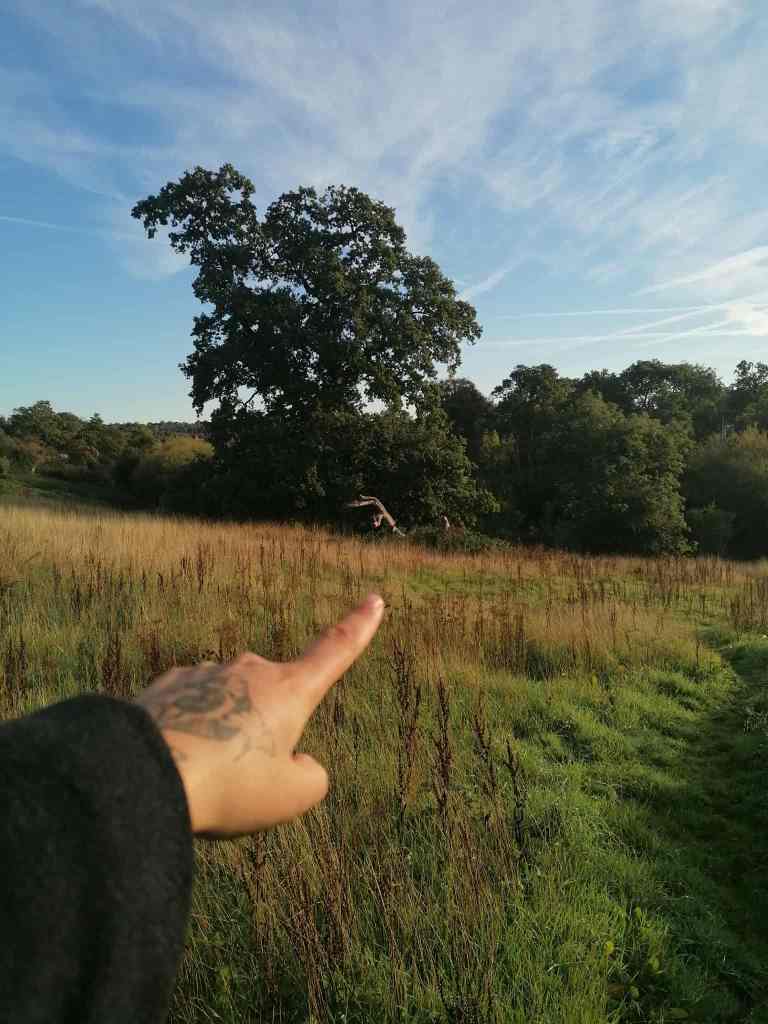
One of the spots I befriended during the course weekend Eco | psyche | -logy
When trying to re-entagle the very complex personal and inter-personal landscapes of existence, ecopsychology makes a good attempt. In the 1995 book Ecopsychology: Restoring the Earth, Healing the Mind, Theodore Roszak explained ecopsychology as an interdisciplinary field that entwines human psychology and the environment. This is to restore the connection between us humans and our home planet, and in that healing the alienation between the urban human psyche and the natural world. Roszak coins the theory that this disconnection is at the root of many (mental) health issues, and that in restoring this connection we can heal both people and the planet. In that same book, Robert Greenway wrote the following:
“Ecopsychology is a search for language to describe the human-nature relationship. It is a tool for better understanding the relationship, for diagnosing what is wrong with that relationship, and for suggesting paths to healing.”
The above exerpt forms a bridge to my own understanding and definition of ecopsychology. To form a base that helped me define my understanding, dissecting this word let me look at the various meanings that together build a complex field of study—and practice!
Eco
Stemming from the greek ‘oikos‘, meaning ‘home’ or ‘dwelling place’, the word eco refers to our external environments. They change as we move around, by other beings coming and going, and they shift by being in flux themselves (the weather, seasons, landscaping, natural disaster). Static home structures can be our houses, or other geographical locations where we spend a lot of our time. More dynamic, and perhaps more abstract, I consider our dwelling places to also include our social circles. In most ecopsychology and ecotherapy settings, a natural outdoor setting will be chosen, to benefit from its soothing effects, and also to foster and build on the human-nature connection.
Psyche
This is the core self, or what I simply understood as ‘me’. The word psyche comes from the Ancient Greek word ‘ψυχή’ (psykhḗ), meaning ‘breath’ or ‘life’, and later ‘mind’ or ‘spirit’. The ambiguity of this meaning rings true to me. Our internal landscape is constantly in flux and difficult to define. Depending on what we consume, and I don’t only mean food, we affect our internal processes. Bodies with wombs ovulate and menstruate—a very clear cyclicality, like the sun and moon phases. We aren’t only our mind (and even our mental body is a complex landscape with many voices that introduce meaning into our lives on both conscious and subconsious levels), we are also our emotions and our experiences.
-logy
This suffix is pasted at the end of words to mean ‘the study of’. In the contect of ecopsychology, and with the help of other ecological thinkers, I came to the understanding that the studying of the relationship between our dwelling places and our selves—eco and psyche—is the constant conversation between our external and internal landscapes, as well as the search for a common language. This is where the body plays a huge role, serving as a vessel for our psyche, and a channel or tool for us to interact with the outside world. Embodied thinking, other ways of knowing, and somatic, sensory, felt and practiced experiences are all part of becoming more ecocentric.
During the course weekend we tried to define ecopsychology in a group setting. Naturally, meanings and understandings varied greatly, even with only twelve people. One topic of discussion was consciousness. Some consider consciousness to be a static phenomenon, potentially contained by a physical vessel. This was used to describe the communication between our own consciousness, or psyche, and the Earth’s consciousness or psyche. Perhaps complimentary to this, I strongly feel for the potential ‘creation of consciousness’ that happens through the communication of entities, and all symbiotic and synchronistic flows that arise from that. In ecopsychology, I would explain an effect of nature-connection practices to be creating a new awareness, or conscioussness: a planetary one! My consciousness is a co-creation between the life forces of my parents, the natural world, and the cosmos. This explanation would also make possible the destruction of consciousness.
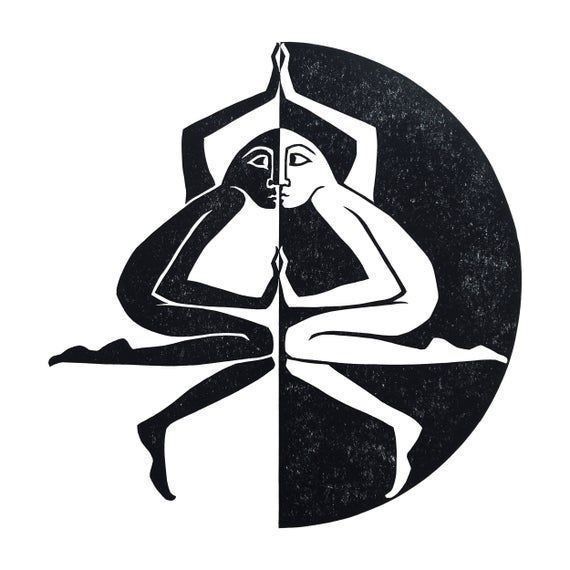
Healing from egocentrism
In my struggle to reshape my identity, and finding new narratives to fit new circumstances, I got more and more entagled in egocentric thinking and living. When thinking of terms like ‘egocentric’ or ‘narcissism’ we commonly associate these with dominating, loud and possibly even proud behaviours. The sneakier kind is the self-obsessed perspective in which an individual perceives anything that happens around them as happening to them. And although we are all the centre of our own universe, this creates very dualistic notions of ‘good’ and ‘bad’ things or people to happen to us, and also has the potential to remove a sense of agency, or responsibility, for our own lives, experiences and emotions.
As mentioned above, a symptom of egocentric living (which I also think a very common symptom of our modern, disconnected, highly urban lives) is extremely dualistic thinking. At the essence of our lives, or consciousness, many cultures and life philosophies recognise two contrasting or counter-balancing energies: the forces of yin and yang, creation and destruction, or the feminine and masculine. And although I believe that the interplay between counterforces shapes and creates life as we know it, and while they make beautiful ceremonies and rituals, it should also be clear that in our physical and non-physical realities life manifests as complex nuances and expressions of these forces. Most of the natural world displays an interplay of opposite energies that are constantly in flux, and that do not exist in strictly binary notions.
As I tried to turn away from my own binary stories—in which I either make all the right or all the wrong decisions, and am either my best or worst self—life started to open up again. I started to open up again. Experiencing connection with people, beings, and landscapes outside of myself got me out of an egocentric perspective, and helped me move towards the ecocentric thinking I so believe in (and have previously lived). Having noticed this shift helped me find gratitude for seemingly ‘losing’ myself in other peope’s narratives and realities. This is a cycle I expect to return to at many points during my life, as it’s only natural. We are social beings that are inherently dependent on connection. We constantly move through roles in our own stories, through other people’s stories, only to find that we over-identify with them, or outgrow them, or are hurt by them—which is when we need to step away from ourselves to expand our perspective. And nature is a great teacher, true friend and wise guide in doing so.
An essential ingredient in healing from ‘egocentrism’ is, besides connection, a compassionate attitude. Without also growing or nurturing compassion towards yourself and others, the journey towards ecocentric and connected living will be a harsh one without much meaning. If we are to truly think holistically, we can see the parts of ourselves that have caused hurt as being the guides and teachers they can be. We can accept them as being an integral part to our being, while not over-identifying with them, or adopting their main narrative through which to live our lives. I’m conscious of sounding preachy, especially as this is something I struggle with myself. But the experiences that are most healing to me tend to happen in settings where authenticity is valued and compassion is offered. I’m hesistant of using the word ‘safe’, as it doesn’t always feel safe to express any complex, heavy thoughts or feelings that we carry around. But there certainly is a level of safety experienced when people express their needs and boundaries clearly. It helps me do the same.
So, all in all, arriving as my messy self in this first weekend on my course helped me find compassion. Entangling my very personal experiences with a shared experience in a natural setting helped me find compassion. Talking, listening, and holding space for others helped me find compassion. Letting myself be quick to shed tears and not hide from them helped me find compassion. Feeling seen and heard in my needs helped me find compassion. Seeing nature exist without the story and express itself in so many changeable ways helped me find compassion. And this is the connection—with parts of myself, with others, with nature—that heals from isolating and alienating egocentrism.
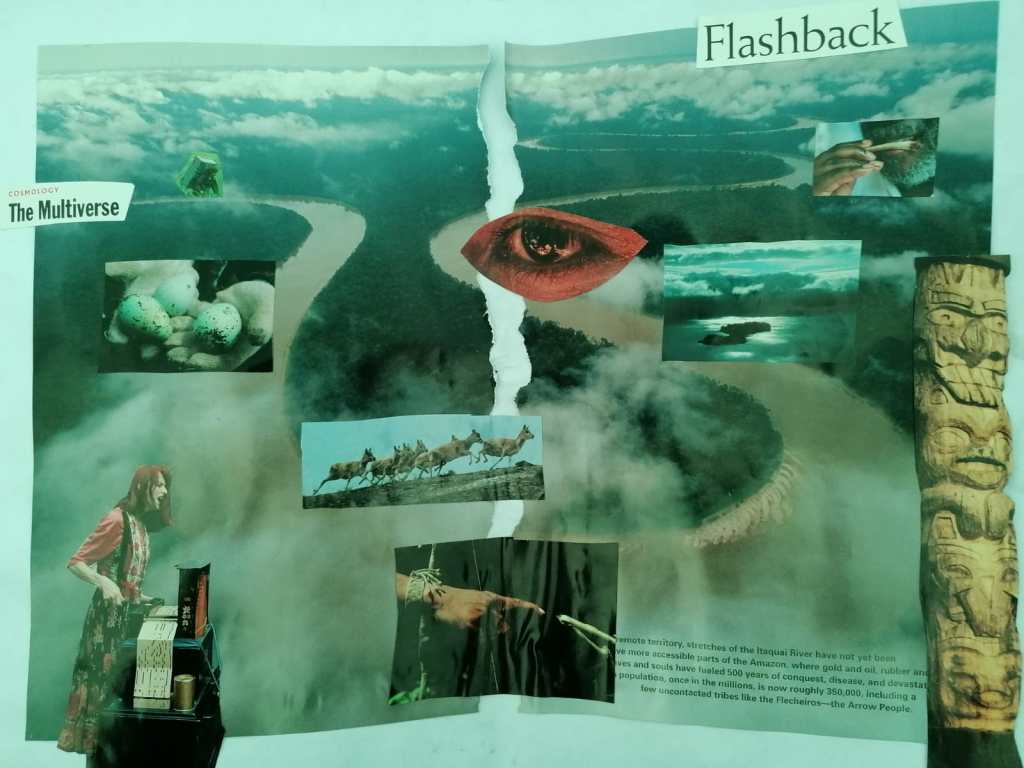
Mapping my journey
Wrapping up this post, I wanted to share this collage as a way of forming a bridge to future posts. As this weekend was only the start of a journey, an attempt to ‘predict’ this journey feels silly. But, having already moved through similar cycles, I mapped out the following loose phases of a reconnection journey:
- the eggs, re-birth, and start of a new arc;
- the herd, finding your crowd or tribe, audience, peers, however big or small, and finding your role or place amidst these
- the performance of ego, conformity, external narratives, when the balance tips and becomes egocentric, symtoms are getting stuck, something failing, becoming fearful, self-pity, self-doubt, your mask or role becoming your full identity (over-identification), hitting a ceiling or wall, finding yourself in environments that don’t reflect who you are, losing confidence (insecurity)
- reconnecting, healing from your separation story, intending to (or recognising the importance of) move from egocentrism to ecocentrism, intention or desire to shed old skins, wanting to take a break or distance yourself from roles or masks
- finding your foundation, creating your pillars of truth amidst change and instability, filling your toolbox, engaging in embodies and sensory practices, grounding, all of which are essential when aiming to shed your ego and not lose yourself
- becoming an island, period of isolation, water is relevant for moving through emotions and energies that need clearing, washing, preparing your vessel for a new arc, opening yourself up, mapping out intentions, where more abstract intentions will help you stay open and attract what is ready for you instead of dictating results
- seeing through your third or inner eye, mapping your internal landscape, bearing witness to all that you are shedding and all that is dying, honouring the fertile landscape this creates for new growth, noticing, sensing, receiving messages, opening up and remaining open, taking everything in but abstaining from in-depth analysis and reflection at this point
- sucking the marrow out of the bones of life, celebrating your process, starting a new diet, being mindful with all that you consume, nurturing and tending to your essential needs, more symbolically this is ‘feasting on your old bones’, centering on gratitude, refinding joy, staying humble
- flashback: do it all again!
Thank you to those who are with me
in any shape or form.⋆ ⁺‧₊˚ ཐིཋྀ ˚₊‧⁺ ⋆
-
Thoughts on the Evergreens (Pinus & Abies)
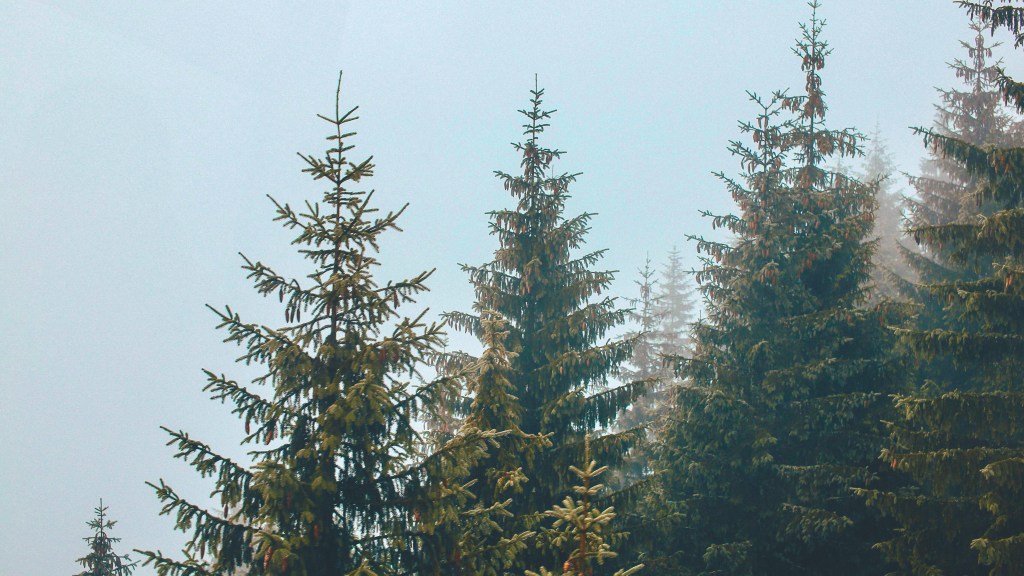
In the midst of the cold, dark and somewhat dormant times of winter, there is joy and creativity to be found in the beautiful strong-standing evergreen trees. They give colour and life to the otherwise dull and grey nature we’re experiencing in the north at this time of year. Their scent enlivens the spirit from winter hibernation and helps us find peace, motivation and strength in the darker months. They are a great winter medicine, an interesting wild food for enthusiastic winter foragers, and good companions for the forest lover.
Symbol of life and protection
Evergreen trees are believed to have represented the possibility of life and protection in many cultures in Europe. During the times of the Vikings and beyond, Fir symbolised eternal life and fertility. They were used as “wedding trees” where young firs were placed and somehow pointed at the entrance of the wedding couple’s house on their wedding day to guide the couple home. Similarly, fir was also used at funerals though at this event pointed away from the house so that the dead person’s spirit did not follow home. Placing fir branches at the grave was a reminder of eternal life and protection against evil.
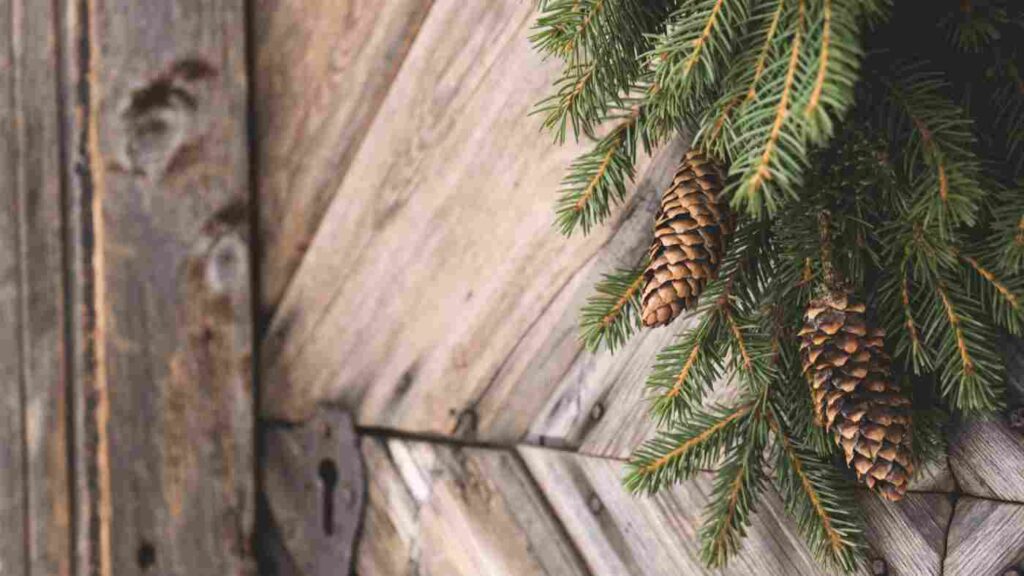
The Greeks and Romans associated Pine cones with love, lust and fertility and similar to the people in the north, couples planted a Pine tree when they married. In Taoist beliefs ingesting the pinecone seeds, resin, young buds, and needles of Pine would bring about longer life and would strengthen their bodies, protecting them from physical harm and natural aging.
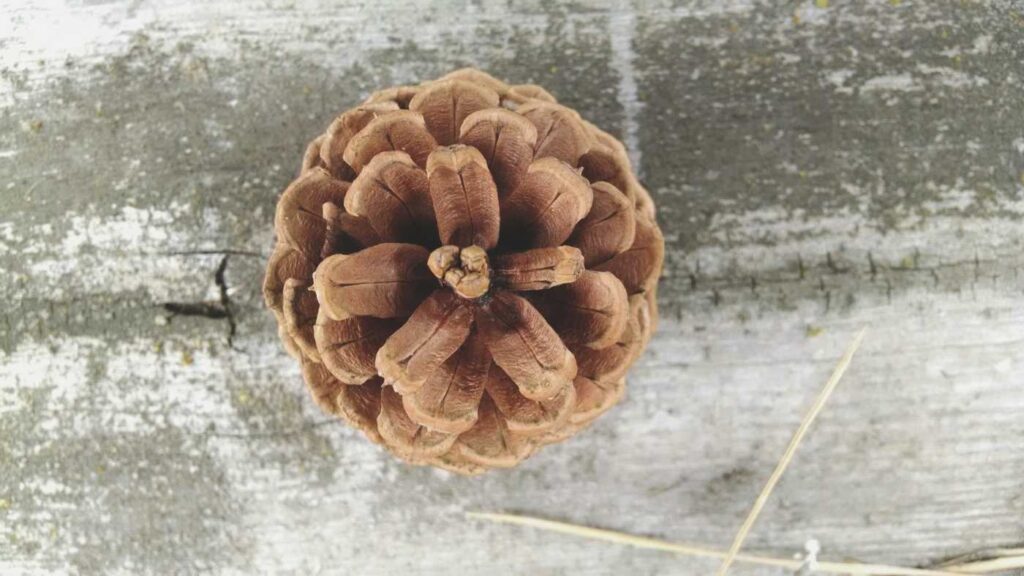
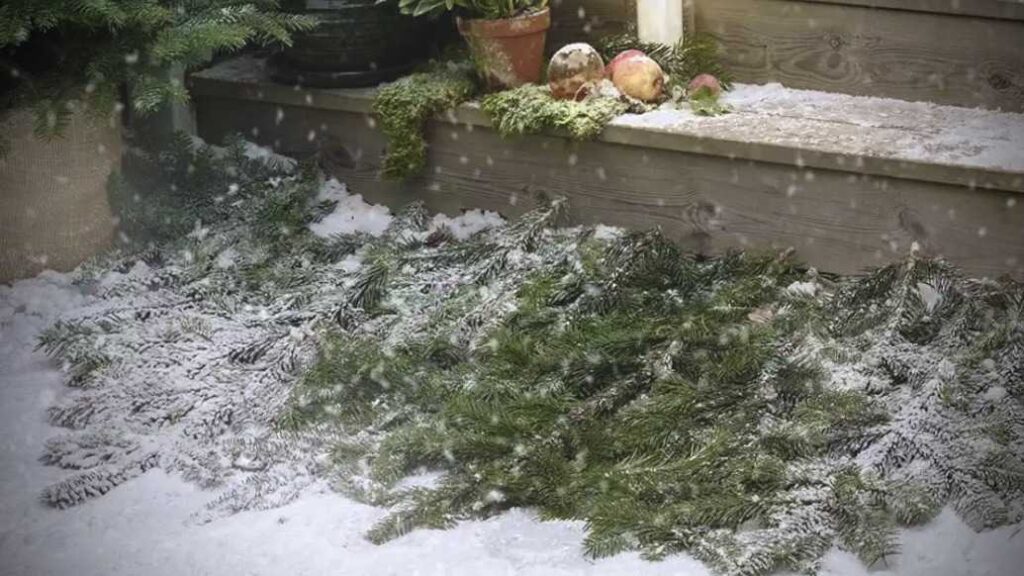
All evergreens are in mythology believed to be protective against negative energy. People in ancient Europe made crosses from needles to help keep evil out of their homes and also burned them like smudge sticks in sick rooms to strengthen those in healing. In Sweden, we have a tradition of laying branches of fir on our doorstep in winter. I always believed this was done purely to prevent slippery accidents and brush snow off the shoes and have, along with many other Swedes, often gathered bunches of fir branches to lay on my doorstep during the winters, completely unaware of their magical power. Since I gained this wisdom, entering and leaving my house always put a smile on my face and a feeling of gratitude toward this wonderful tree.
Winter Immunity
Pine and fir especially, are during midwinter more nutritious than in other seasons with increased levels of vitamin C for the immune system and essential oils that stimulate blood circulation. These are terpene-rich volatile oil compounds which give the Evergreens their wonderful forest smell and taste and are also what protect them from bacteria, infection, and fungi. Harvesting their needles and resin while enlivened by their invigorating scent is true bliss to the soul when times are cold and dark.
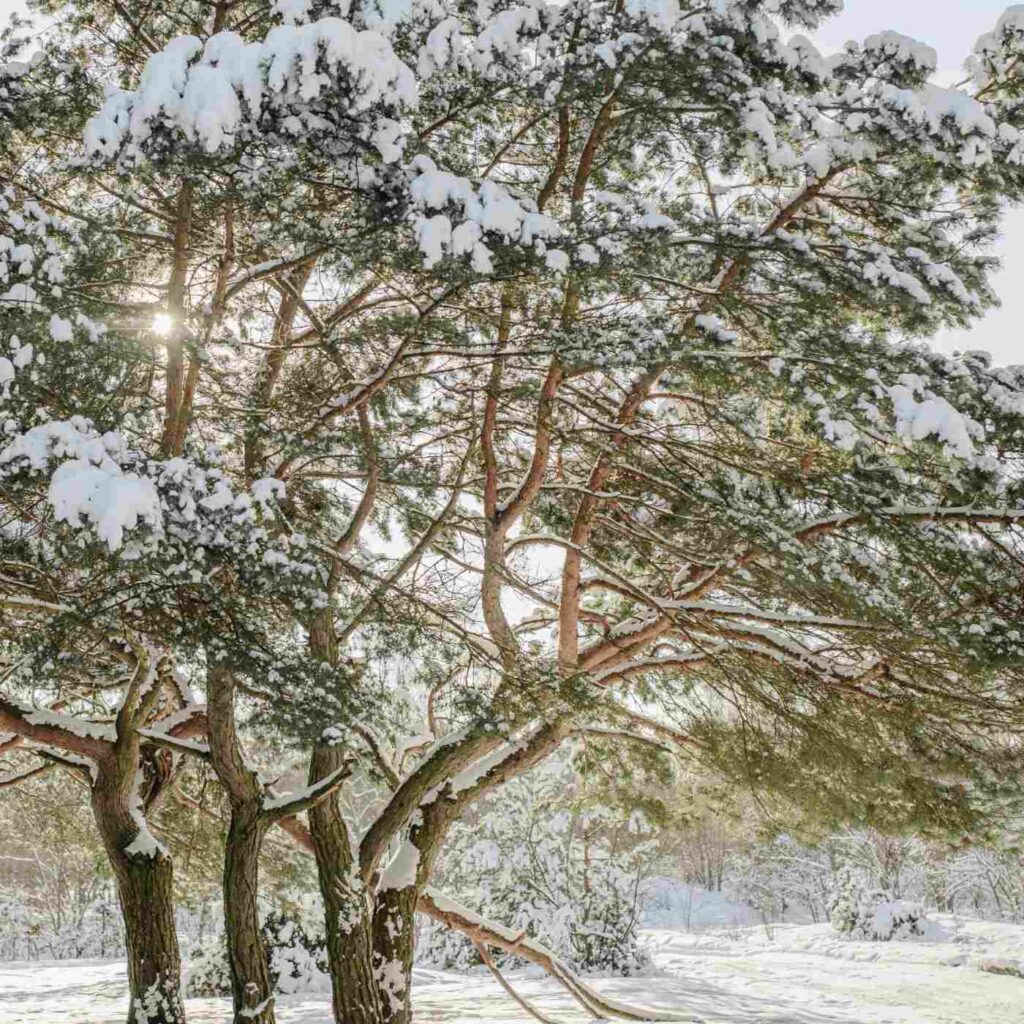
Pine (Pinus spp.) 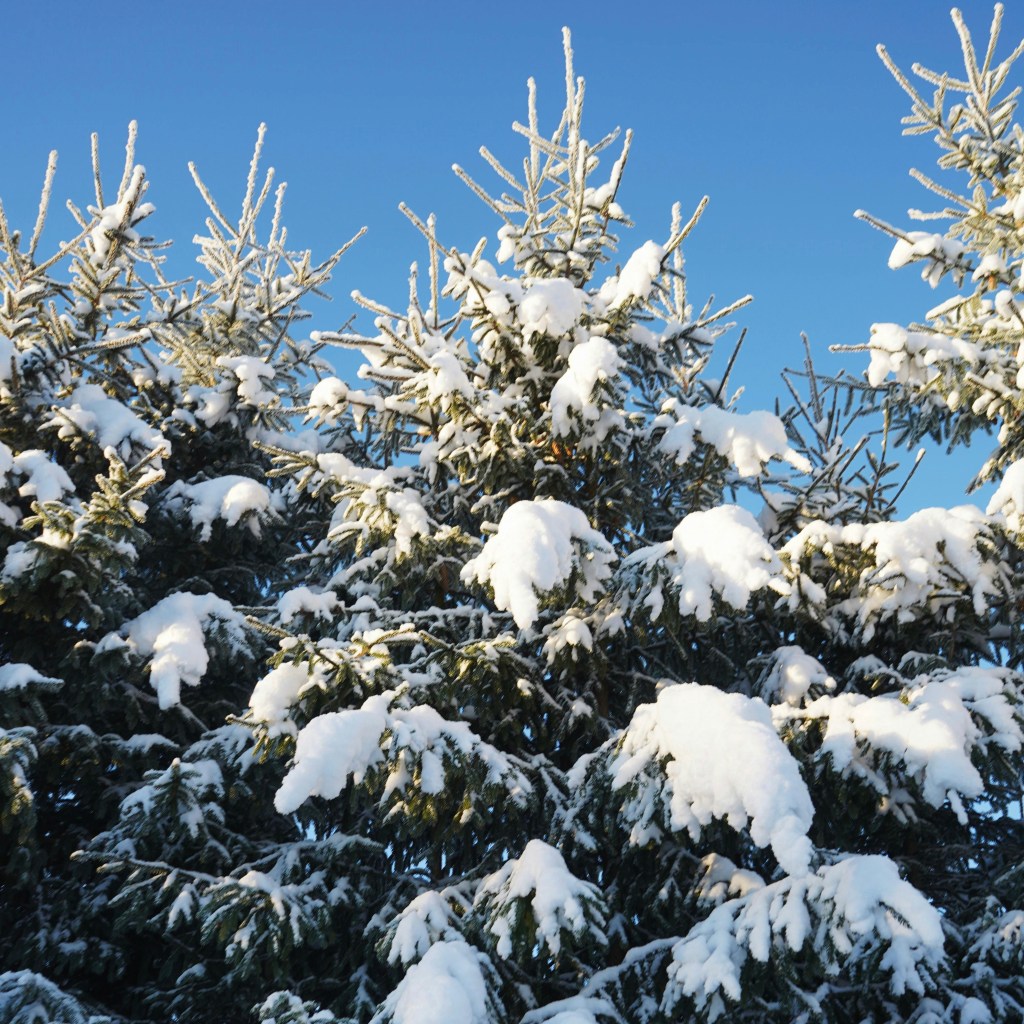
Fir (Abies spp.) Just like the oils in evergreens which are antiseptic and antibacterial protect them from harm, likewise, they are immune boosters and protectors to us humans by helping our bodies fight infection and inflammation. They are naturally warming and help rid the body of stagnation and inflammation by improving blood circulation and drainage of metabolic waste. They also thin thick and stubborn mucus in the airways which is sometimes experienced during a cold and thereby clear the upper respiratory system making breathing effortless and smooth again.
Needles
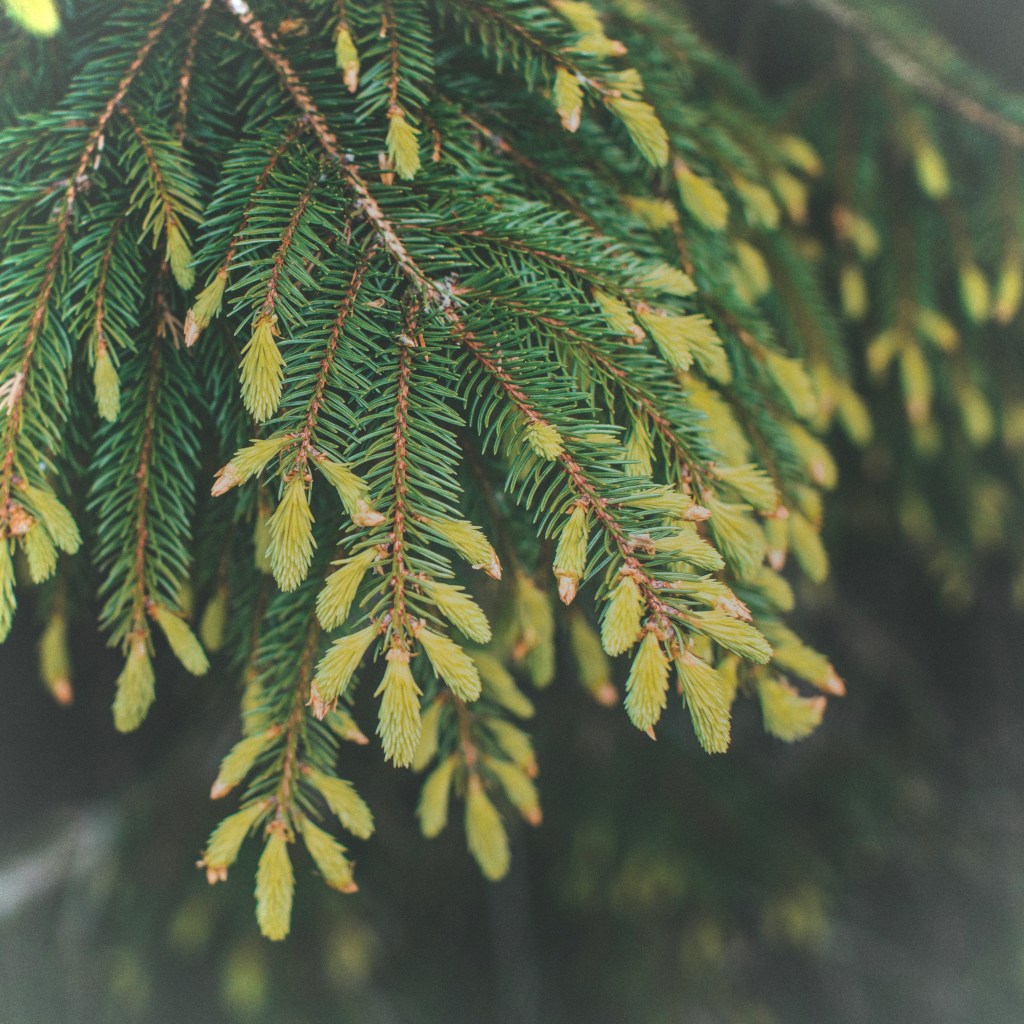
Needles can be harvested at any time of the year. They are super rich in vitamin C and antiseptic and antibacterial oils. The older, darker needles have a higher vitamin C content but the fresh, new growth will taste a bit better and can be eaten fresh. Tea, water steams, honey, -oil -and vinegar infusions can be made with fresh needles and used regularly to keep well in the winter months, treat a cold or improve joint mobility and blood circulation. When harvesting needles, remember that the tree also needs its needles to thrive and protect itself hence only pick a few needles from each tree. Continue reading for preparation and recipe ideas.
Resin
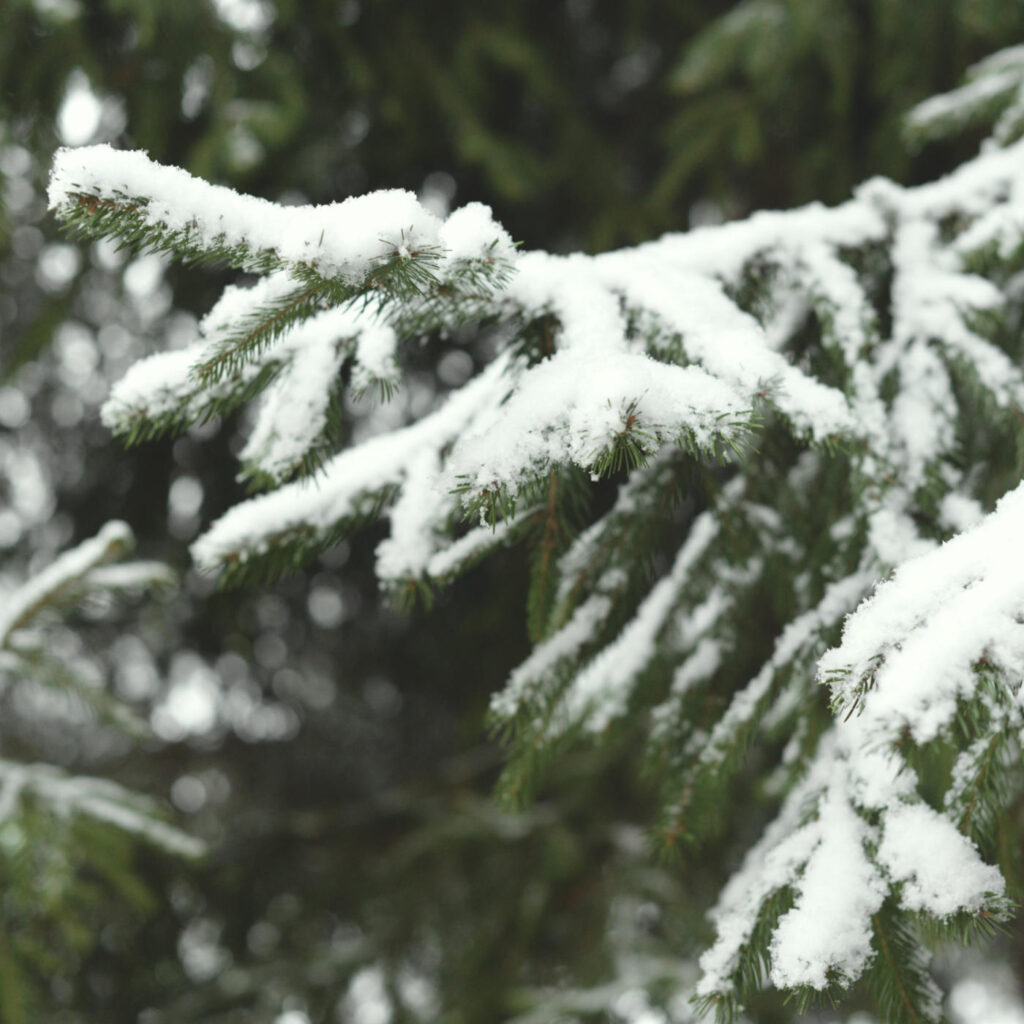
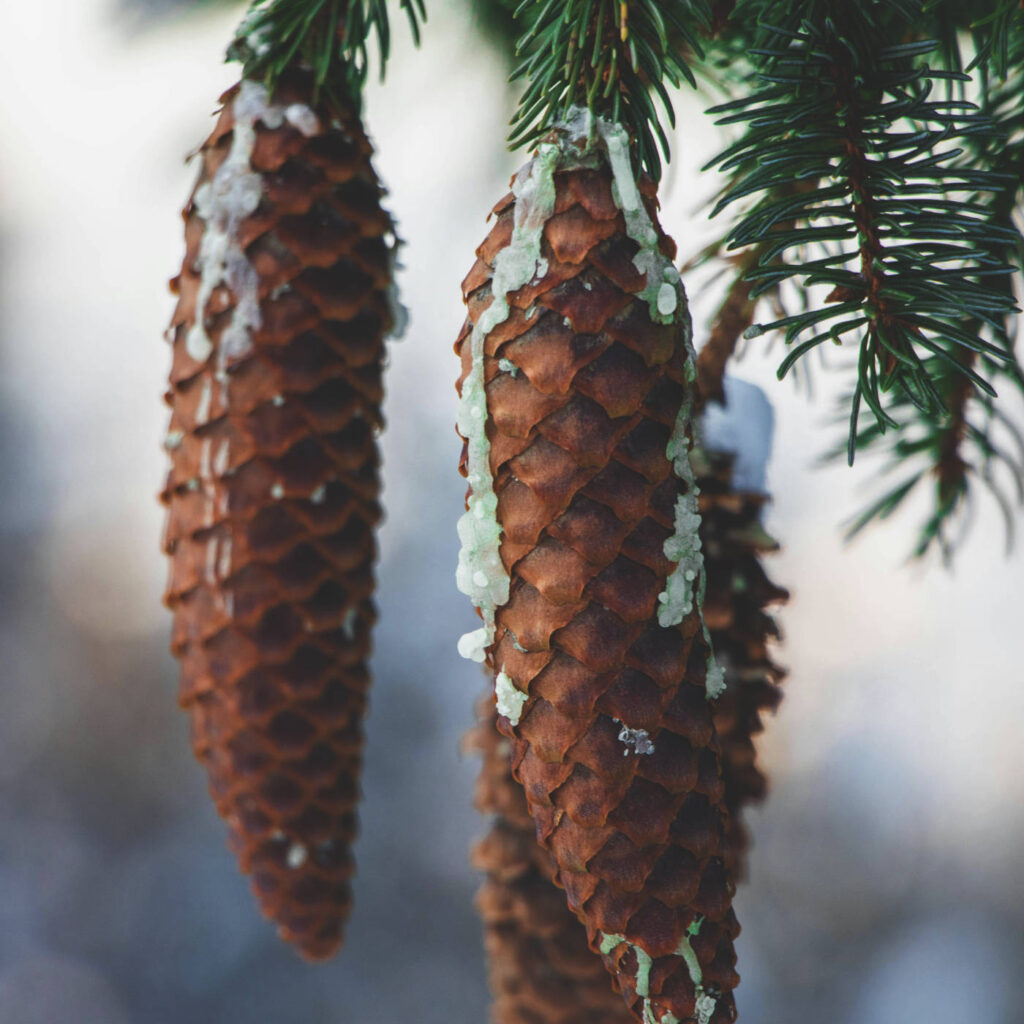
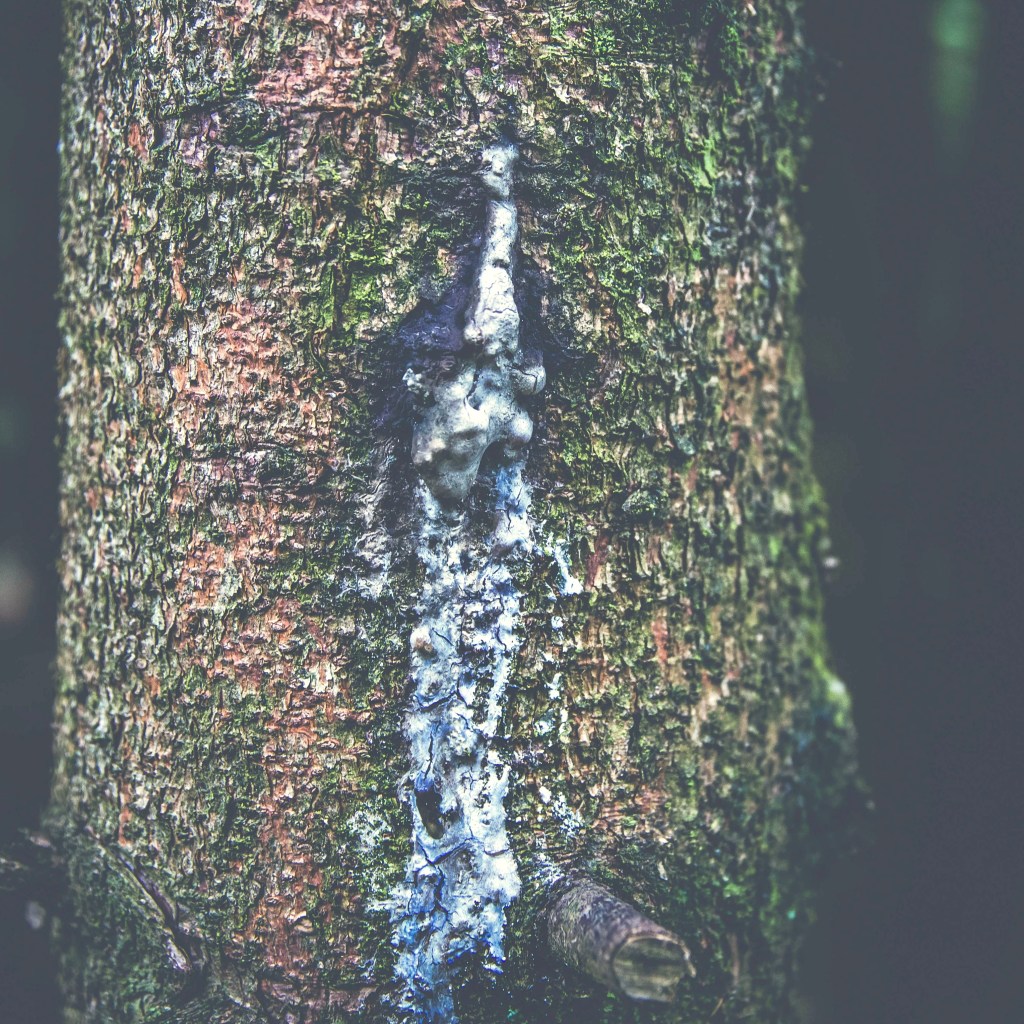
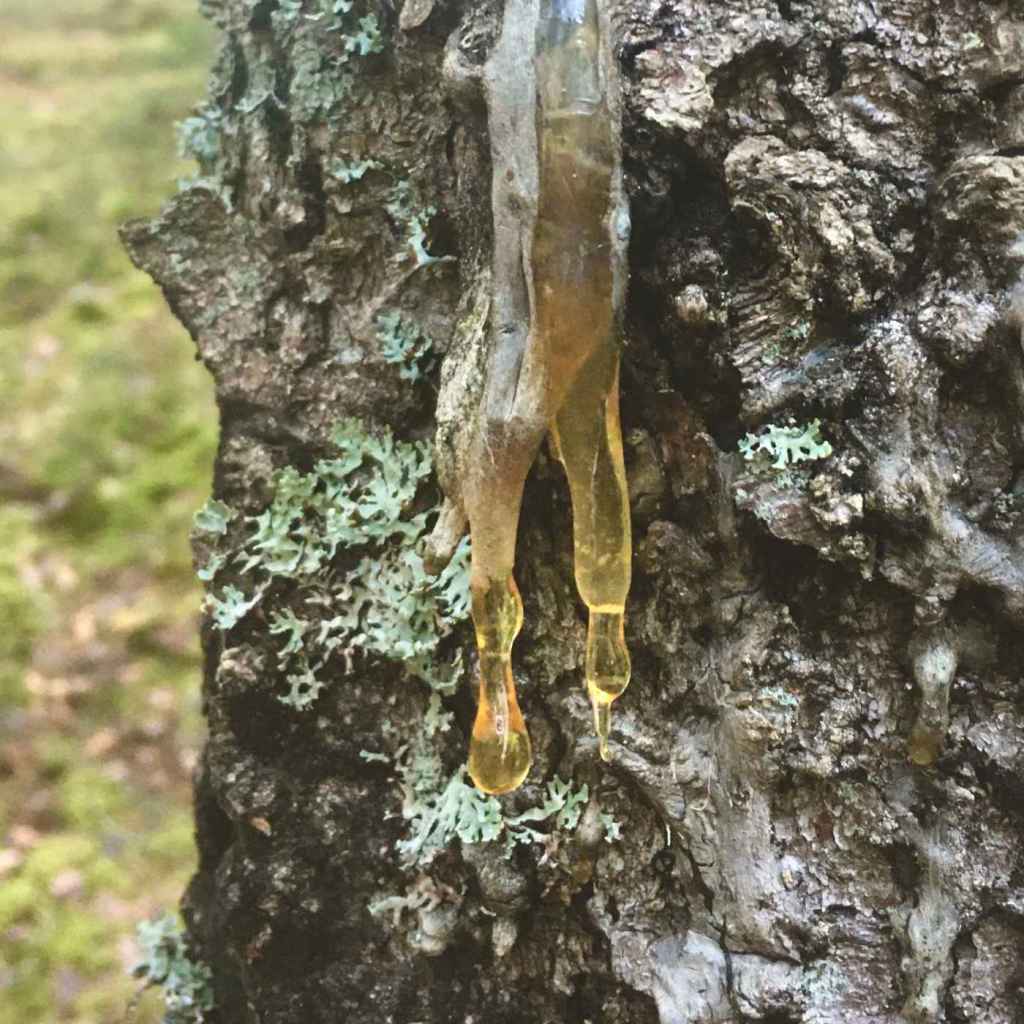
Resin is the sticky syrup-looking liquid you may have spotted on evergreen tree trunks and cones and is packed with healing terpene-rich volatile oil compounds making it smell divine. Resin works as the tree’s plaster for when it’s been injured and must therefore at all times be collected in a way that doesn’t impact the recovery of the tree. Identify where the injury of the tree is, and collect only resin that has dripped down from it. Never be greedy and collect resin that’s covering the wounded area, that would be extremely cruel to the tree who’s working hard to heal. The resin can be used to make healing salves or left to solidify fully and used as incense to invigorate the spirit. Continue reading for preparation and recipe ideas.
Psychological, Emotional and Spiritual
A lot of the evergreen trees’ history of promoting mental clarity, positive emotions such as self-acceptance and confidence, purifying the spirit and reawakening our instinctive connection to life is highly linked to its scent alone. Compared to our other senses, the sense of smell is our most primal and instinctual. It has a remarkable ability to evoke emotional responses that greatly influence our well-being. This is due to the direct connection between our scent receptors and the Limbic System in the brain, which is in charge of recording our emotions, memories, and survival instincts.
When we breathe in the scent of pine and fir, they have a way of making us feel refreshed and invigorated while at the same time calm and relaxed. The aroma has uplifting qualities and has been shown to improve cognitive function and enhance mental clarity. Furthermore, studies have found that inhaling the scent of pine helps lower levels of the stress hormone cortisol in the body leading to a more harmonious state of being.
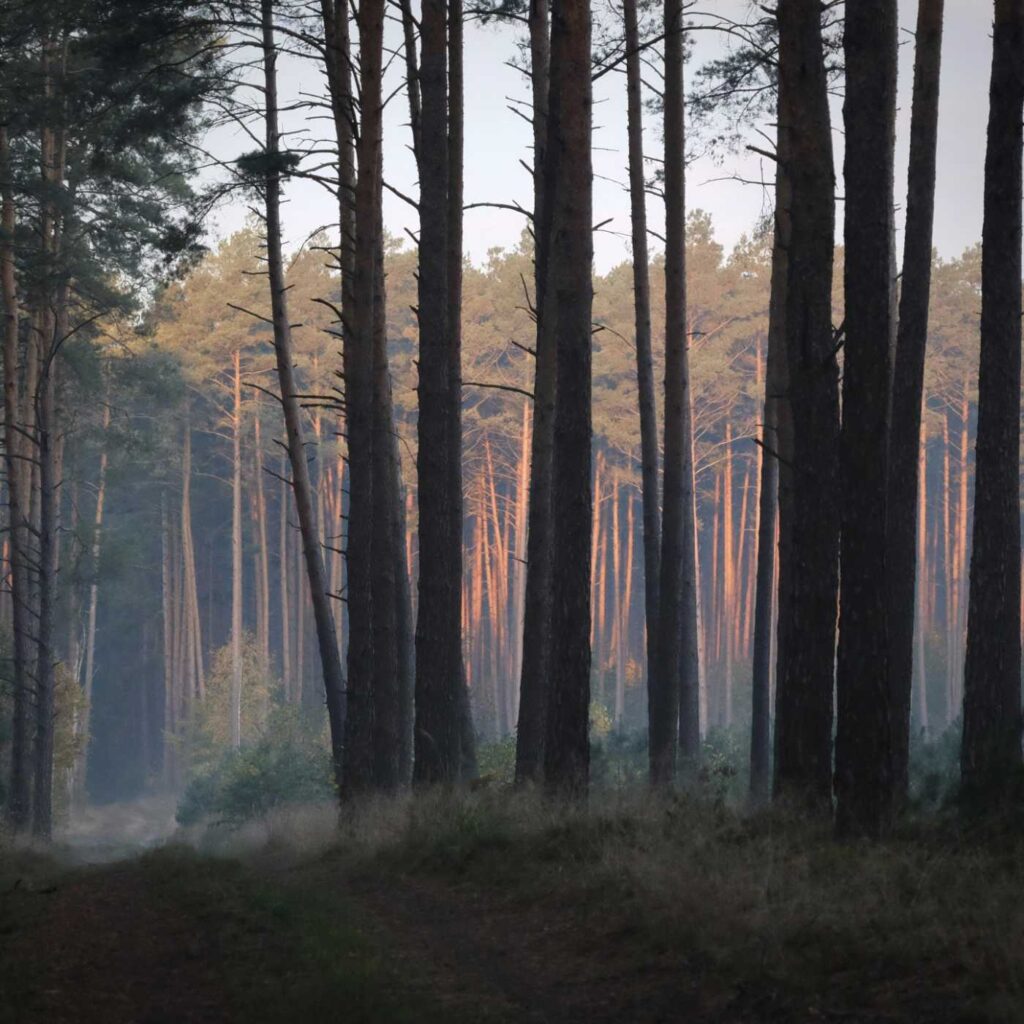
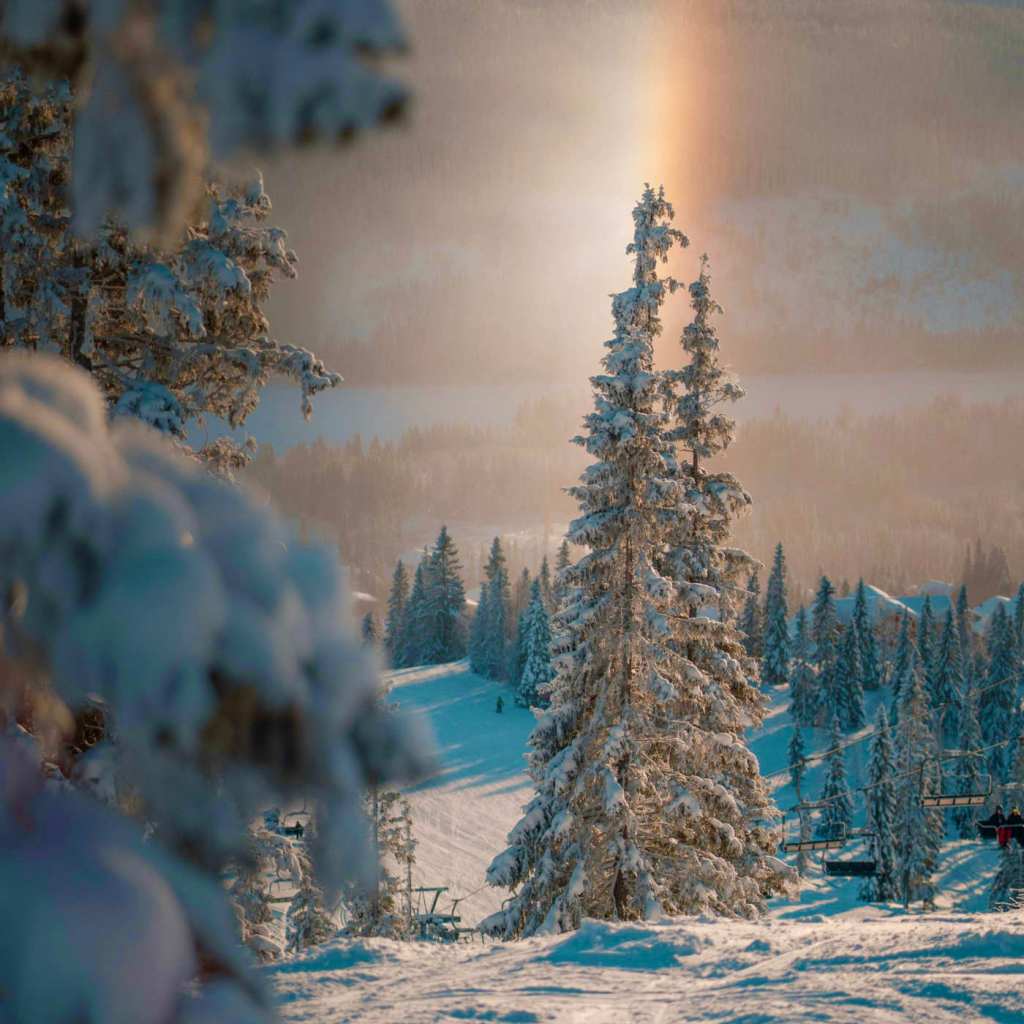
In the wintertime when life tends to feel dark and dull, spend time in evergreen forests, decorate your home with branches, burn resin or needles, or prepare water steams with added needles to inscentify your home and you’ll quickly notice the positive effect the evergreens have on your general wellbeing. It is pretty mindblowing when you pay attention to it.
Bathe in Evergreen
Remember when the Japanese “introduced” us to forest bathing to inspire people to reconnect with nature and the forest? An amazing initiative which evidently has shown life-changing results in many stressed and overwhelmed people. However, time spent in nature and forests as medicine is apparently not a new concept and it was in the olden times not an uncommon advisory by physicians to spend more time amongst pine and fir trees for healing. Hippocrates is even known to have stated that – “nature itself is the best physician”.
Just like bringing evergreens into our homes for decoration and medicine-making for various health purposes, spending time in evergreen forests will give you even more healing. In the forest and with the help of the sun the trees are breathing out the immune boosting, energising and feel-good activating terpenoids into the atmosphere which when we inhale absorb into our whole being.
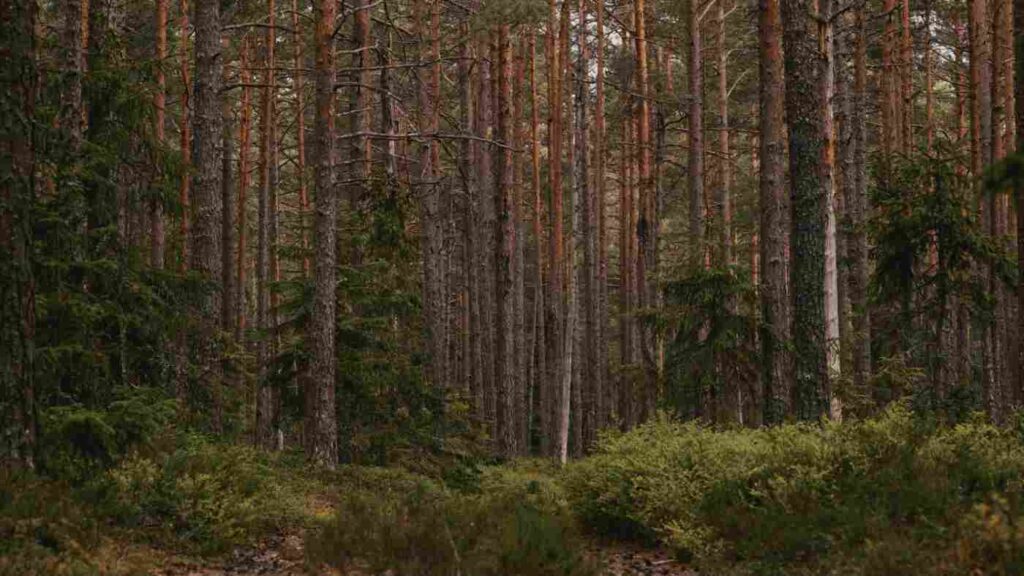
Go deep into the forest and allow yourself to absorb all its goodness, contemplating with every deep breath the wonderful gift of strong immunity, clear thinking, uplifted mind, protection, energy, strength and life that the trees offer. The benefits are deeply profound.
Preparations and Recipes
Needle tea
Drinking strong pine tea about 3+ times a day can support the body in treating coughs, and relieve chest congestion and sore throats. A cup will also improve mental clarity and make you feel more harmonious. The hot water will destroy some of the vitamin C content in the needles. For best medicinal effect, cover your tea while it’s brewing.
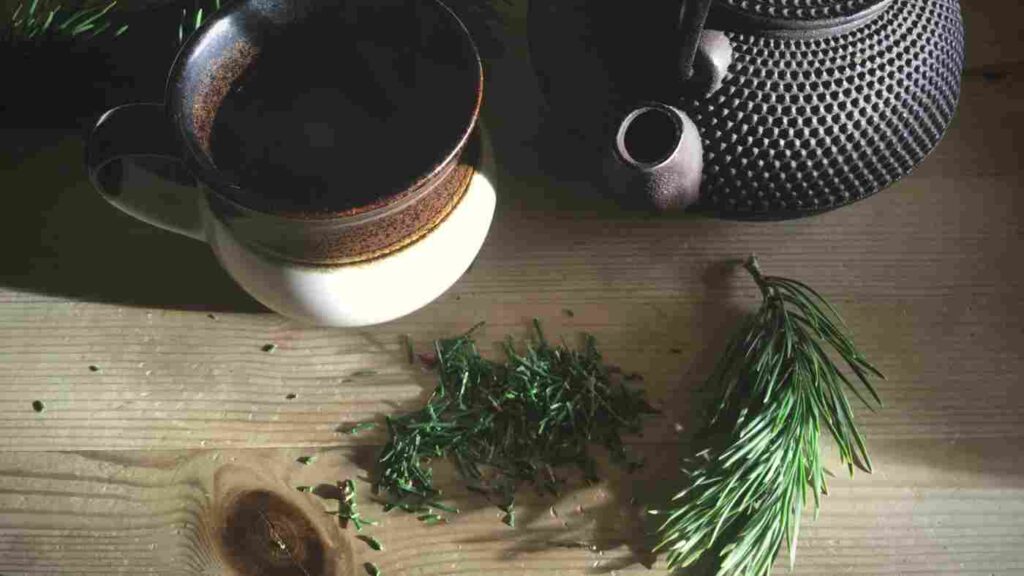
For one cup of tea, use two tablespoons of fresh chopped-up needles steeped in boiled water, cover and let brew for about 15 minutes. Dried needles can be used instead of fresh with a ratio of one tablespoon to one cup, however, fresh needles do, in my opinion, make a nicer tea.
Needle steam
Make a fresh needle face steam inhalation to help clear a blocked nose or sinuses. Have a pot filled with fresh needles, preferably chopped, and hot water. Bring your face about ten centimeters directly above the pot and drape a towel over the back of your head and inhale the fresh evergreen steam. Stay here for up to ten minutes, depending on how your skin reacts to the steam.
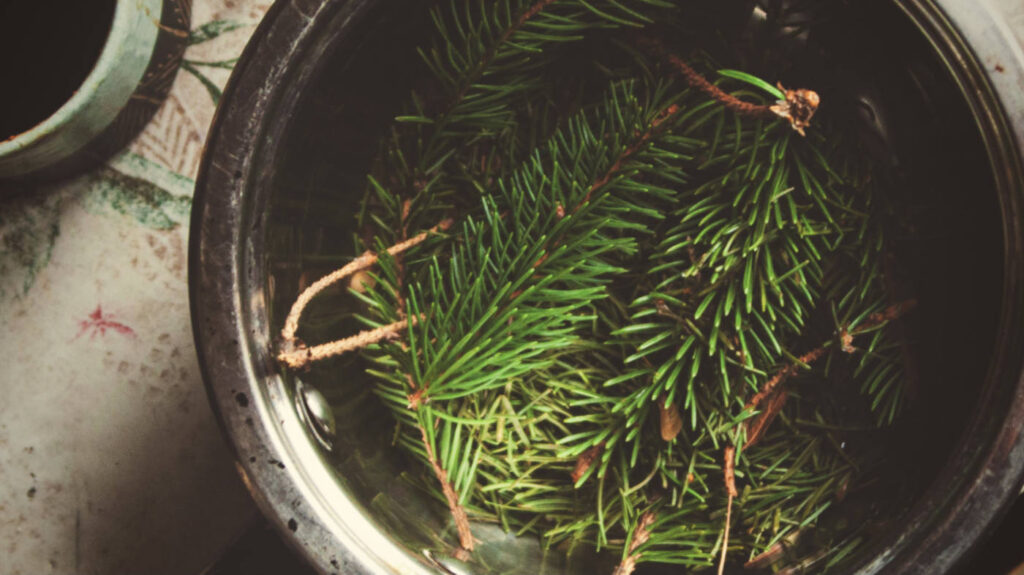
You can also freshen up your home with a needle steam simmer pot. The preparation is the same as for face steam, only now you leave the pot on the stove to simmer for the needles to release their divine aroma into your home. This also adds moisture to the otherwise dry winter air experienced in the north at that time of year as well as the medicinal properties from the terpenoids released into the air.
Evergreen syrup
Make a simple immune booster, respiratory support and cough remedy in the form of a sweet syrup which can be enjoyed on porridge, yoghurt, pancakes, in tea or whatever you can think of.
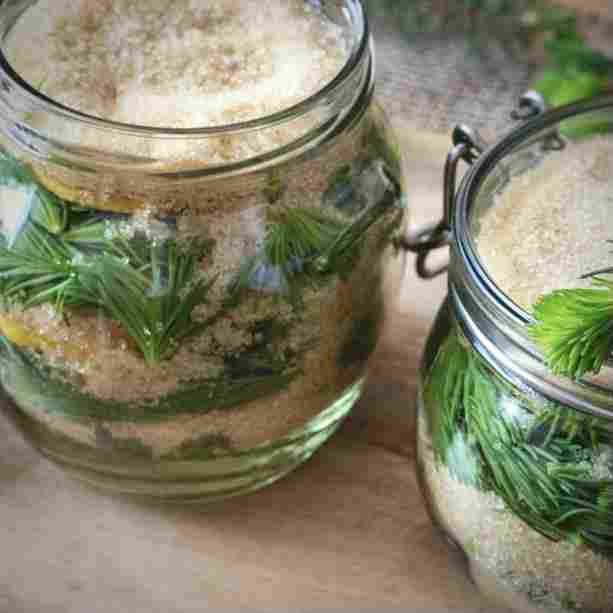
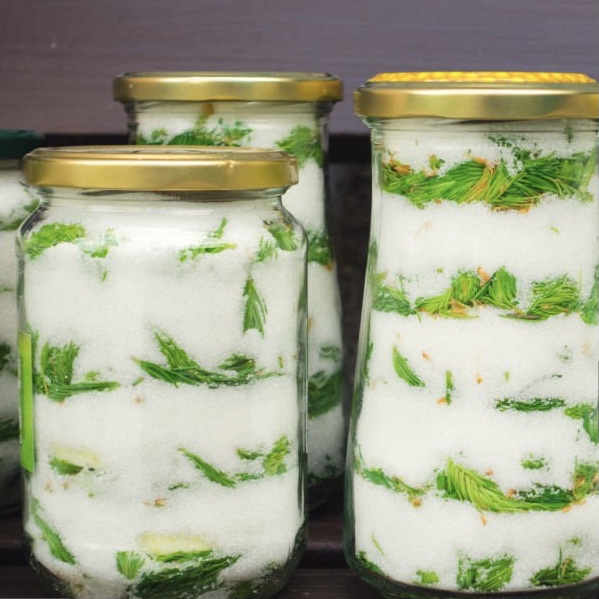
1. Layer fir shoots and raw sugar in a glass jar and cover with a tightly sealed lid.
2. Place the jar in a sunny window for about 1 – 2 months and turn it every now and then. With time the needle shoots will release their liquid to be absorbed into the sugar.
3. Pour the sugar mix into a pot and bring to a boil to dissolve the sugar.
4. Strain and discard the shoots, and pour the syrup into a glass bottle.
5. Store the finished syrup in the fridge
The same recipe can be made using immature green pinecones instead of fir shoots. These are generally best harvested in early spring just like fir shoots.
Needle-infused oil
Fresh pine or fir needles infused in oil have a long tradition of being massaged for improving circulation and heat in the body, mobility in the joints, and easing muscle tension. The amazing forest scent that’s drawn out of the needles into the oil will enliven a tired and unfocused brain and bring relaxation to the otherwise stressed and overwhelmed person.
Read my article How to make a healing herb-infused oil for step-by-step directions on how to make a potent pine or fir needle massage oil. The oil can be massaged onto cold hands and feet, sore muscles from exercises, stiffness, and inflamed joints. Adding a few drops to a hot bath or simply smelling the oil will leave you feeling refreshed and harmonious.
Needle-infused vinegar
Infusing fresh evergreen needles in apple cider vinegar will make a beautiful nourishing and refreshing salad dressing when combined with olive oil and honey. The pine vinegar can also be used as a hair rinse to keep the scalp healthy from fungal infections and eczema. Read my article How to make herb-infused vinegar for step-by-step directions on how to make and use pine or fir needle vinegar.
Furthermore, pine and fir vinegar can be used for cleaning because of their antimicrobial properties and fresh scent. For this purpose, I prefer to use white spirit vinegar. Fill a clean spray bottle halfway with the pine-infused vinegar and the remaining half with cooled boiled water. Use as an all-purpose cleaning spray though avoid using on metal, natural stone, granite, marble, quartz, or the like as can cause erosion.
Resin incense
Burning pine resin in your home will purify the air and is traditionally believed to remove negative or stagnant energy and create a harmonious, grounding and uplifting atmosphere as well as strengthen the nerves and give courage and emotional strength. The scent improves the mood by clearing the mind of stresses, energizing the body to help eliminate fatigue, enhancing concentration, and promoting a positive outlook. Best of all, it smells divine.
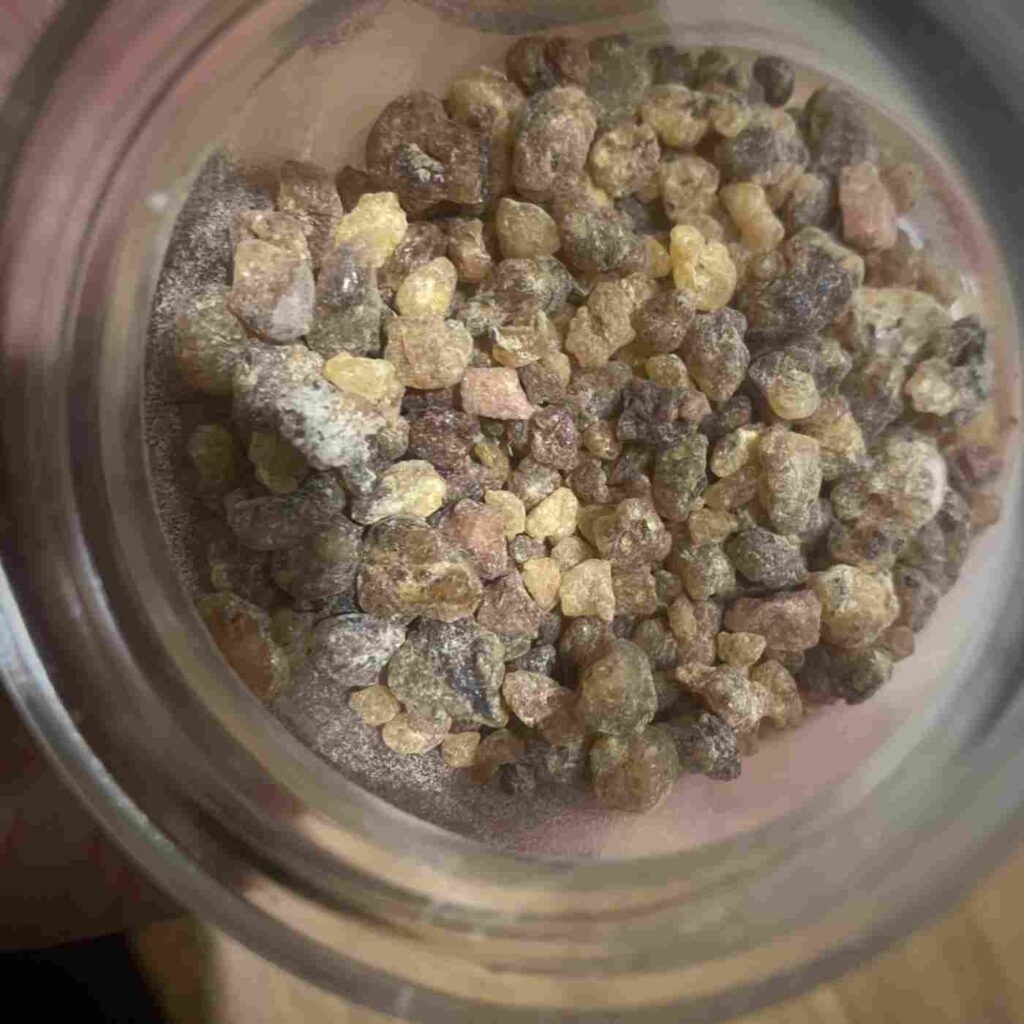
Fir and pine resin left to solidify for two years 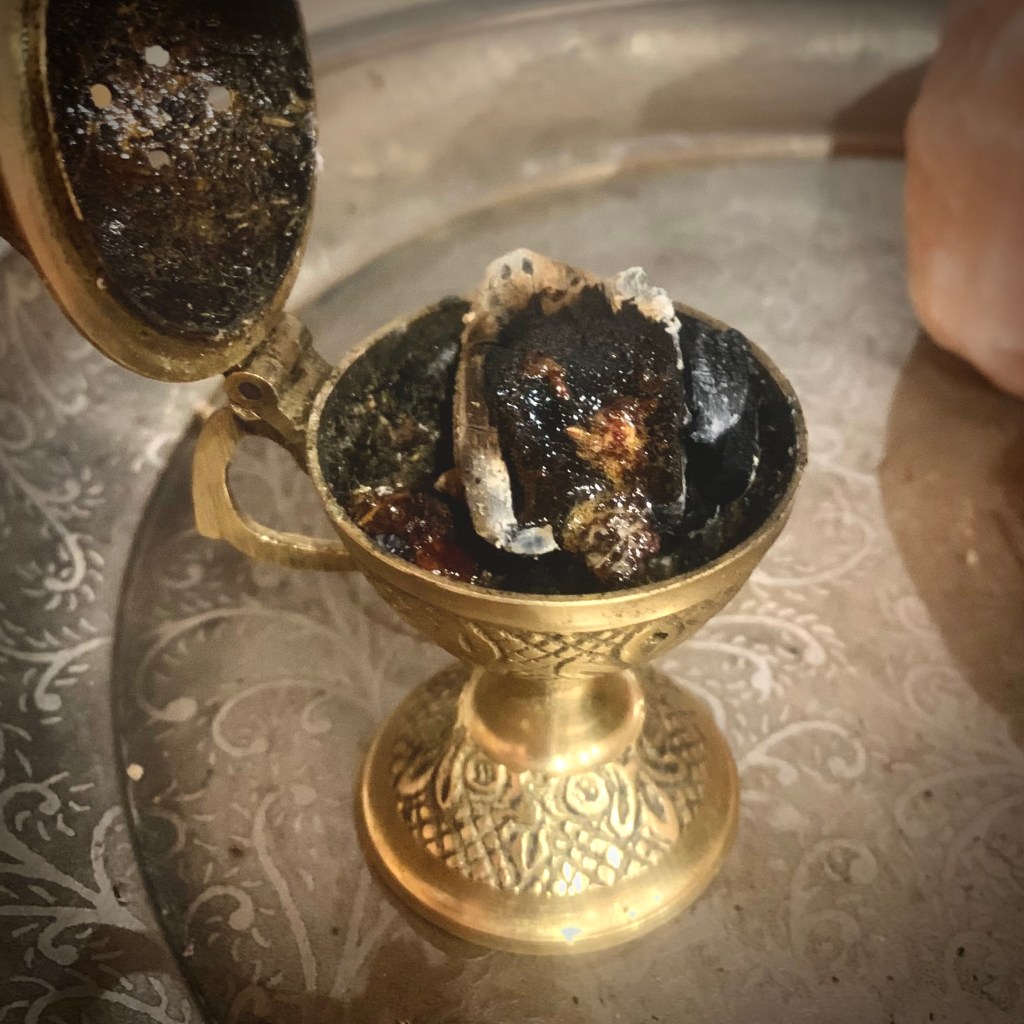
All you need to do is leave the resin that you have collected to solidify completely and then burn on a piece of charcoal in an incense burner or ceramic bowl filled with sand. I leave my resin in a paper bag and break it apart from time to time as it solidifies. It takes about a year for the resin to become fully solid and ready to burn.
Resin salve
Fir and pine resin salve has for centuries been made and used by nordic habitants and especially the indigenous people of northern Scandinavia and Russia; the Sámi. The salve is used on the skin as an ointment to treat a wide range of complaints including cuts, scrapes, chapped and itcy dry skin, hardened skin (calluses), fungal infection, sore muscle and joint pains. It can be rubbed on the chest and back to ease respiratory problems and coughs, and is amazing to use on your dogs cracked paws. With all its versatile uses this salve is so wonderful and really worth making to have on hand at all times.
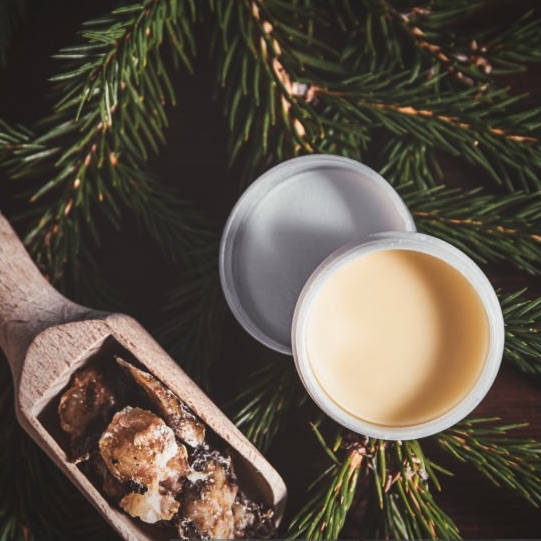
RECIPE
2 parts pine or fir resin
2 parts olive oil
1 part beeswax or 1/2 part candelilla wax
1. Prepare a water bath using a stainless steel bowl that will from now on be your designated resin salve-making bowl. The resin gets very sticky as it begins to melt and easily becomes difficult to scrub off.
2. Add resin and oil to the bowl and heat together on low heat until the resin melts. Strain the mixture through a coarse coffee filter or strainer to remove any unwanted bits of bark or dirt.
3. Return the mixture to a water bath, add the wax and gently heat until it has completely melted. Remove the mixture from the heat and stir gently with a spatula until it just about begins to thicken and pour it into tins or jars to solidify completely.
Contraindications
Most evergreen trees are safe to use, providing they are the edible and medicinal kind. Some pine trees, ponderosa pine (Pinus ponderosa) being one, may stimulate uterine contractions and should be used with caution by pregnant women. Furthermore, some people may experience allergy symptoms from evergreen pollen.
Code of conduct
As always when wildcrafting and using nature’s resources, harvest with awareness, gratitude, and respect. Only pick a few needles, cones and resin from each tree and leave enough for them to recover and flourish, reproduce and for other animals to survive on. If you’re collecting branches for decorating with, look for trees that have fallen to the ground or trees that are well established and harvest sparingly. Only harvest from trees far enough away from roads and areas prone to fumes and toxins.
Beautiful photo by David Selbert Love, Sarah Águsta
-
Existing without the Story
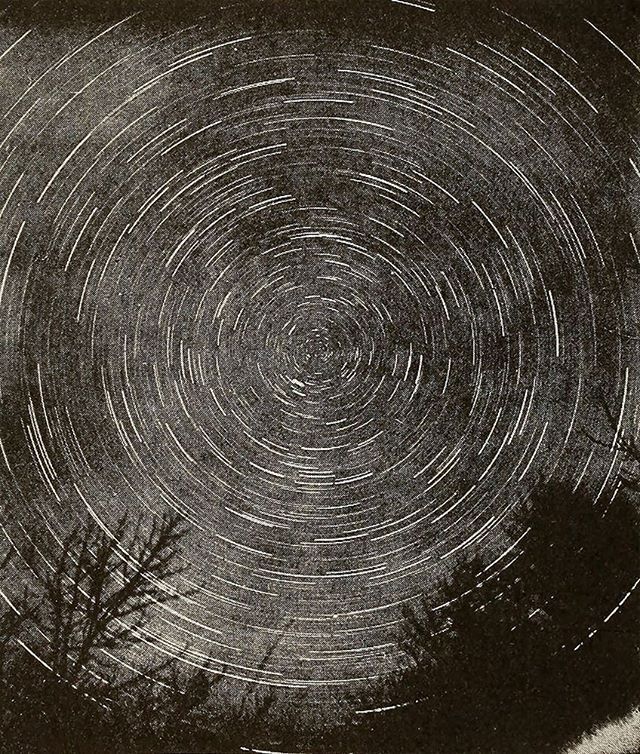
Last Friday’s moon meditations were all about finding pure presence, which can be found at all times, if only we take the time to meet it.
Following the urge to re-find some simple yet essential practices had me and two friends moonbathing in Queen’s Park. It turned out to be a great choice to move this month’s sensory meditations fully back into the outdoors, and we were rewarded by a gentle night illuminated by bright moonlight.
Soundscapes
As we walked into the park, a red cat carrying a bell around its neck came to greet us. It took me a while to find the ‘right’ spot to settle down in the middle of an 0pen patch of grass not too close to the footpath. Allowing ourselves to get used to our new surroundings, we started out with a strong cup of Mugwort tea. I had a strong ‘upside down’ kind of feeling, as the setting was similar to one usually found in bright daylight, except now the world was cast in a silvery blue and we were the only humans in the normally bustling park.
Once fully arrived we met with the local soundscapes through sensitive ears, tuning into soundwaves both near and far. Keeping our eyes closed while lying on our backs made it easier to fully bring our awareness into our sense of hearing. The park itself was quiet, apart from the rustling of yellow-turned leaves on the trees that sometimes made their way to the ground. The nearby pond housed a couple of swans and quabling ducks. Car sounds moved in and out of the soundscape a bit further away, and we could hear the occasional front door being shut. Even further; a constant electronic pitch. (Or is that just my ears?)
And then, a soft tinkling sound closing in on us. It stops! I pry one eye open, and meet face to face with the cat, who has poked its head between ours in an almost-silent inquiry. Not given much attention besides a chortle, it moves away again. The end of the meditation is announced by the calling of loudly mating foxes.
“
Release. Reset. Presence moonbathing,”We close up with a sound-making exercise, pushing us past initial discomfort and into the hypnotising lull that comes with slowly exploring the sounds, weight and shapes words take on in our mouth. The clock tower strikes nine.
Presence
Simple exercises cause a profound shift in bringing us back to the here and now, freeing us from any past or future. We are reminded that ours is a rich world to perceive; that it is okay to take a break every now and then; and that, like nature, it can be enough to exist without the story.
We recognised a moment of grace and softened into it. However brief, these are my favourite moments, shared with just a few, and not all human.
I’m grateful for sharing these simple yet profound meditations, and for (at times!) being able to bring people where previously I only visited alone. When I’m outside, I feel I don’t have to do much besides gently guiding people’s awareness, as nature does the rest.
And is nature not our best teacher in existing in the present moment? The absence of sound, smell, texture or movement can make the present feel empty. I’ve come to recognise that, instead, it removes all distractions and lets us meet a universe which is far from still, but forever unfolding at the pace of life.
The echoes of our world’s vibrations travel far, and when I’m most still, my fingertips and thin-skin-of-my-ears pick up on them.
Offerings
Full Moon by Ted Kooser
“We see only
the moon’s fixed face,
as you know. It never turns aside
in pain, in anger, or disgust. It is thus
the good parent, holding the earth
at arm’s length, gripping its shoulders
with cool white hands, turning
and turning it as if it were
saying goodbye, as if it were taking
one last long look. But the moon
with its homely, familiar face,
has been wishing that we fare well
every evening for millions of years,
fully knowing that we would be back
in the morning, ready to try.” -
Transmissions from the Moon
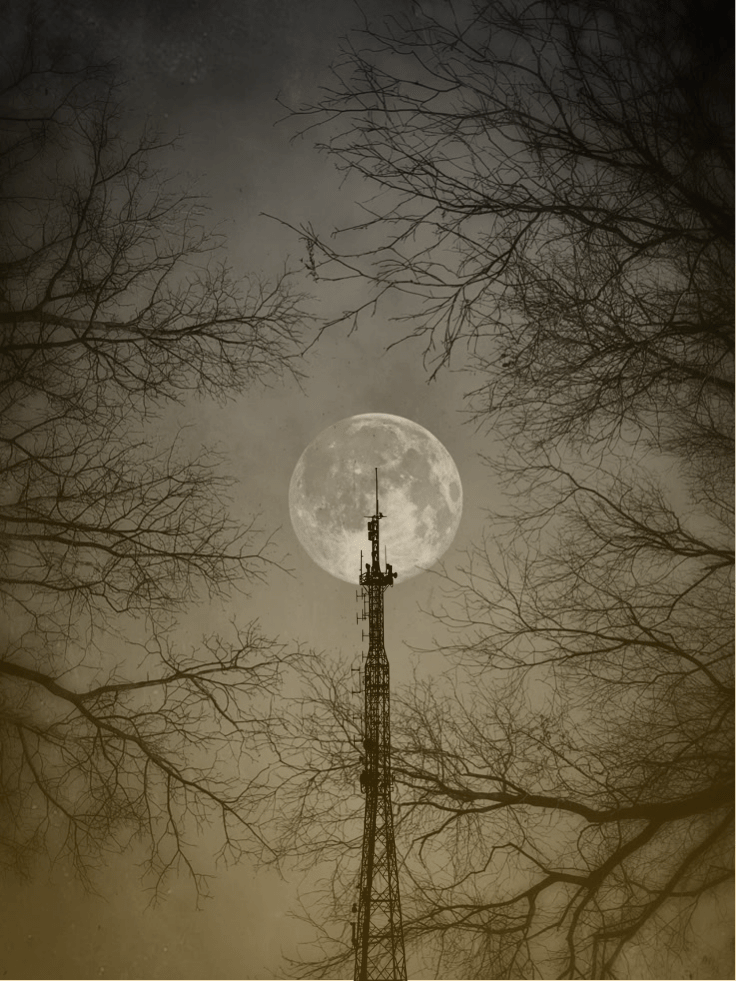
Relocating my self and my moon circles from Sweden to England, and becoming a radio tower.
As a blogger currently residing in Brighton, I’m proud to say that the foundation of this post has been drafted sitting in the window seats of a café, sipping an oat cappuccino like a proper Brightonian. The sun has pried me out from between my bedroom walls where I already spend most my days working from home. I’ve been in Brighton for almost two months now, and yesterday was my first moon circle here. Where previous ones fully took place outside, this one was largely held indoors in a beautiful yoga studio with a glass ceiling, so that the moon could still watch over us.
Inspired by Gabi Abrão (@sighswoon) the practices I chose for this gathering were centered around seeing our dynamic and sentient bodies as radio towers constantly receiving and transmitting frequencies. Her quote below offers a beautiful explanation of this analogy, that also helped me, personally, in re-orienting myself in new habits and spaces. It helped me become intentional in clearing any expectations or structures that were tailored for my life in Sweden but just wouldn’t take root here, and open myself up to really see what Brighton can offer me this time around.
“What are the mechanics behind you, as a body, as a big energy moving around the world, the big vast world of endless possibilities, of endless combinations? It’s all about dynamics. We don’t do anything alone. We’re like a radio tower. We can be intercepted. The channel can change. And so much of just maintaining our energy is a constant maintenance of honestly truly just listening. How do you tune a radio? How do you decide that a radio is clear? Just listening. Oh, can I hear it clearly? Was it clear in this other part of town and now it’s not? Is there another voice seeping in from another radio station? Is it the speaker itself? It’s like just any kind of adjustment with sound—which is the same thing as vibrations—is through listening, and it’s a lot of visceral listening.”
The Hunter’s Moon
October is believed to be a time where the veil between worlds is thin, which inspired ancient traditions and ceremonies. Amongst these is the Gaelic celebration of Samhain, starting on the night of October 31, honouring the end of the harvest season and the beginnining of winter which was associated with human sickness and even death. Similar to what we now know as the Christian traditions of All Hallow’s Eve, or Halloween, this is a time to honour the departed. Disguising one’s own body as a corpse was thought to prevent wandering spirits from using it as a host vessel, and instead be left in peace. Generally, as the boundaries between material and ethereal realms dissolve, this is an exceptionally good time to protect yourself from over-sensitivity and confusion. Clearing our bodies of visceral ties to what no longer belongs to us, or our current timeline, can restore clarity and help us become mindful of what it is we want to make space for.
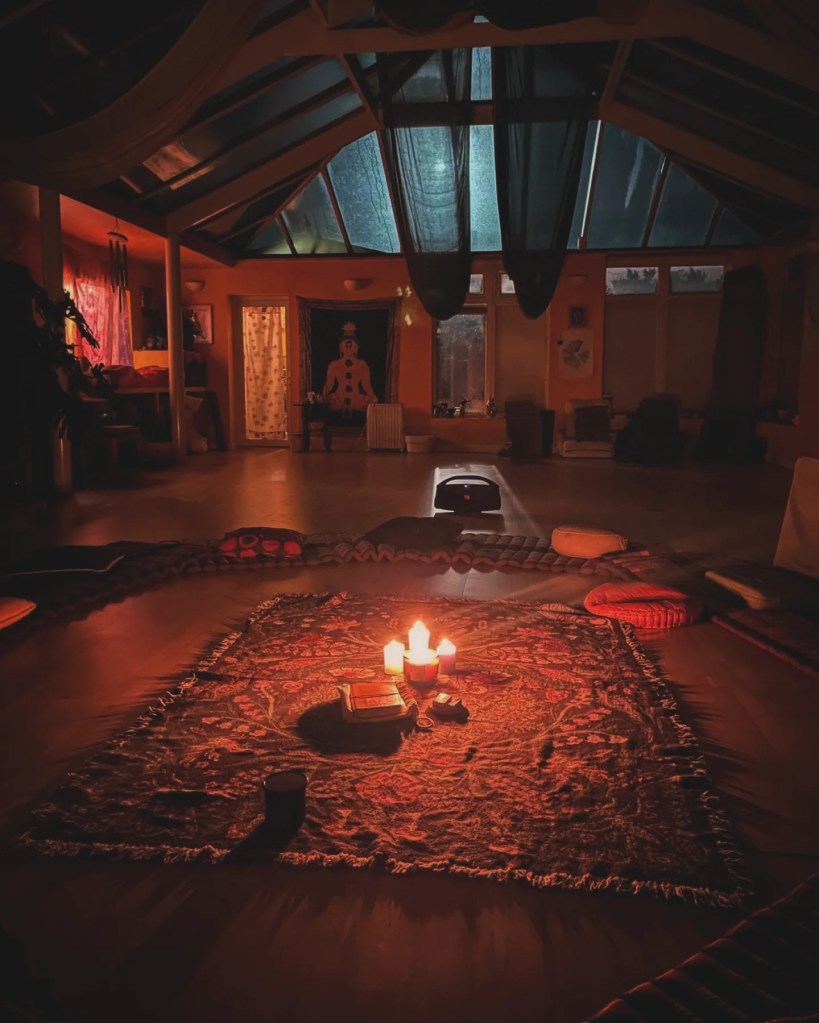
The atmosphere captured by Kit This month’s full moon, also called the Hunter’s moon, was celebrated by sonic meditations and conscious dance. As this celebration involved more organisation (like hiring a venue and collaborating with a friend for the dance part), a flighty and awkward nervosity kept me company, especially at the beginning of the evening. I am certainly no stranger to this presence, but being a facilitator that guides other people into a mindful space was at times made difficult because of this. At the same time, this illuminated needs in regards to facilitating future circles, as well as made the practices all the more beneficial to me.
We were a total of eight people, both old and new friends, and most rewarding (as always) was hearing experiences and internal processes that people move through. Sonic meditations in the moonlit garden offered someone time to reconnect with the local environment, which they hadn’t been able to do since moving back to the area. The interpretation of the exercise transformed inside people’s minds to evolve into something they needed. Where the multilayered soundscape on the edge of the South Downs could initially spark anxiety in an ADHD-operated brain, decreasing the bubble of awareness to more near and direct sounds travelling up from underfoot helped clear the sensory channels, through which a mindful return to larger auditory realms was made bearable.
We received:
“Home Introspection.
Cacophony.
Pace, grounding connection.
Sensitivity worlds.”After opening up our channels to listen and receive we moved onto a more dynamic practise, for which we were to be moved by what we heard and felt. My friend Nathan shaped this part of the evening with a mixtape that helped us get in a trance-like state, being with our bodies and exploring movements in the dark and spacious studio. Sober and conscious dancing for the sake of really feeling into your body is something not many people are familiar with. I recommend it to anyone: getting past that initial state of hyper-selfconsciousness is incredibly rewarding once you let yourself be moved.
Despite not being present in person, Nathan facilitated a journey of flow and release that after the last track had us curled up on the floor. Dancing helped me let go of my controlling mind and surrender to hypnotising movements. Returning to the room afterwards, witnessing the open state of human bodies scattered around the room, reminded me of stranded seashells on the shore, and made me marvel at the capicity of our vulnerability.
“Free fluid body.
Open.
Reflective.
Purpose: joy, forgiveness.”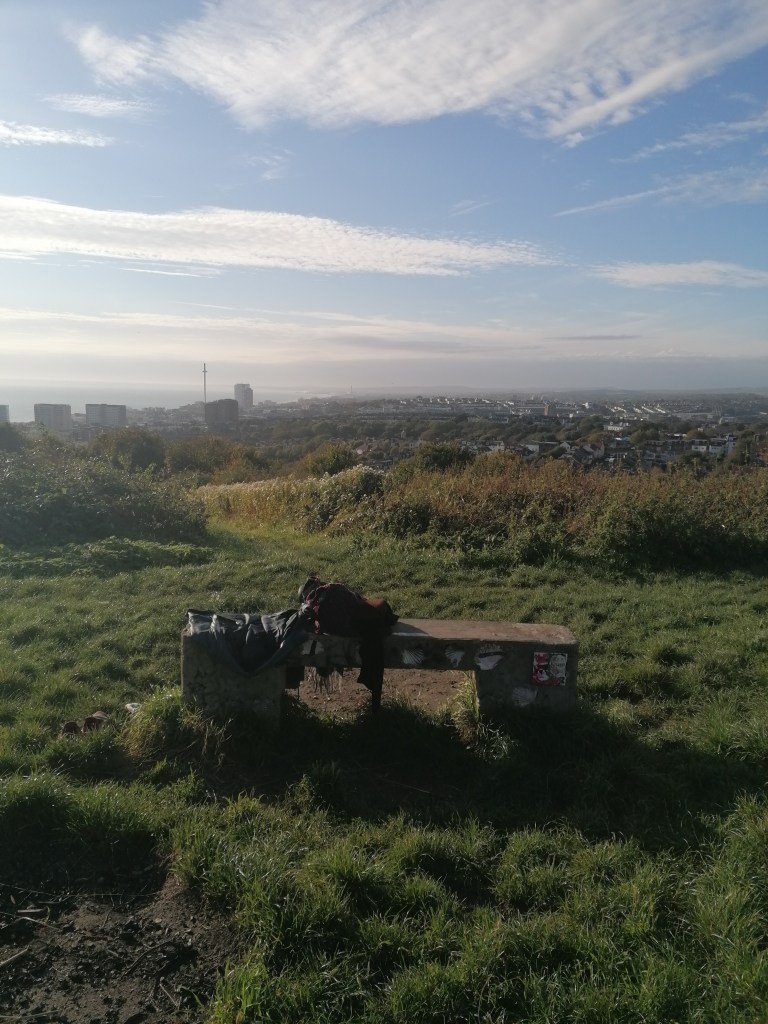
Radio tower on a hill receiving signals from both near and far To my starry eyed friends
A lot has moved through me during these past months and in the preparation leading up to this moon circle. As I struggled to settle and carve out a space for myself, it has been reassuring to receive messages that were affirming of my path. Parts of it have been shared by people no longer physically near me, and it is comforting to hear about synchronicities spanning large geographical distances, momentarily bringing others closer. At the same time, I let myself be inspired by the bold steps taken into the undefined territory of our futures.
I wonder if ‘being in control’ just means filling up the channels of my radio tower to the point in which the Unplanned has no room to interfere. Which is great for as long as it gives me beneficial structures to hold onto. These help me grow strong; and then they age with the natural cycles of life. I will recognise when it is time to let them go, and trust that in opening up — mindfully, lovingly — to life’s transmissions of the great Unplanned, I will be given answers to questions I didn’t know needed answering.
If you are someone who has stars in their eyes whose light threatens to be dimmed by realities sometimes very unlike your dreams: my heart is with you. Entirely. To keep it light, remember that at any moment you can decide to tune into different channels. They all have something to offer, and it is up to us to discover what treasures and lessons they hold. Keep putting yourself out there, looking for frequencies you would like to receive. If the work you’re putting in isn’t paying off, then at any time you can decide to pause your transmission, and instead open up your channels to listen and receive.
Let life happen to you and show its face.
Altogether, I’m proud of myself for continuing to host circles despite still being so new to it and not always knowing how to convey the magic that lies within our reach. I hope these moon circles can be expanded into other seasonal and ecotherapy practices. I also hope to find starry-eyed co-hosts to learn from and create experiences with.
Offerings
Nathan’s magical playlist for this evening The More Loving One by W. H. Auden
“Looking up at the stars, I know quite well
That, for all they care, I can go to hell,
But on earth indifference is the least
We have to dread from man or beast.
How should we like it were stars to burn
With a passion for us we could not return?
If equal affection cannot be,
Let the more loving one be me.
Admirer as I think I am
Of stars that do not give a damn,
I cannot, now I see them, say
I missed one terribly all day.
Were all stars to disappear or die,
I should learn to look at an empty sky
And feel its total dark sublime
Though this might take me a little time.” -
Destroy and Create
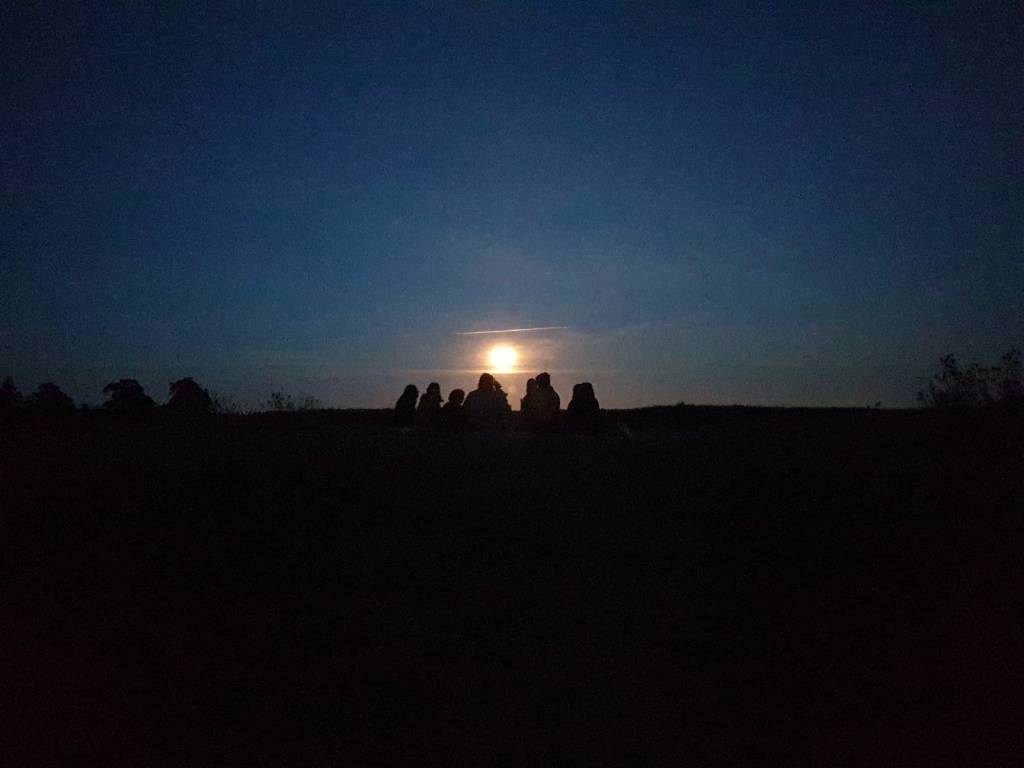
Musing about a magical gathering with sonic meditations under the August supermoon.
Last night’s full moon gathering could be described as unexpected even though I did not consciously hold expectations. We started the evening on a hill surrounded by strangers who had all come out on a Monday evening to gaze at the orange supermoon rising on the horizon. This post will be the first of a new blog thread that explores full moon gatherings and similar shared experiencies. This also marks my farewell to Uppsala, which has been my home for two years. My summer has been filled with goodbyes and magical moments spent with friends amidst natural splendour that Sweden has in abundance. I’m left with a fresh and peppery aftertaste, much like the juniper berries found around the perimeter of a beautiful hill in an open field.
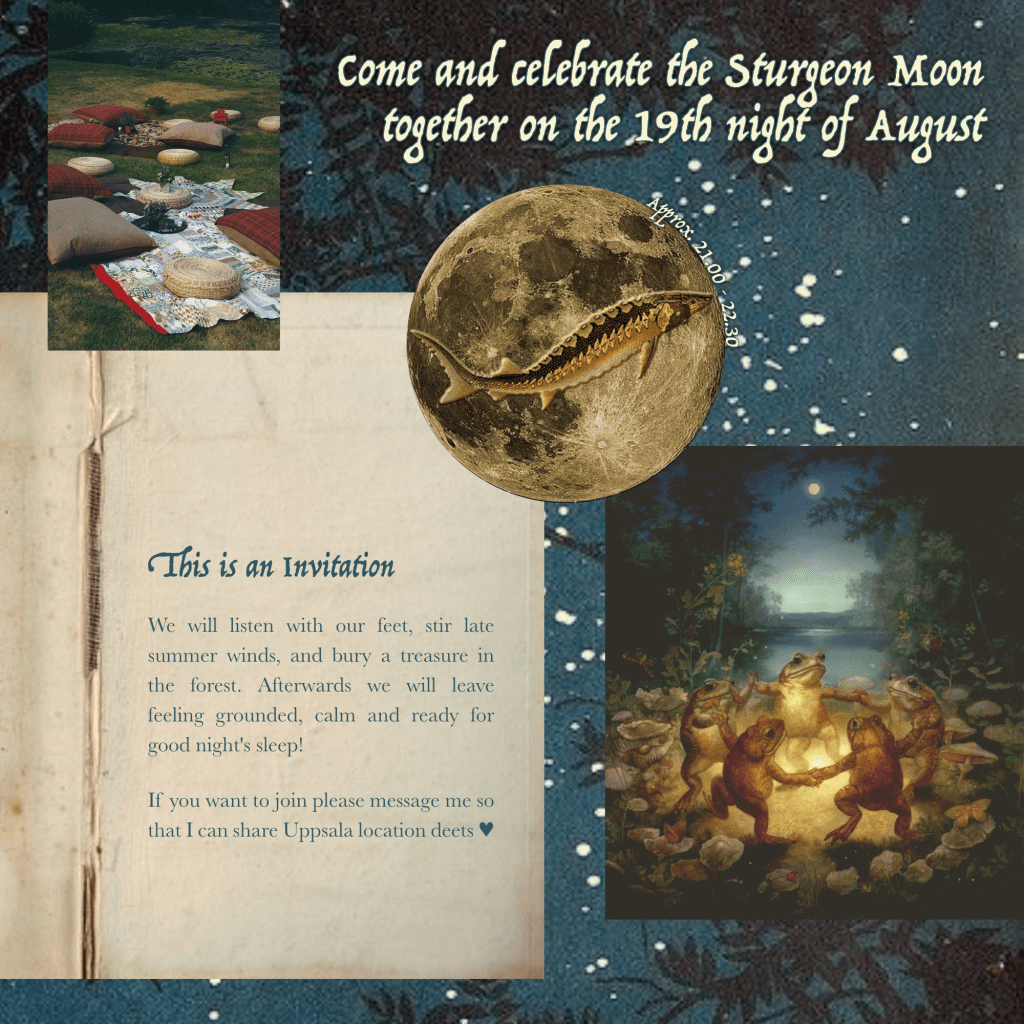
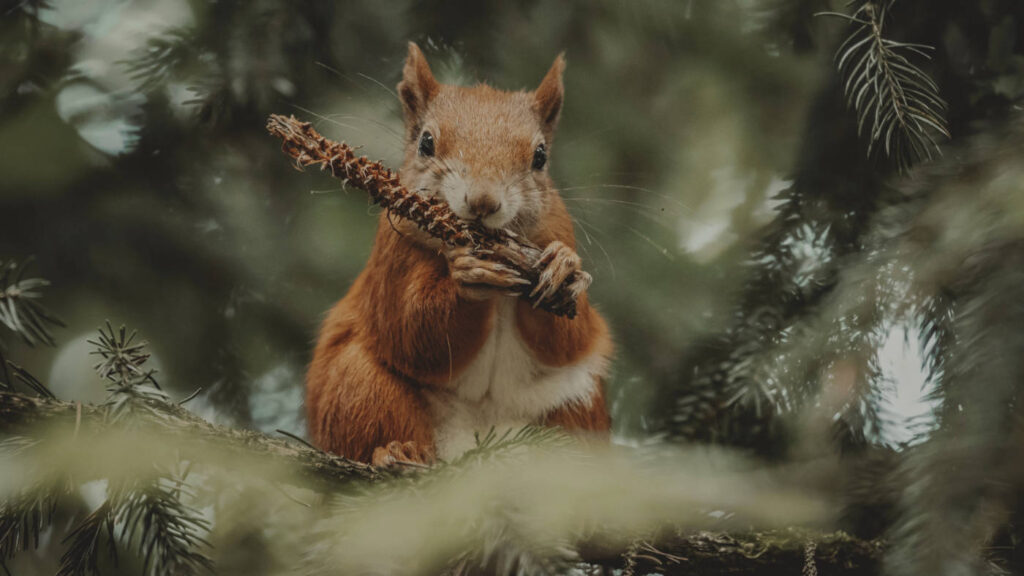
The initial invite Squirrel energy
Nine people showed up to celebrate the full moon with me. Old friends and new friends came together during this breezy night and participated in sonic meditations. I had planned a deep listening exercise as well as a sound making exercise, to help us connect and communicate with our surroundings. Our bodies were to become sensors. Earlier that day I had gone to this exact nature spot to scout the environment, take note of ant activity (low and only between the pines) and to dig a hole in between the compacted soil and tough roots with a flimsy kitchen spatula.
On my way back home I decided to do the sounding exercise for myself. A shaded space beneath hazel and pine trees attracted me, or perhaps the large granite rocks did. I sat down on the largest one and pressed my palms against the cool surface. After taking in some deep breaths I exhaled in a low tone. My search in sound became a tentative melody, and it was during this melody that a squirrel suddenly ran up to me through the tree covers and loudly started chittering. Surprised, I stopped my own sound to gape at the little creature. As soon as I stopped, the squirrel started backing away, so I resumed sounding. They came back to chitter at me some more. An unexpected encounter! I later looked up that squirrels symbolise resourcefulness, positivity and organisation. This, I could embrace fully as an encouraging sign.
See, I told you they are a cult!
Besides having a loose format that allows room for on-the-spot adaptations, there are many things that cannot be anticipated at all when hosting an outdoor event that heavily relies on natural surroundings and the willingness of people to engage. Instead of having this add to my anxieties and need for control, I could accept my role as a gentle guide while also placing trust in nature, other people’s openness, and the way we ultimately shape these experiences together.
Taken by Chris on Kung Björns hög Once everyone had arrived we sat down in a circle, mesmerised by the giant glowing orb that after much excited anticipation made a dramatic and fiery entrace over the treetops. Besides our group more people had come out to Kung Björns hög to watch the moon. I refused to give up our central spot on the hill and poured out strong mugwort brew to initiate the night’s celebration. Soon after people went off to explore the open area covered in heather, huge rock surfaces and a patch of pine forest. Embodied exercises are sometimes a better way to really ground in the physical here and now than listening to more words. The prompt for the first deep listening practice was one of Pauline Oliveros’ sonic meditation scores:
“Take a walk at night. Walk so silently that the bottoms of your feet become ears.”
I tried to encourage people to follow their intuition and seek out spaces that called to them, and then to listen to how that space sounds. Since I didn’t bring any sound making device other than my own body, we decided for the word ‘moon’ to be our cue to gather back before starting a second exercise. As soon as I started howling ‘”mooooon!” amidst the field that still also held other people, shouts of “moon!” were repeated back to me in reassurence. (This was enough confirmation for people overhearing us to declare us a cult.) Since we were quite a large group I asked everyone to share just one word that came up for people. In doing so we composed the following poem together:
“Distraction, vargbröder liveliness. Earthquake calmness. Grass. Peaceful cult. Hallucination, buzzing.”
The night gradually grew darker, yet that day farmers had been harvesting out in the fields, and agricultural vehicles were still moving about in the distance. Together with the relentless chirping of crickets it felt to me as though sleep was moving further down the list of worldly priorities. So, now that we finally had the hill to ourselves, I took more time introducing the second exercise which we initiated together in hums and whispers. Internally I had named this exercise ‘sounding sensors’, as people were to go out into the field a second time, but now they were to also talk back to the environment and find a common tone. Confined to the hill with all our belongings, I crept around the edges, sang to the dried flowers, and enjoyed how even a sigh took up space in the air. Another poem emerged out of our experiences:
“Island, ease melody. Melody patterns. Freshness, surrender. Light, soothing crisp.”
Burying the treasure
As late summer ripens into autumn, we move from flowy states of being into a period of harvesting and taking stock. How are we caring for the physical spaces we reside in, those we call home? How can we better nurture our body? Our house? Our surroundings? The full moon offers a clear opportunity to reflect on what we have in abundance and what we lack. Anything that stands in the way of our dreams and acting from deep values can be given back to Earth to be composted so that new opportunities can grow. In doing so we create more space for the unexpected—of which the natural world has plenty to offer.
Exercises such as sonic meditations and generally spending time in nature can help declutter our minds and put us in direct contact with our more intuitive and sensing sides. Making use of this, I dedicated time at the end of the night to reflect on how we show up for ourselves, and to inspire care, compassion and courage when assessing this. I asked people to write down two things: something they wish to let go of and something they want more of. We then left the hill to the moon, and set off to bury our offerings in the small hole I had clumsily dug with a kitchen spatula earlier that day.
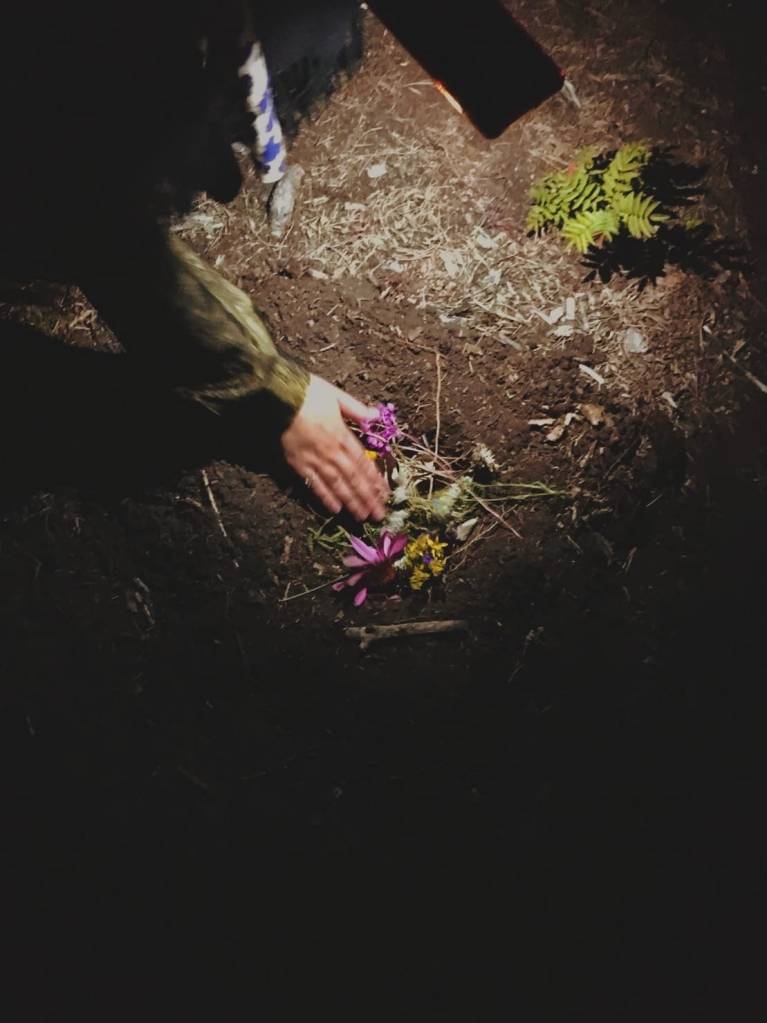
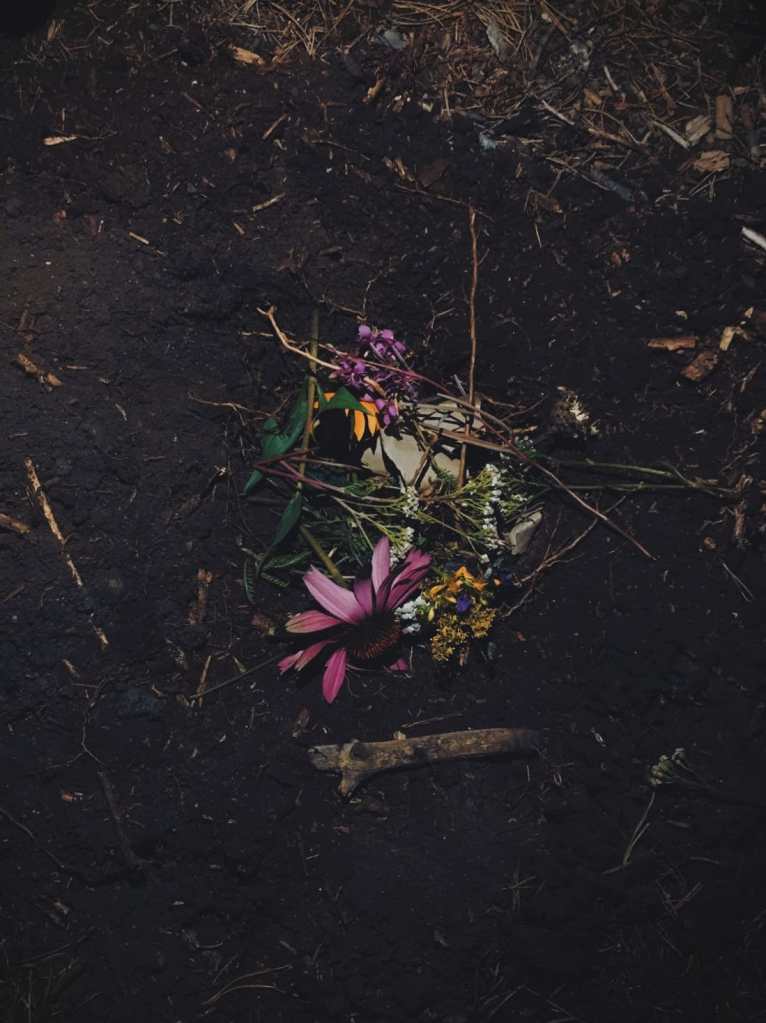
Photos taken by Ellen beneath the pines This night has been a special one. I’m amazed by how many people showed up, some of which I had not met before, and also by how many people generally have shown interest in these experiences. The amount of moon photos I received yesterday makes me feel very seen, and I love that I can connect with people in this way. This year has shown me where to direct my efforts so that they are returned to me in a multitude of ways. Gradually surrendering into trust has been a liberating learning curve, and I am slowly but surely finding my own language and way of doing things. Next week I move back to vibrant Brighton to reconnect with people and places I have missed during my time in Sweden. I’m looking forward to continue hosting these moon circles (and hopefully more) with and for other people. Ideas are growing exponentially. But for the moment I have a more pressing priority: reducing my belongings so that they fit into my suitcase and backpack!
-
How to safely and respectfully gather wild plants
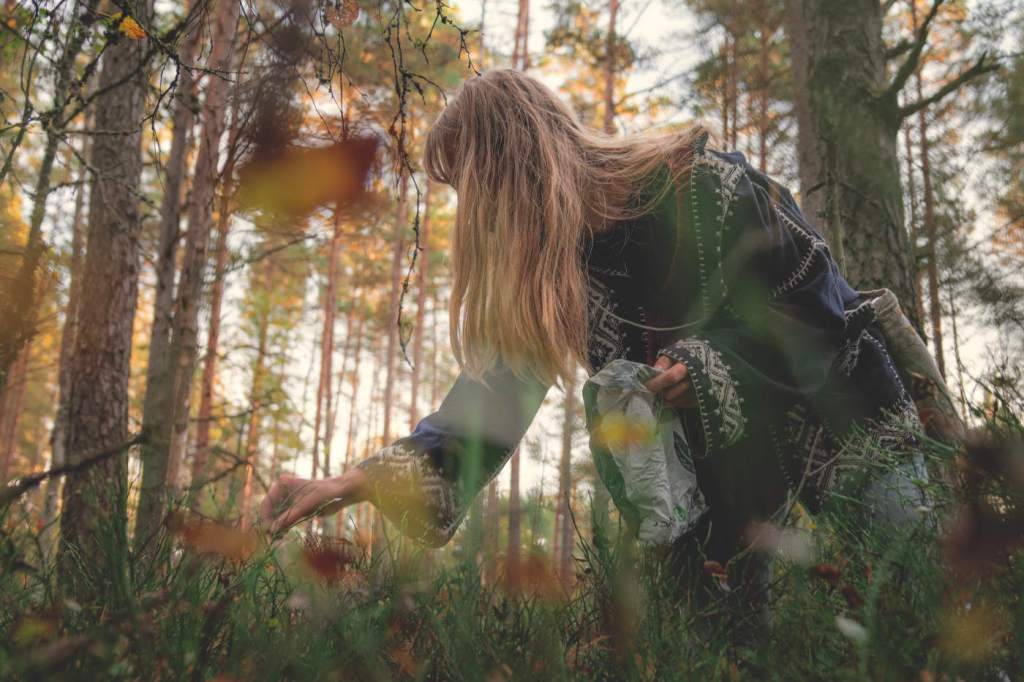
Holding the powerful knowledge of identifying wild plants and picking them for preparing nourishing meals and medicine has tremendous benefits. Not only physically, by being active and eating nutritious wild plants, but more so it enriches us on a deeper emotional and energetic level, bonding us with the natural world from which we originate.
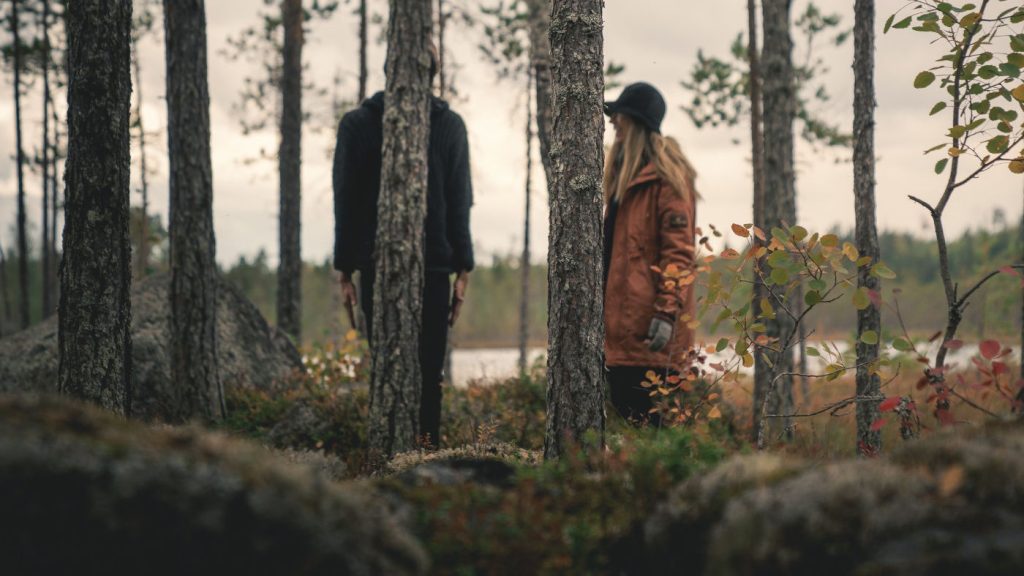
I am adamant that we all carry within us this wisdom, passed down from our ancestors who lived in harmony with the land and survived from its resources. Only in our modern ways of living have we forgotten how to harvest in nature responsibly, sustainably, and safely, in a manner that heals and connects us to nature and our fundamental being. However, by following a few simple guidelines on where, how, and the do’s and don’ts of wild plant harvesting, we can rediscover and bring back the lost practices.
Safety for all
We cannot hide the fact that picking plants in nature for personal gain impacts the environment; the reproduction of the plants we pick, food for animals and the natural ecosystem. It is therefore extremely important that we harvest responsibly and ensure sustainability with proper knowledge, respect and humbleness to our surroundings and ourselves. Below I’ve made a guideline on how to do so:
Know your plants
Learning to accurately identify the plant/s you wish to harvest is super important so that you don’t end up poisoning yourself from toxic look-alikes or harvest endangered species that should be left for re-establishment. Use appropriate books, videos or phone apps to help you with correct identification. Alternatively, ask a knowledgeable friend to come with you the first few times until you feel confident enough on your own. One thing that helps me when I first get to know a plant is to look up what potential look-alikes the plant has, if any of them are poisonous and how to tell them apart. This way I can more easily rule out any tricksters and be certain I get the right plant. The bottom line is that you must always be fully confident in your identification and never consume a plant unless identified with 100% certainty. Remember, many plants do look alike.
Bring the right tools
Scissors or secateurs are a must to bring on your wildcraft excursions. It ensures safe harvesting of the plant and avoids pulling up its roots. Unless it’s the roots you are after of course, then a shovel or pointed spade is what you need. Do you have a beautiful woven basket in your possession then use that to store your harvest in for a more romantic feel. This is usually too impractical for me and instead, I prefer to store my harvest in paper bags which I can keep in my rucksack. Avoid plastic bags if you can, I don’t think the plants like them.
Be Sustainable and show respect for your environment
Harvest with awareness and never leave a plot empty of the plant you’ve been picking. I cannot stress enough how important this is for the regeneration of the plant. A good rule of thumb is to harvest no more than 10% of a plant population in a given area so that there is still plenty left for animals and other people to enjoy. To minimise wasting your harvest I would also highly suggest you justify the picking of a plant before you do so; what are you planning to do with your harvest? How much do you need? etc. Lastly, educate yourself on the natural growing seasons and reproductive cycles of the plants you have an interest in i.e. find out when is the right time to harvest.
Avoid contaminated areas
Ensure the health of the plant you plan on harvesting for food or medicine and stay away from busy roadsides, industrial sites, and areas that may be contaminated with pesticides or pollutants. Plants easily absorb chemicals and pollutants which in turn get into your system as you eat the plant, causing harm instead of good. Limit your harvesting to the forest or big meadows. That calls for a nicer and healthier experience altogether!
Know the legal Considerations
Keep yourself updated on where you may and may not pick plants. Some countries and areas have specific restrictions or require permits for wildcrafting which, although may seem unreasonable, one should at all times respect. Here in Sweden for instance you may only harvest resin and birch sap as well as some nuts on your own land unless the land owner is kind enough to give you permission to harvest on their land.
Avoid allergic reactions
Some plants cause allergies in some people. To avoid any serious allergic reactions, always take an allergy test before using the plant by rubbing parts of it on a small area of the skin. If you experience any itchiness or rash after a short time, this is probably not the plant for you.
Continue learning and Share
Wildcrafting in nature is a lifelong learning process. Continuously educate yourself on plant species, ecosystems, and sustainable practices. Not only through reading but also through spending time in the outdoors, inviting the plants to teach you. There is so much wisdom to be found in nature. Share your knowledge and experiences and encourage others to more sustainable practices and healthier living in harmony with nature.
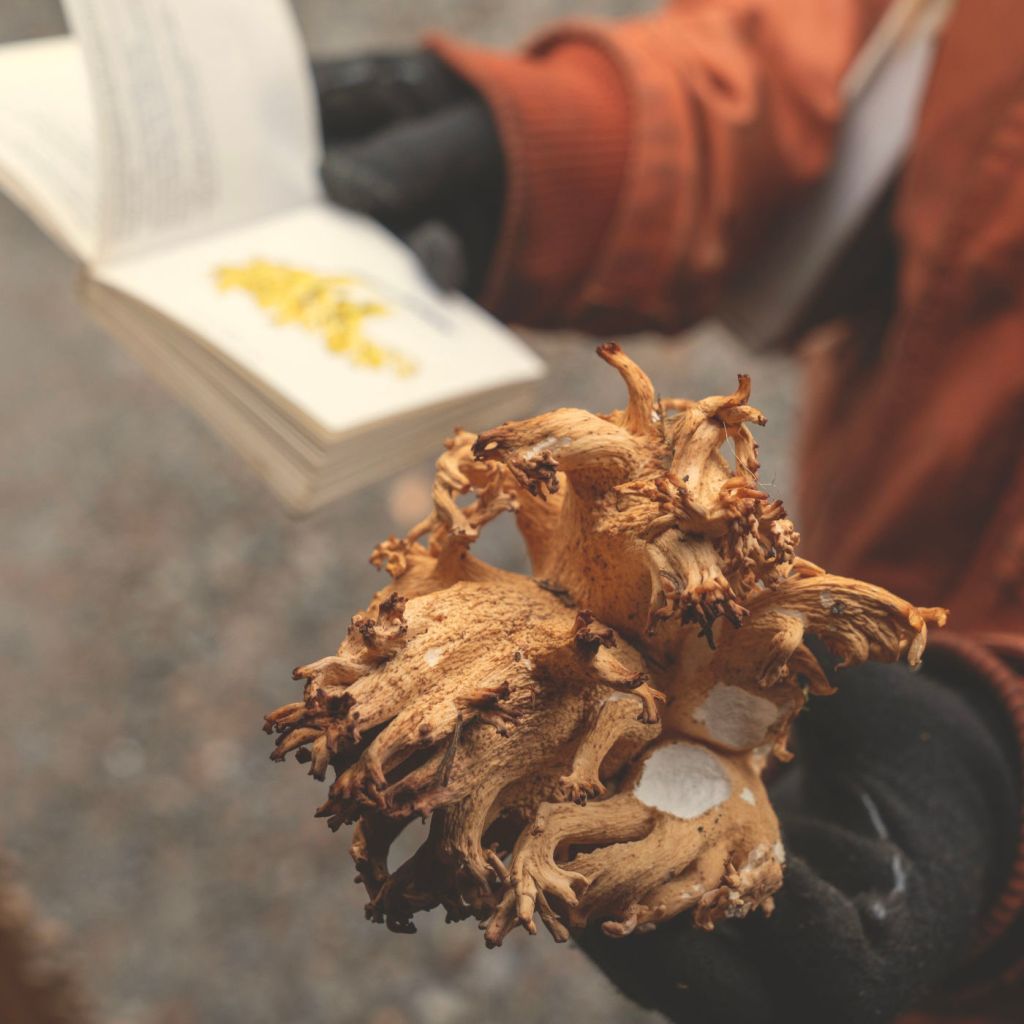
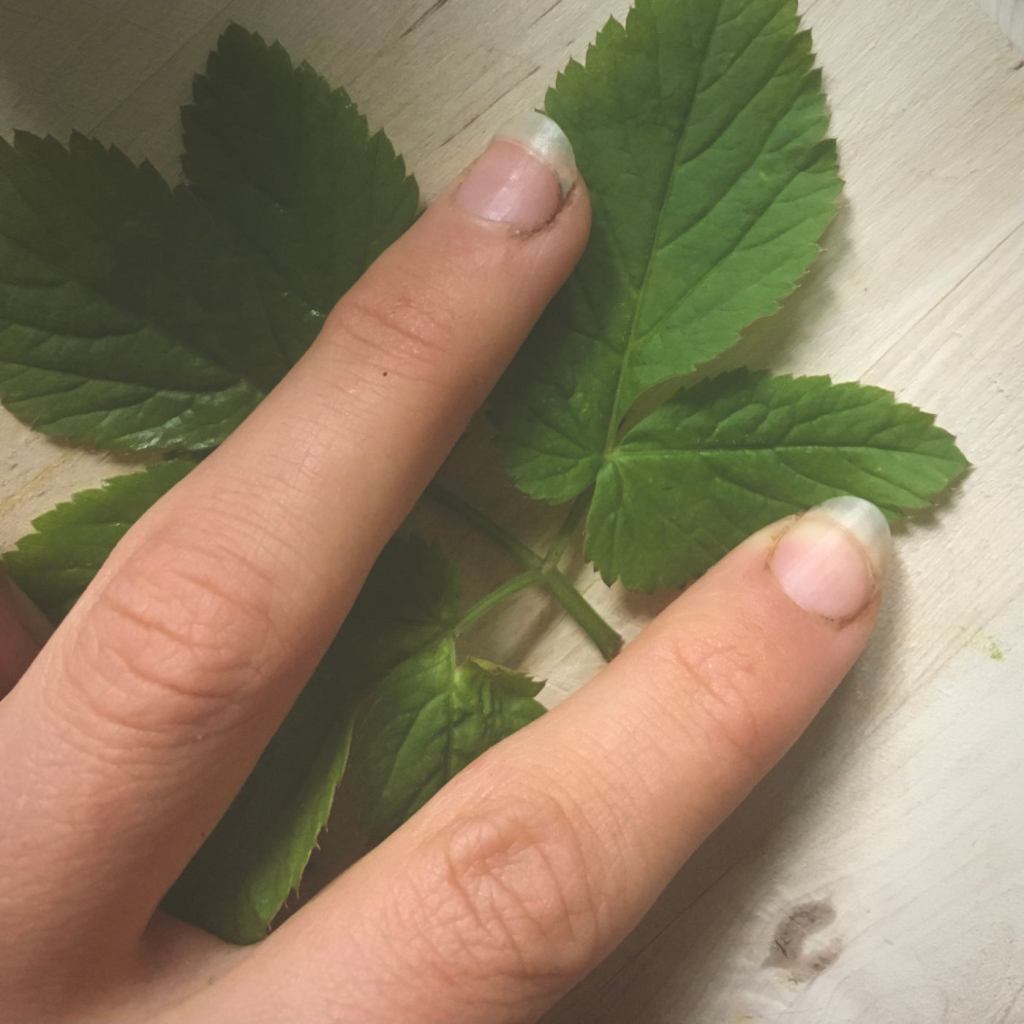
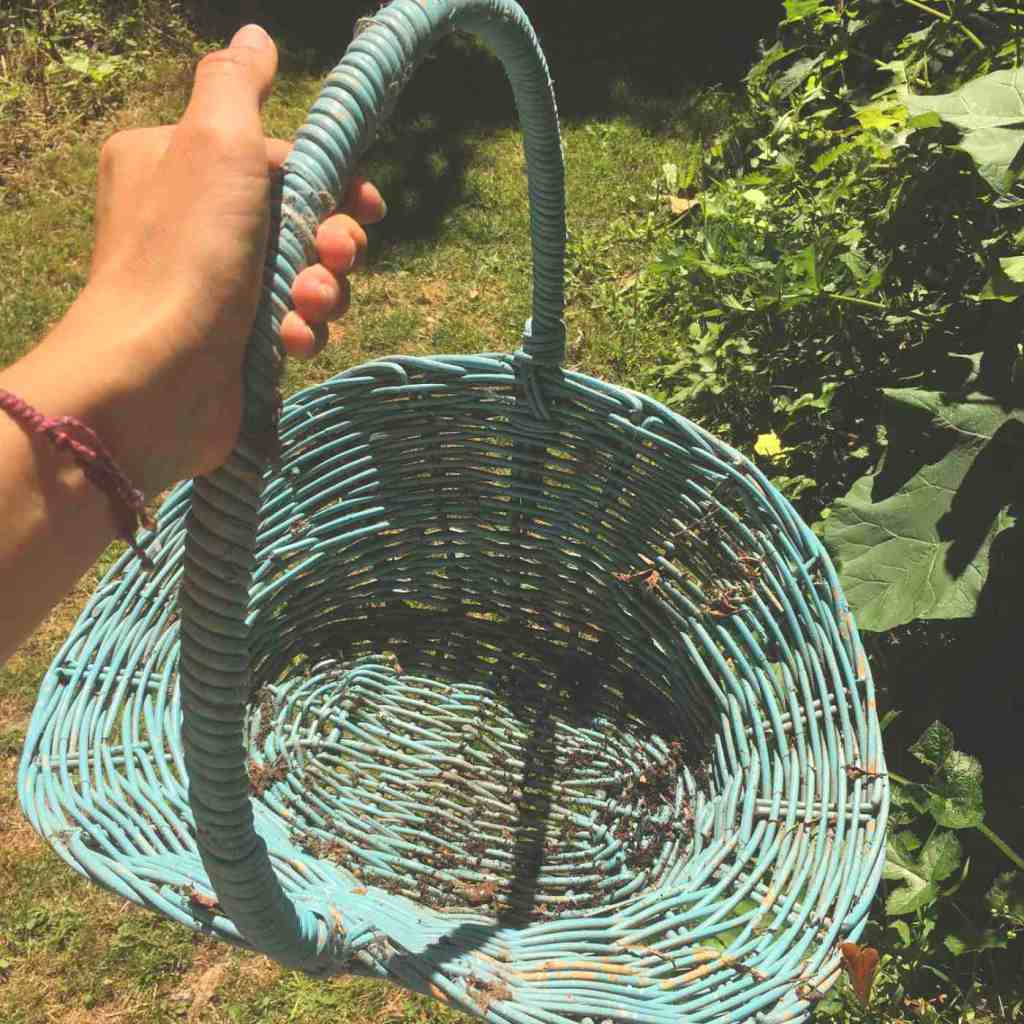
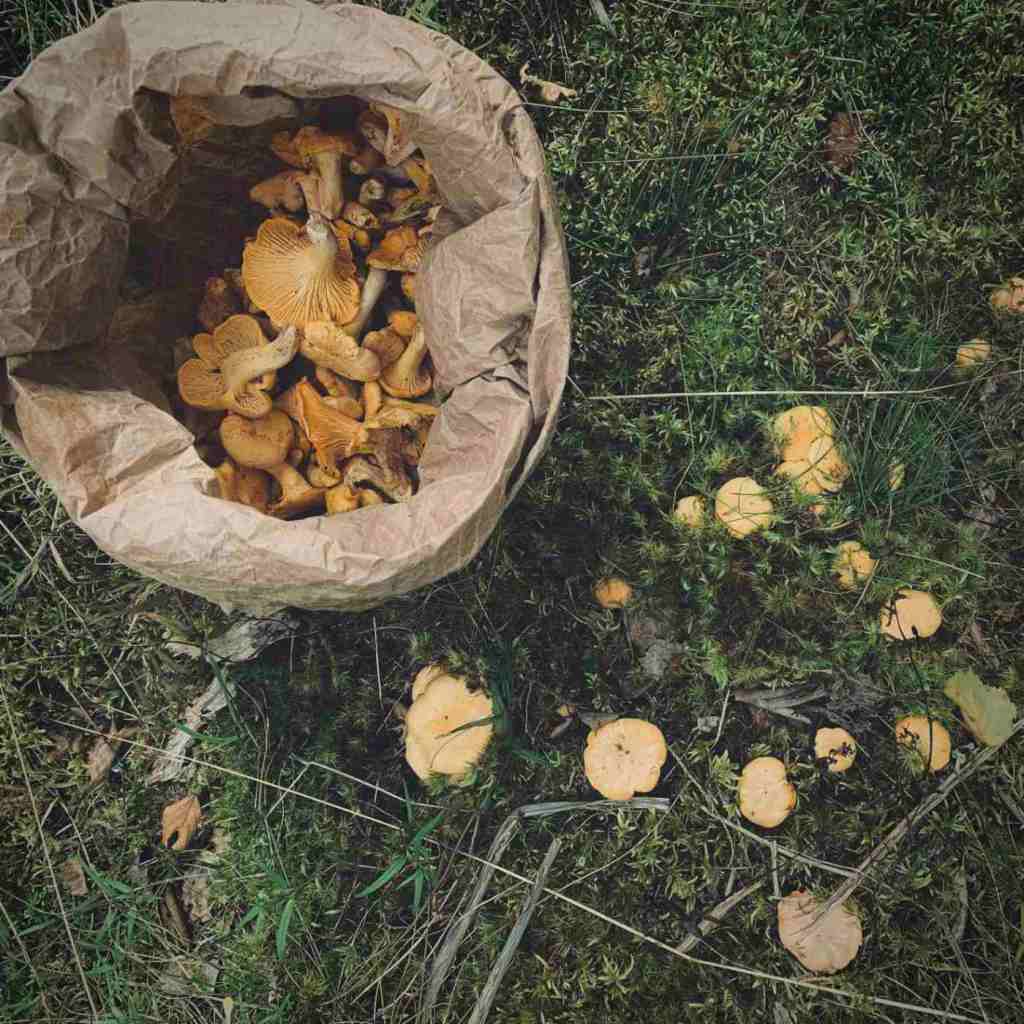
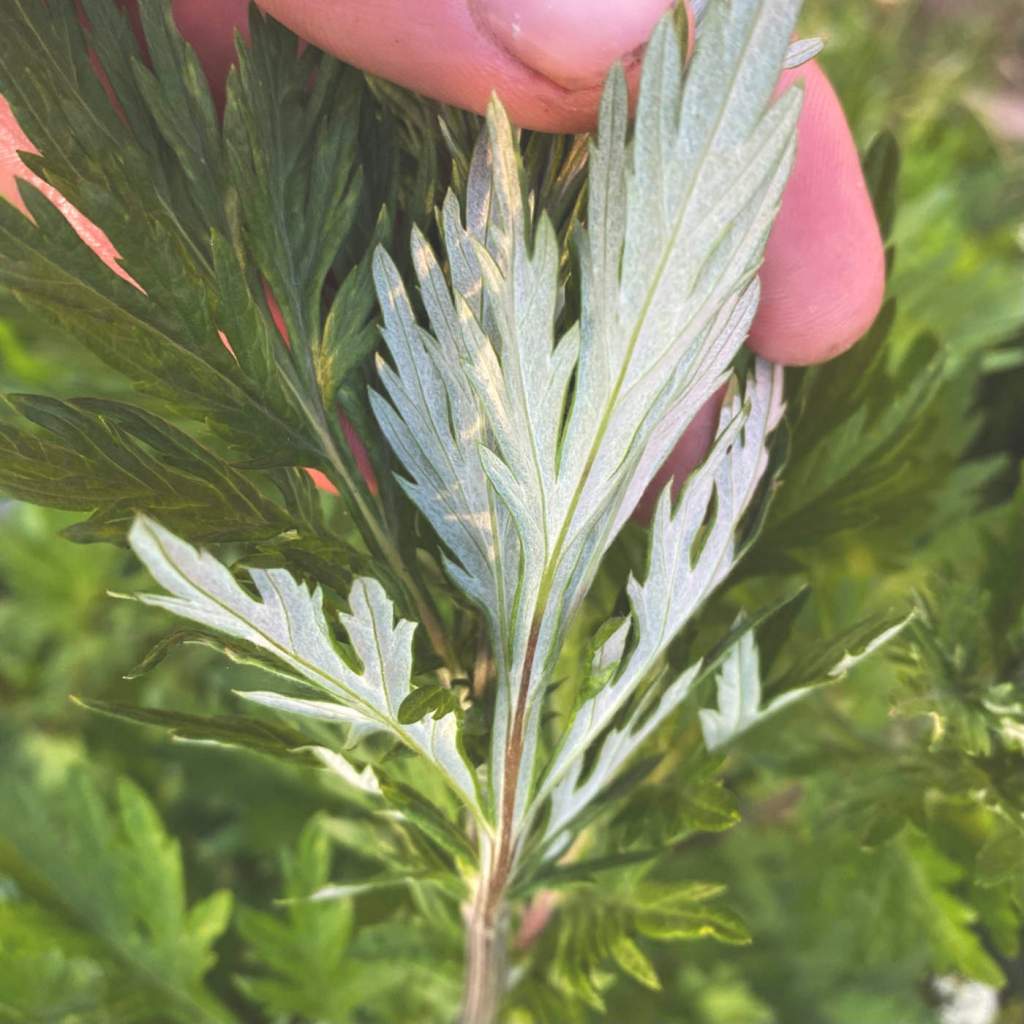
Engaging in these mindful practices ensures that harvesting of wild plants in nature remains sustainable activities that we can continue to enjoy and benefit from, without compromising the health and vitality of our natural environments.
Tips and Tricks
As a little bonus below are some tips and tricks on how to get the ultimate benefit and enjoyment out of harvesting and using plants of different categories.
Plants for medicine
When you harvest plants for their medicinal properties you want to get them at their highest potency. Have you studied your desired plant you will know which part and at what season it should be harvested. However, as a general rule, all aerial parts of a plant are at their highest potency in the late morning or early evening on dry days when there is no dew and the sun isn’t shining hot on the plant. One should never harvest wet plants for medicine and when the sun is strong many of the medicinal and fragrant oils are pulled out of the plants. Having said that, the plant won’t be completely ripped off of its medicinal properties and if your only opportunity to harvest is in strong sunlight then I believe that’s better than to not harvest at all.
Plants for food
You can apply the above to your harvesting of plants for preparing food as well to get their ultimate benefits, however, for me personally that is a bit overkill. Instead, I focus on harvesting wild foods as soon as possible before I plan on eating them. The sooner you eat wild greens after harvesting, the more nutritious they are. In my ideal setting, this would be minutes before eating but depending on where in the world I am, this might be a few hours or a few days provided I can store my harvest appropriately.
Resin
Collecting resin for making healing salves or letting solidify to burn for their fragrance energy can be very exciting and rewarding. Resin works as the tree’s plaster for when it’s been injured and it is therefore extremely important to pick resin in a way that doesn’t impact the recovery/healing of it. Identify where the injury of the tree is, and collect only resin that has dripped down from it. Never be greedy and collect resin that’s covering the wounded area, that would be extremely cruel to the tree who’s working hard to heal. Harvesting resin quickly becomes a sticky mess and you don’t want to get it on your clothes. I use a designated knife to get the resin off the tree and a paper bag to store it in. The only right time to harvest is in my opinion in the colder months when the resin is more solid and easy to get off the tree. I’ve tried to do it in the summer but it just gets too sticky and messy in the heat.
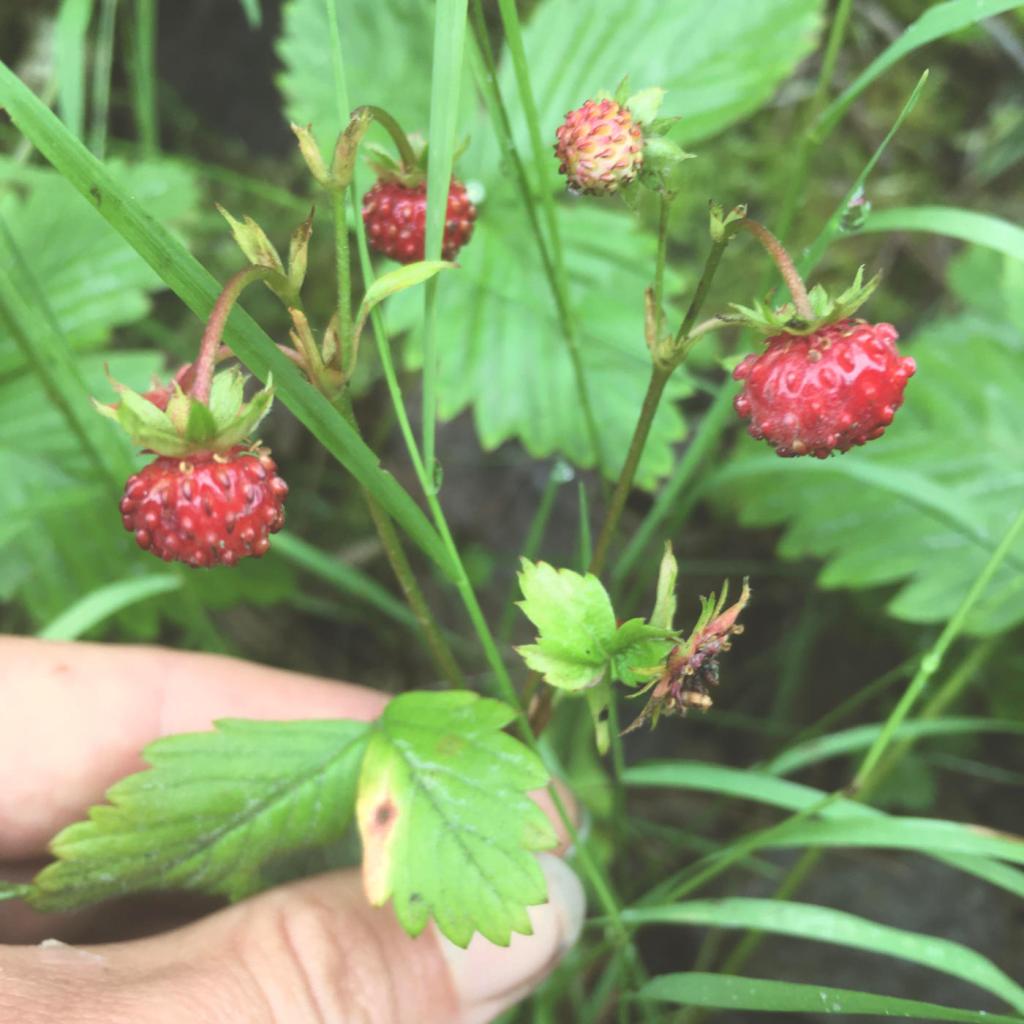
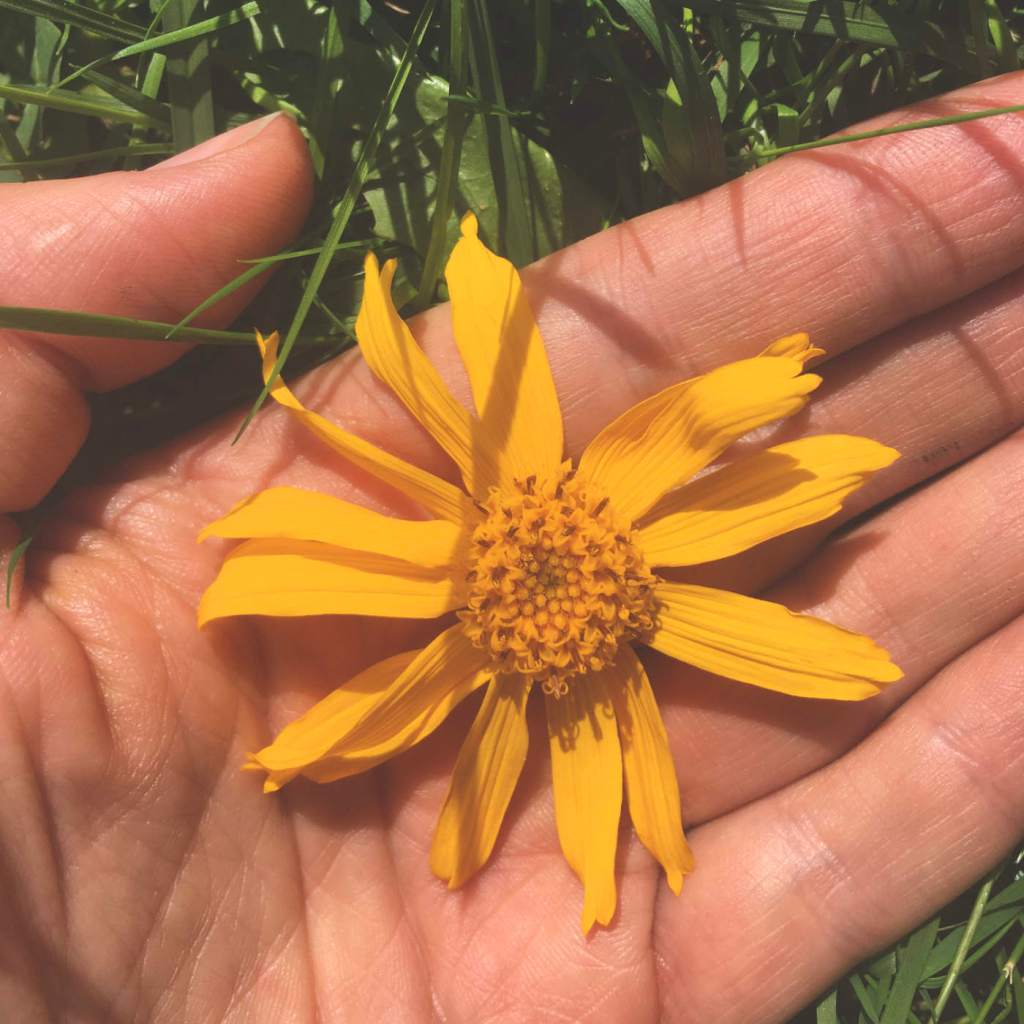
Now, get yourself out in the wild and let the plants share their wisdom and magic. Enjoy! ♡
Love, Sarah Águsta
-
From Anthropocentrism to Ecocentrism
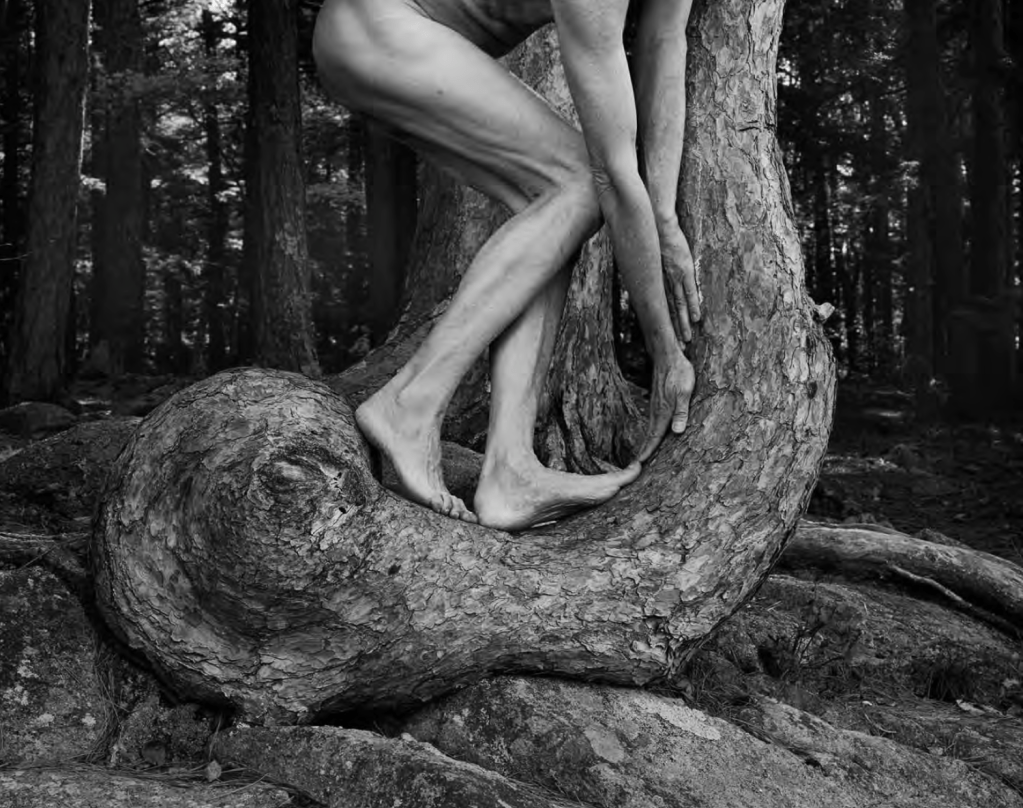
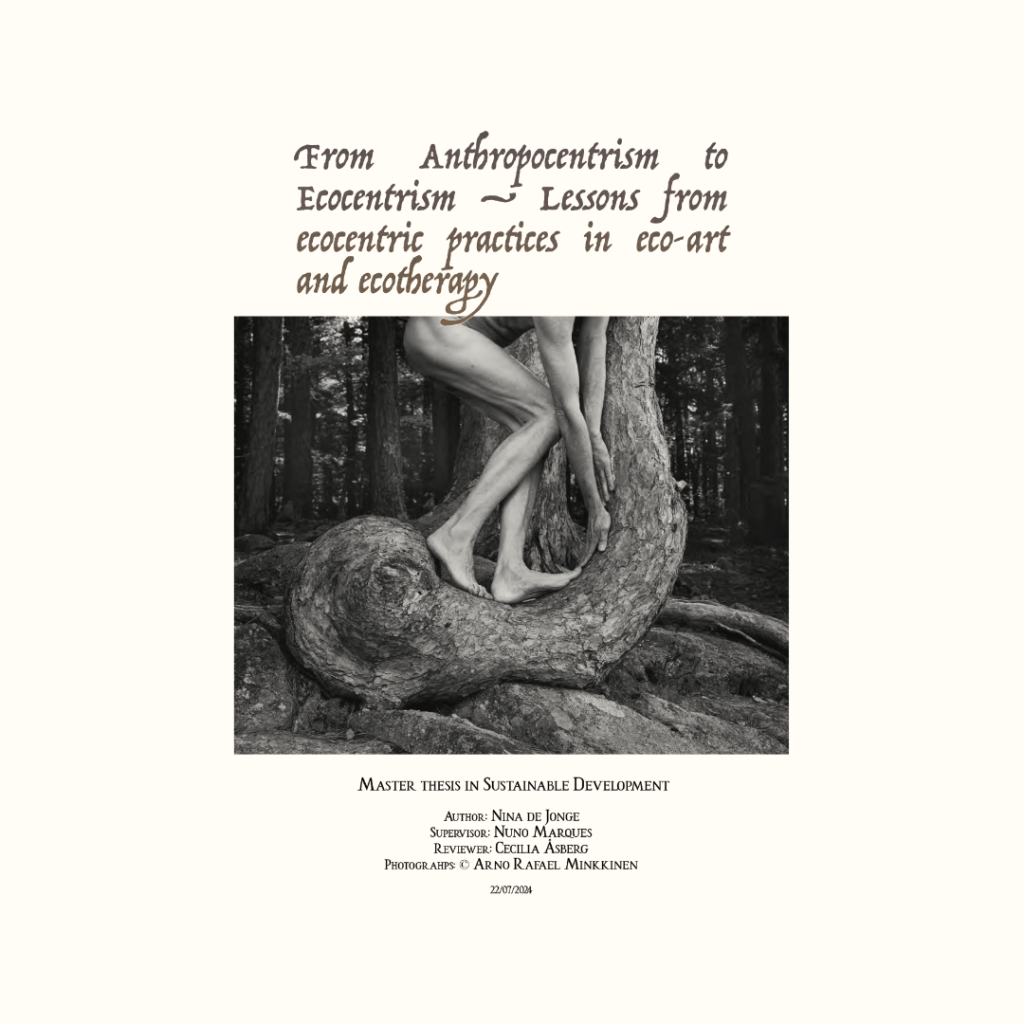
Here you can find the summary of (and link to) my published master thesis for Sustainable Development featuring the art of Arno Rafael Minkkinen.
Summary
This thesis researches main values and perspectives of ecocentrism, which is a nature-centred worldview that sees humans as part of—and deeply interconnected with—nature. Interviews with eco-artists and ecotherapy facilitators about their beliefs and practices offer examples of how they can promote ecocentric perspectives about the relation between humans, other beings and the planet. It starts with an overview of anthropocentrism, which is a human-centred perspective of humans and nature that sees them as separate, and believes humans to have more intrinsic value than nature and other beings. The more-than-human world is seen as resource capital for human use, enabling harmful practices like ecocide and over-extraction. Beliefs that form the roots of this rift are a perceived Western human superiority and power over human and non-human beings that are seen as inferior; and a worldly understanding based on simplification, separation and dualisms. Historically, this perceived superiority became symptomatic in harmful practices like colonisation and slavery. In modern days, neocolonialist practices can still be identified to exist in insidious ways that are deeply ingrained in societal systems, where Eurocentric ways of being are imposed onto other cultures and the more-than-human world, keeping capital driven extractivist practices alive.
The thesis then moves on to explore ecocentric perspectives and nature-centred values that stress equal intrinsic value of humans and other beings. Six main ecocentric themes are identified: humans are nature; the importance of pluriversality; presence and connection; cyclical change and dynamic transformation; co-creation and autonomy; and life as a subjective experience that values other ways of knowing. These ecocentric perspectives are illuminated and discussed through interviews with eco-artists and ecotherapy facilitators. Besides interviews and conversations with ecocentric practitioners, a complementary research method has been observatory participation, which both deepens and colours the findings of this research. Activities range from sonic meditations, playful activities, sensory nature treasure hunts, non-verbal conversations with the more-than-human world, various somatic exercises, the telling of myths, nature art, outdoor learning, and more immersive activities that encourage significant amounts of time spent in natural areas.
To conclude this thesis, an argument is made for the importance of personal and subjectively felt experiences that can steer humans towards shaping their own lived understanding of their relation to planet Earth. In moving away from a monistic worldview in a biodiverse world it is important to create space to honour and work with the many ways of learning, knowing, and living on planet Earth. There is no one right way to live well and be sustainable. Diverse ecotherapy and eco-art practices offer examples of how nature connection can be established in relatively simple ways, yet cause a profound shift in worldly perception, which is essential in acknowledging how human beings are dependent on a healthy, biodiverse natural environment.
Keywords: Sustainable Development, Ecocentrism, Ecotherapy, Eco-art, Worldview, Environmental Humanities
About the Art
A special thanks to Arno Rafael Minkkinen for his transcendental art that I used in this version of my thesis publication (and also in other blog posts). I was first introduced to his photography during the CEMUS course ‘Perspectives on Climate Change: Ecopsychology, Art & Narratives’. I continue to be stunned by Arno’s work and will keep referring to him where possible. The way he effortlessly reintegrates the human body in natural environments makes it unthinkable that many humans live that perceived rift that has been established between them. His photography playfully honours our being nature.
All works by Minkkinen are self-portraits, free of any digital manipulation. He works alone. Only the viewfinder knows what happened at the moment of exposure.
Cover image: Wellington State Park, New Hampshire, 2008
More on this
-
From Anthropocentrism to Ecocentrism
Here you can find the summary of (and link to) my published master thesis for Sustainable Development featuring the art of Arno Rafael Minkkinen. Summary This thesis researches main values… read more ꩜
-

Chapter 8: Earth, my home and body
This post means to wrap up a journey that started long before my studies in Sustainable Development; and one that will continue to become long after. It has been almost… read more ꩜
-
Chapter 7: Being with Change
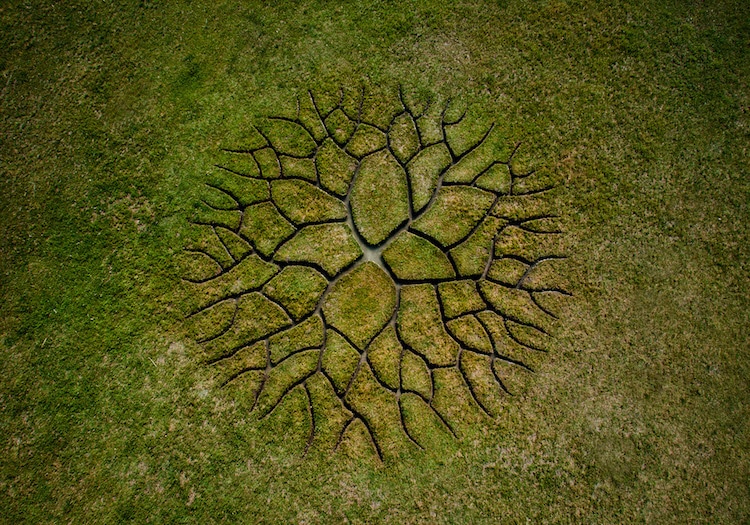
“If you think of what we’re all going to encounter in the next ten, twenty years, in terms of environmental devastation, which we know is gonna happen, it’s very much… read more ꩜
-
Chapter 6: Embodying our relation with Earth
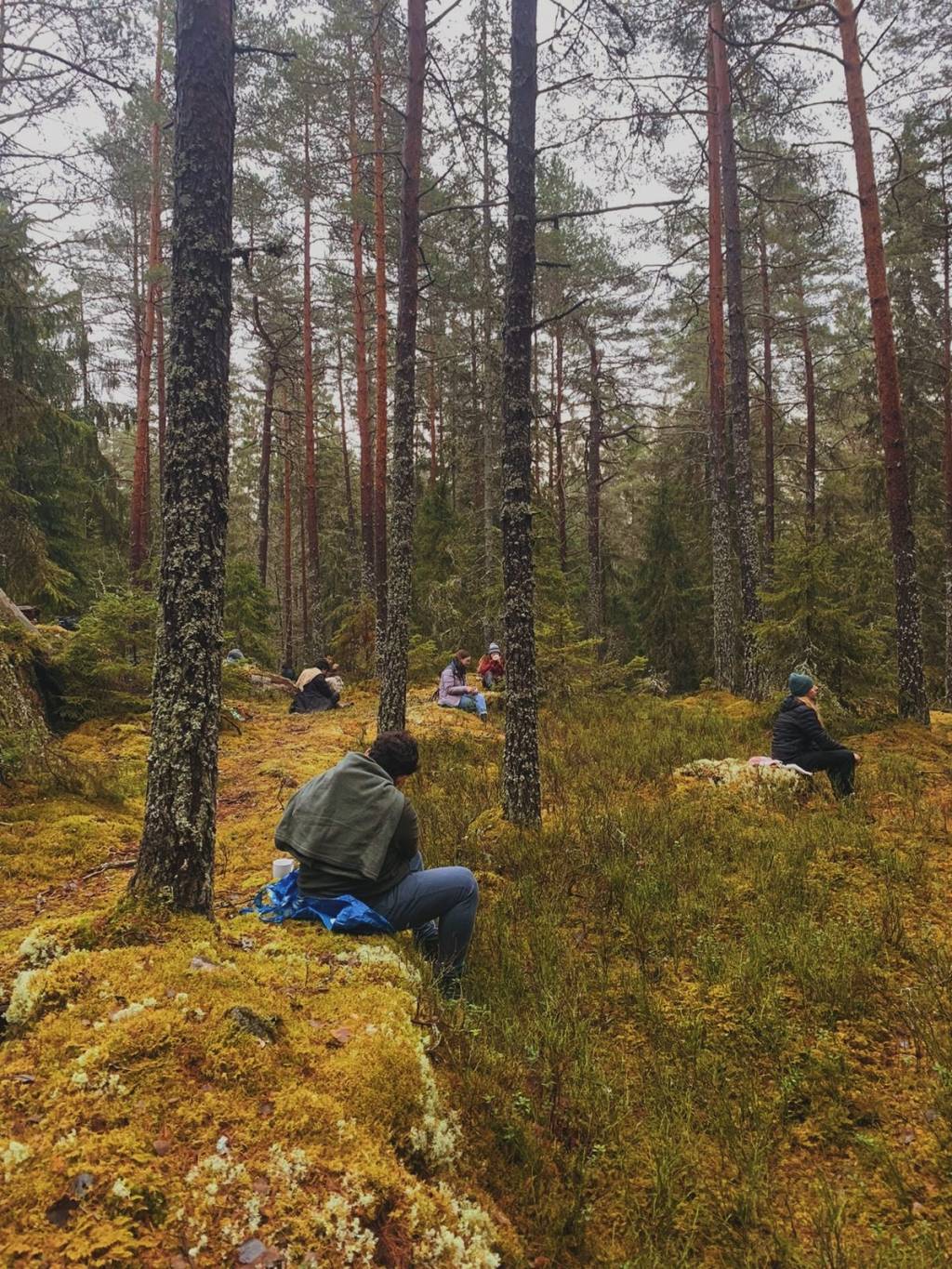
How much do you feel part of Nature? How essential do you think your body and its senses are in connecting to your environment? This article shares practices and insights… read more ꩜
-
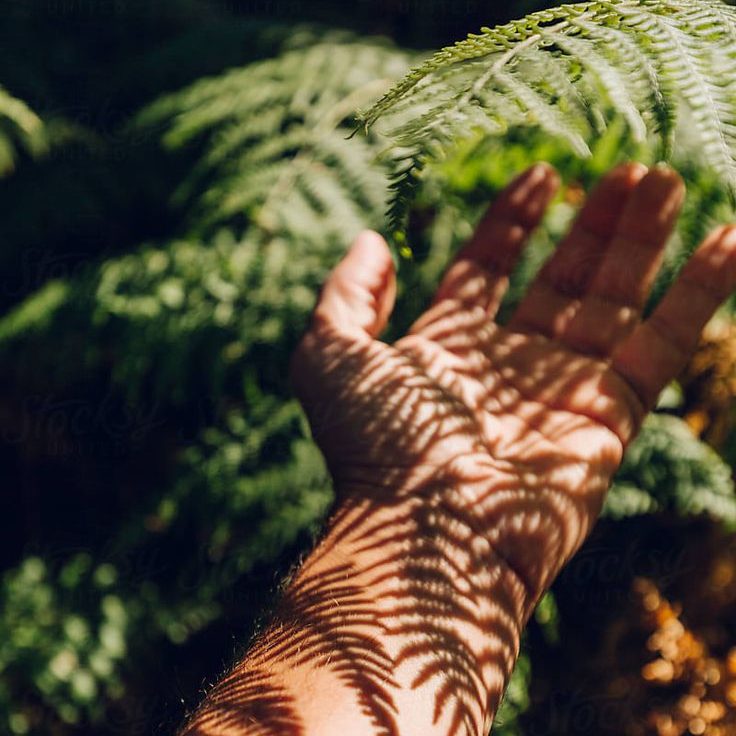
Chapter 5: Eco-Everything
As we see the prefix ‘eco’ being added onto more and more things, I wonder when this will become superfluous in a new ‘normal’. Placing oneself amongst likeminded people, let’s… read more ꩜
-
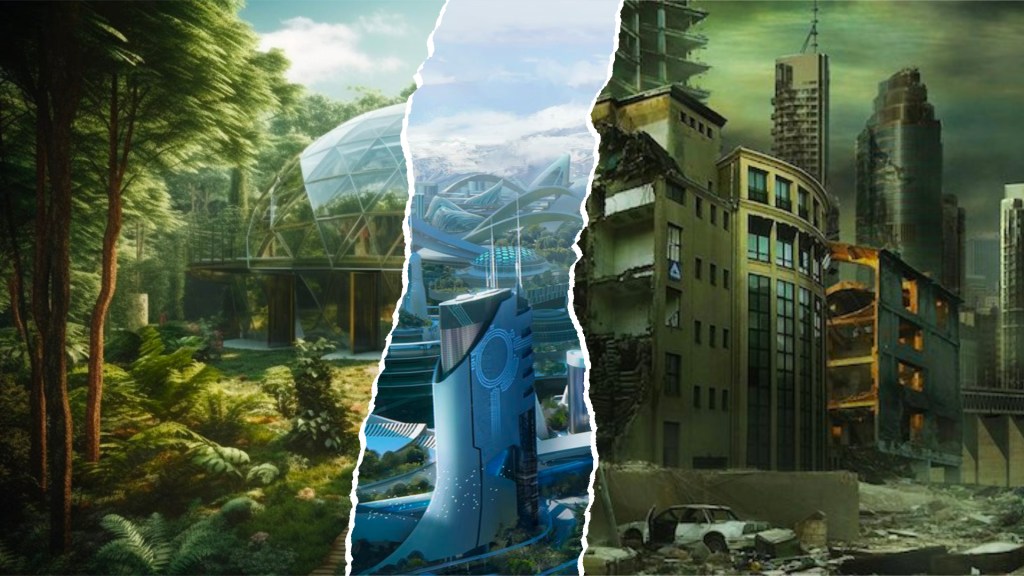
Chapter 4: Destinations
How do you navigate through the world, what is your vehicle, and who drives it? Whether you believe in linear or non-linear timelines, singular or multiple dimensions, there is a… read more ꩜
-
-
Chapter 8: Earth, my home and body
This post means to wrap up a journey that started long before my studies in Sustainable Development; and one that will continue to become long after.
It has been almost a month since I officially got that final ‘pass’ on my master thesis. The belated graduation date had nothing to do with my planning habits. During the last miles I encountered some obstacles, many of which I had somewhat anticipated. These obstacles were shaped by my lack of scholarly experience, but also by my research subject—ecocentric worldviews—being a soft and fluffy one, and my examinator having a hard science background. “Yes, putting my bare feet in the dirt and chanting words under a February full moon formed essential parts of my research experience.” I had to remind myself that soft does not mean weak. Exploring philosopical and value-driven roots of cultural habits is essential if we want to truly right our wrongs. Encouragement and praise from both my supervisor and subject reviewer helped me stand my ground. “Yes, my research does indeed work with the broad but proven assumption that alienation from nature in Western cultures explains unsustainable behaviour.”
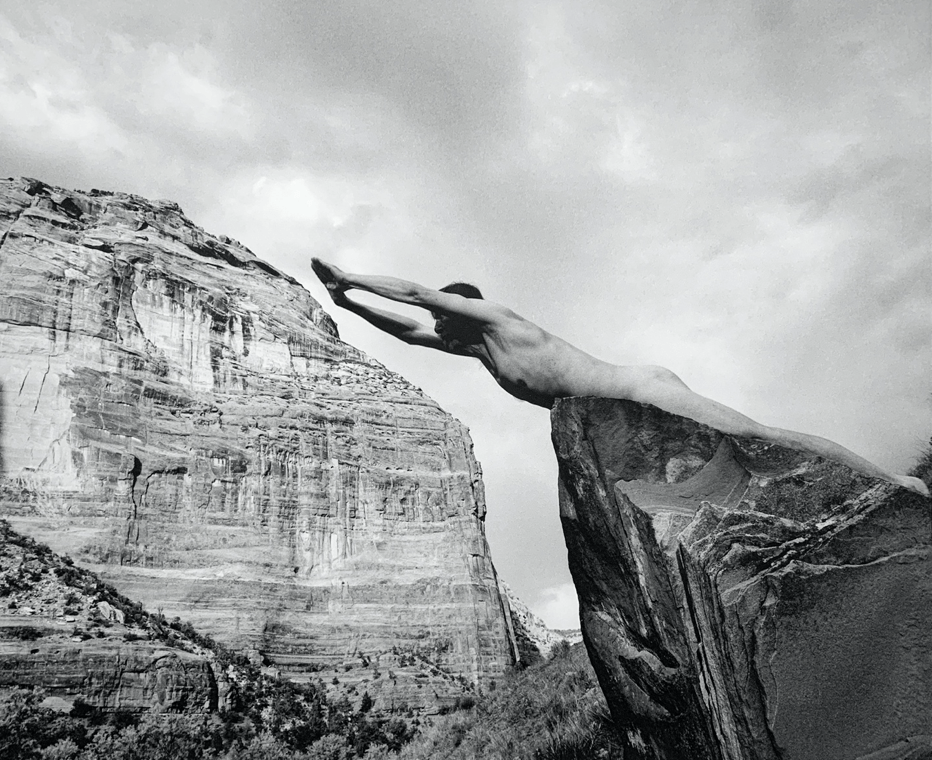
Looking Towards Spider Rock, Canyon de Chelly, Arizona, 1999 by Arno Rafael Minkkinen Once I have finalised editing my own (artsy, esthetically pleasing) version of my thesis I mean to publish it on this platform for anyone who is interested. I have spent too many hours spitting through critiques and evidence on the human-versus-nature rift that exists in Western societies for me to dedicate any more time to problems. Instead, I will take a leap and share with you the main ecocentric lessons that personal conversations with ecocentric practitioners and personally engaging with their work have taught me. They are directly copied from the concluding chapter of my thesis called ‘From Anthropocentrism to Ecocentrism — Lessons from ecocentric practices in eco-art and ecotherapy’.
Ecocentric lessons
Together, six identified ecocentric themes allow for a deeply personal understanding of ecocentrism that is reached through practice and embodiment. In comparison to the principles of deep ecology (Naess & Sessions, 1986), ecopsychology (Roszak, 1992) and Land & Earth Ethics (Leopold, 1989 [1949]; Callicott, 2014), these value-driven themes are relatively open-ended and do not mean to dictate specific actions and beliefs. Instead, they advocate for an understanding that transcends an intellectual definition, and may come to have varying interpretations and expressions for different people. Still, when imagining others to engage in similarly immersive activities and deeply connect with nature, I do not think it far-fetched to assume that notions like intrinsic value and codependency are embedded in all these themes.
The first concrete lesson is more of a remembering of the human species being nature: we are born as nature and will one day return to be part of Earth’s cycles, however we spend our lives and regardless of if we forget our interrelatedness with nature. This is an essential aspect, as there is a clear perceived and practised divide between humans and nature, which allows and enables harmful, unsustainable behaviour. Engaging in nature-oriented activities can benefit physical, emotional and mental well-being and even increase social cohesion. In remembering that we ourselves are nature, we may notice similarities existing in the flows, communications and connectivities that exist outside of ourselves to also exist within us. We may come to feel an enhanced sense of belonging and kinship with the more-than-human world.
Pluriversality allows for multiple truths and beliefs to co-exist alongside each other. As colonisation and the domination of a singular worldview are identified to cause unsustainable practices and relations, the ecocentric lessons as uncovered in this thesis allow for a pluriversal existence in which not one view is deemed as superior. Ideologically speaking, if the entire world was to reach an understanding of all six themes, it would be unthinkable for one person or culture to feel justified in imposing their worldview and moral compass onto others. If people deeply believe that their own worldview is valid, and that others hold similarly valid worldviews that may differ, this automatically de-validates monistic notions.
Connection can be found in a multitude of ways, which can alleviate a sense of isolation, and increase a feeling of being held by our home planet. In establishing relations with external and internal environments as well as multispecies communities, we can develop enhanced awareness of cycles, changes and transformations that occur. For example in changing seasons and climate, but also in our emotions and other internal processes. Ecocentric practices awaken our senses and other innate abilities—like intuition and kinetic awareness—that all allow us to look and perceive better. As Blanc Sceol says: “You see through your body”.
Mouth of the River, Fosters Pond, 2014 by Arno Rafael Minkkinen In recognising that life on Earth is never static, but always changing, transforming, and becoming, this makes linear notions of growth and development simplistic and limiting. Noticing how transformation occurs, we can honour change and take lessons out of potentially difficult situations. This is essentially realising that humans, despite having a major impact on Earth’s systems, do not exist in a vacuum and are not as much in control as ideological colonial thought is based on.
Instead of fixating on collaboration and beneficial symbiosis, which of course are important, the ecocentric theme of co-creation honours how we shape the world through simply partaking in it. It is impossible and unrealistic for our entire more-than-human world to live in harmonious and nurturing relationships. Paired with autonomy, this ecocentric lesson opens up possibilities to take on a more active role in not only our own well-being, but also that of the planet through non-linear reciprocal relationships. Additionally, accepting that strong inclusions lead to strong exclusions (and vice versa) allows a working around that without getting stuck on having everyone and everything on board with one’s beliefs and visions.
And, finally, an ecocentric value that lies at the foundation of my thesis is that life is a subjectively felt and deeply personal experience. Whereas science—paired with our intellect and rational thought—is essential in understanding our human and planetary systems, the appreciation of how our deeply personal perceptions and experiences are always present carries the potential to deepen and enrich our lives in any area. This also values other ways of knowing that transcend the mind and involve entire bodily systems.
Stripped down
With the scholarly part of my research behind me, I can now focus on my own more emotional and embodied understanding of what I have learned. I feel a need to shed terms like ‘ecotherapy’ and ‘ecocentrism’ that have become second nature. I already have a primary nature. One that requires no prefix and I will use to share my ‘eco’ and generally nature-oriented normal. This normal has me walking barefoot on muddy tracks, playing in the river on a rainy day, and napping on sunwarmed rocks.
I have found a home on Earth, which isn’t as self-evident as that sounds. Everyone deserves to have a sense of belonging on this planet. This belief drives me to keep sharing my views, as well as art and nature-based practices, with others. And although I currently find myself in that liminal gap between graduation ceremonies and more practical matters like job applications, I will not let any fear of the unknown or insecurities take hold of me. On a bad day I will simply lay on my back and stare upwards. As long as I can hear the birds sing, I am not alone. As long as I can see the sky, I am free. As long as I can see the sun rise and set, I know love. And heartbreak. As long as I can feel the wind, rain and sun on my skin, I am alive. As long as the Earth beneath my body holds me as though I belong here, I have a home.
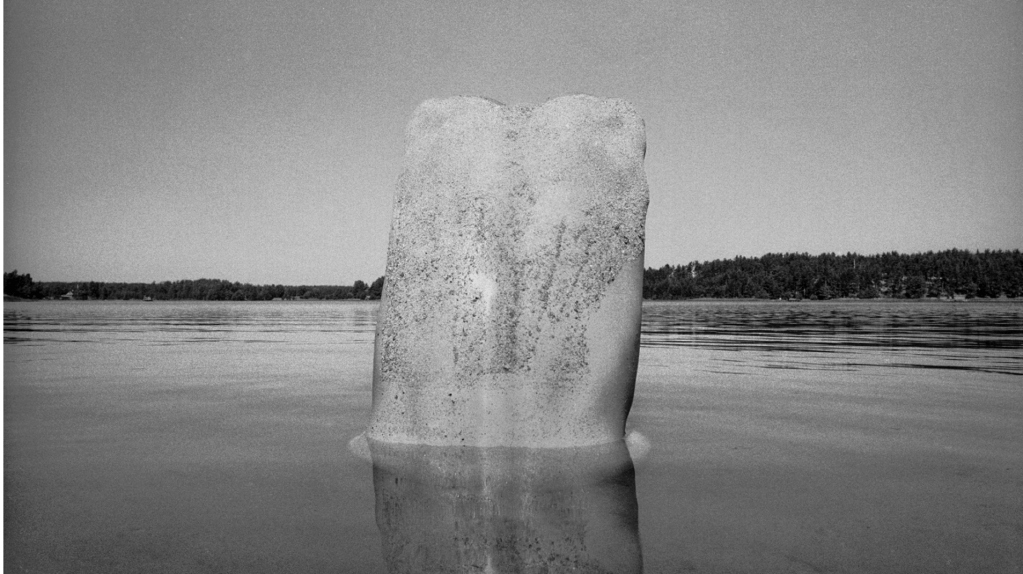
Nauvo, Finland, 1973 by Arno Rafael Minkkinen To finish off this chapter, here is a quote from an essay that Arno Rafael Minkkinen wrote in his 2008 book titled Homework: The Finnish Photographs of Arno Rafael Minkkinen: 1973 to 2008:
“My first photographs in Finland, taken in 1973 in Nauvo, confirmed for me the sanctity of human nudity. The essential bareness that surrounds everything in nature surrounds us as well. In Finland, where nature can be at its most glorious, to be nude and alone in the forest or on some shoreline vista may be the closest one will ever get to the experience of creation. I love digging my toes into the forest floor or navigating the boulders along the lake shores barefoot and bare ass like a monkey in heaven.”
May we all remember that we are nature, not above or below it. May we all remember to strip down and play outside like bare ass monkeys in heaven (the one on Earth).
Reference(s)
Callicott, J. B. (2014). ‘Thinking Like a Planet: The Land Ethic and the Earth Ethic’. New York, 2014; online edn, Oxford Academic, 23 Jan. 2014. [https://doi.org/10.1093/acprof:oso/9780199324880.001.0001]
Leopold, A. (1989). ‘The Land Ethic’. A Sand County Almanac, pp. 201 – 227. Oxford, UK: Oxford University Press Commemorative Edition, 1989 [1949].
Naess, A., Sessions, G. (1986). ‘The Basic Principles of Deep Ecology’. The Trumpeter, 3(4). [https://trumpeter.athabascau.ca/index.php/trumpet/article/view/579]
Roszak, T. (1992). ‘The Voice of the Earth’. First Touchstone Edition, Simon & Schuster, 1993.
More Chapters
-
From Anthropocentrism to Ecocentrism
Here you can find the summary of (and link to) my published master thesis for Sustainable Development featuring the art of Arno Rafael Minkkinen. Summary This thesis researches main values… read more ꩜
-
Chapter 8: Earth, my home and body
This post means to wrap up a journey that started long before my studies in Sustainable Development; and one that will continue to become long after. It has been almost… read more ꩜
-
Chapter 7: Being with Change
“If you think of what we’re all going to encounter in the next ten, twenty years, in terms of environmental devastation, which we know is gonna happen, it’s very much… read more ꩜
-
Chapter 6: Embodying our relation with Earth
How much do you feel part of Nature? How essential do you think your body and its senses are in connecting to your environment? This article shares practices and insights… read more ꩜
-
Chapter 5: Eco-Everything
As we see the prefix ‘eco’ being added onto more and more things, I wonder when this will become superfluous in a new ‘normal’. Placing oneself amongst likeminded people, let’s… read more ꩜
-
Chapter 4: Destinations
How do you navigate through the world, what is your vehicle, and who drives it? Whether you believe in linear or non-linear timelines, singular or multiple dimensions, there is a… read more ꩜
-
-
Chapter 7: Being with Change
“If you think of what we’re all going to encounter in the next ten, twenty years, in terms of environmental devastation, which we know is gonna happen, it’s very much a kind of moving towards accepting and being—how to be with that, rather than any kind of tuning out.” (Blanc Sceol)
At the start of my research into ecocentrism I felt like I was about to discover a whole new world. One that knows how to live interconnectedly and biodiverse, away from monoculturistic ways of existing and ‘being well’ in a world built on separations. What was I hoping to find out? Oh, just the best way to live as one with nature! But does that mean the same to everyone? Is that perhaps a synonymous idea to popular notions of how to ‘be well’? And where does that leave us when things aren’t well?

Kallavesi Midnight Kuopio, Finland, 1991 by Arno Rafael Minkkinen A romantic notion
I was excitedly planning my excursions abroad to attend activities immersed in nature and interview people that had found their own niche in the ecocentric field. The idea was romantic, but I also had my doubts whether it was a world too separate from ‘reality’—being a standard day to day existence in modern Western society. After my second week of travelling through and away from the city to venture to nature spaces, both large and small, I realised that my research expanded far beyond these timed excursions. Sitting in a noisy, smelly, over-peopled bus, I sat there, all my senses heightened by a sonic meditation, realising how disgustingly connected I felt to everything and everyone around me sharing a late night bus ride through London. Our combined breath was dripping off the cold windows: air and water expelled through mouths and pores. How naive to think that my own way of being in the world—every part of it!—wouldn’t fundamentally change. I had, essentially, made an experiment out of myself.
Interviewing people and placing myself in various situations as both observer and participant (are we ever not participating?) has righted my romanticised view. My search is now dedicated to showing how other ways of perceiving and sense-making are not limited to nature retreats and artists, and that connection can be found anywhere. Which is already proving extremely difficult. Partially because this journey is a sensuous and experiential one, often non-verbal, whereas for my academic research I am limited to written verbal language. One of the main things I have learned these past months is how much of a difference we all make in the world, and of the world, and that together these very subjective experiences weave an interconnected reality that perhaps knows no perfectly objective truth we should all strive for. Promising is that beyond the fear and pain that environmental destruction will brings us we can learn to accept our fast-changing realities, with all its discomforts and beauty, and perhaps make the most of it.
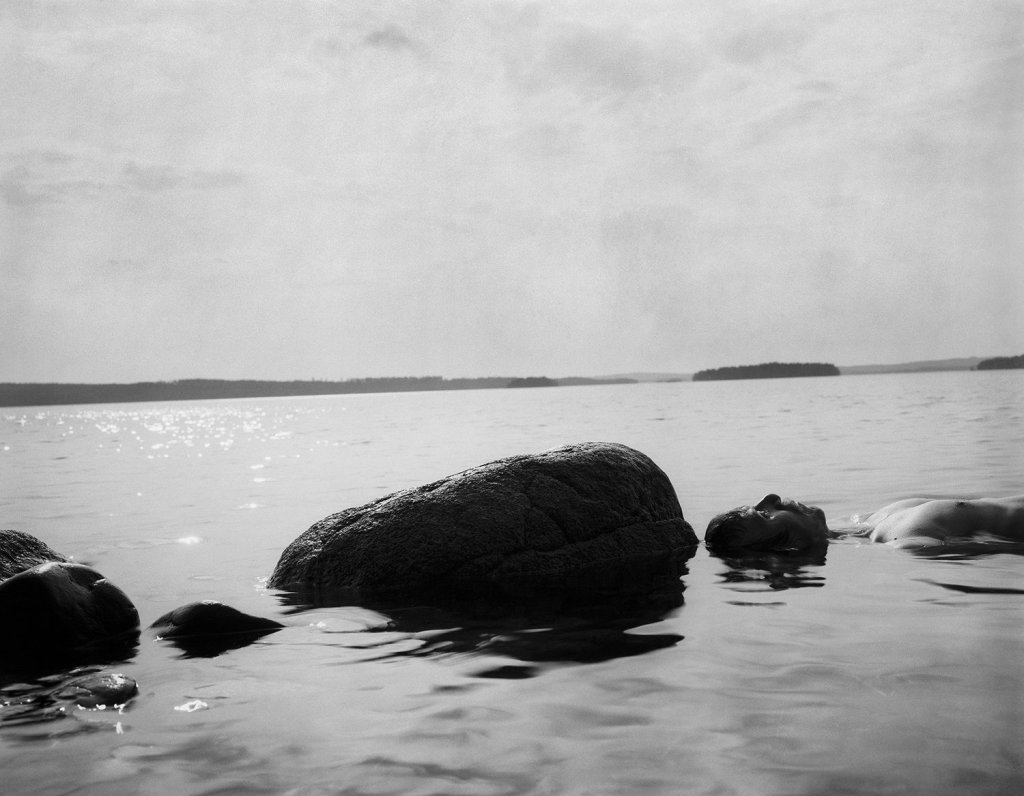
Asikkala, Finland, 1992 by Arno Rafael Minkkinen Connection
A main theme that is repeatedly coming up is connection, defined and felt in a multitude of ways. Ecotherapy facilitators and artists I meet are combining forms of inner gazing with connecting to their surroundings. If you are comfortable with abstractions, I have been calling this an ’inside out/outside in’ approach, whereas both directions may have you end up in the same spot eventually. In holistic terms this is perhaps the manifestation of everything being connected, where we are and shape our environment as much as it shapes us. Let’s call this cosmic connection.
Connection to the environment is, of course, an essential aspect. Whatever locality is chosen for an ecotherapy or eco-art event, time is usually dedicated to ground and tune in to the surroundings with help of our bodies and senses. Sounds, smells, sights and textures that are present play an important role in shaping activities and experiences on the spot. And this is a reciprocal thing. Where we are perceiving our surroundings, our surroundings are similarly perceiving us being temporarily part of their ecosystem.
Another form is how connected we feel with our emotions, or internal world, singled out. Participants in ecotherapy groups have shared to be grappling with heavy themes, like ageing and death. It was incredibly powerful to see that without intellectually picking apart their brains, people were able to express and process complex emotions. The telling of old myths and stories offered lessons that were subjectively interpreted and applied to their personal situation. Searching for natural elements that for people symbolised similar themes could help place their problems in perspective to the broader scheme of life, and recognise that they are not really alone, but always held by nature.
There is a deepened sense of connection between everyone present as well. Sharing complete openness without expectations can be an allowing or even healing experience. Learning to sit with your feelings, however they come, is something not many people are good at. We tend to find it difficult to share emotions like grief, fear or guilt, and if we could, we would magic them away without inquiring into what they may be able to tell us. There is resilience to be built when we learn to allow ourselves to feel and share both uplifting and difficult emotions, which is important for both mental health and social connection.
And then, in all this, there also exists a strong connection to the present. Which is where all healing happens. Mindfulness and conscious activities anchor us not only to our surroundings, but also to the present moment. Again, the breath and senses play a huge part in this. It’s only our mind that can live in a time outside of the present moment, busying itself with past and prospective events. Tuning into other parts of ourselves allows the mind some rest, and trains it to become a guiding servant instead of our main operating chamber. There is much in life that beckons to be sensed and witnessed.
World Tree eco art by Krisztián Balogh Change
“The only constant in life is change”—whether it was Greek philosopher Heraclitus that first said this or not, this cosmic law is omnipresent. For me, this has grown to become a comforting notion at best, and a bittersweet medicine otherwise. I suppose it really isn’t any use having strong sentiments on the matter, but then again, such a rationalisation has never stopped feelings from being felt. Although the seasons still change, our world is a fast-changing one, and learning to move and truly be with that change is perhaps the most important thing we can do. The following quote from an interview with artist duo Blanc Sceol about their deep listening practices is spot on:
“There is a freedom of not just throwing it all in, like “oh, we’re all doomed and this is going down”. Actually, there’s more for us, much more we can experience, much more we can do, much more we can understand. […] We just need an attempt. An attempt to grasp. Which is why we call it practice, I suppose. Because each time we’re just practising, just try to get a bit closer to something.”
And with any change comes not just newness, but also discomfort, and sometimes unexpected beauty. Anna Tsing’s story of The Mushroom At The End Of The World remains one of my favourite to explain the possibilities this brings. Protagonist of the story is the prized matsutake mushroom that only fruits at land disturbed by human activity. It is an example of life always continuing, and humans—despite having major impact on Earth—not existing in a vacuum. With our and other species’ survival becoming increasingly precarious, we need to accept the pace of change as well as the fact that we are not, and never were, in control. This is a quote from Tsing’s book:
“Precarity is the condition of being vulnerable to others. Unpredictable encounters transform us; we are not in control, even of ourselves. Unable to rely on a stable structure of community, we are thrown into shifting assemblages, which remake us as well as our others. We can’t rely on the status quo; everything is in flux, including our ability to survive. Thinking through precarity changes social analysis. A precarious world is a world without teleology. Indeterminacy, the unplanned nature of time, is frightening, but thinking through precarity makes it evident that indeterminacy also makes life possible.”
In combining mindfulness practice with nature connection, ecotherapy can help us anchor in the present moment and notice however the world expresses itself here and now. Besides death and destruction, signs of new life and transformation can be found anywhere, sometimes we just need to learn to look better. Disguised under many names, ecocentric practices are teaching me a new mode of existing—or ‘being’ if you will. Being with and being together. Being in and with myself. Being in nature, and being nature. Because nature is everywhere, and perhaps we were never separate.
Artist duo Blanc Sceol
More Chapters
-
From Anthropocentrism to Ecocentrism
Here you can find the summary of (and link to) my published master thesis for Sustainable Development featuring the art of Arno Rafael Minkkinen. Summary This thesis researches main values… read more ꩜
-
Chapter 8: Earth, my home and body
This post means to wrap up a journey that started long before my studies in Sustainable Development; and one that will continue to become long after. It has been almost… read more ꩜
-
Chapter 7: Being with Change
“If you think of what we’re all going to encounter in the next ten, twenty years, in terms of environmental devastation, which we know is gonna happen, it’s very much… read more ꩜
-
Chapter 6: Embodying our relation with Earth
How much do you feel part of Nature? How essential do you think your body and its senses are in connecting to your environment? This article shares practices and insights… read more ꩜
-
Chapter 5: Eco-Everything
As we see the prefix ‘eco’ being added onto more and more things, I wonder when this will become superfluous in a new ‘normal’. Placing oneself amongst likeminded people, let’s… read more ꩜
-
Chapter 4: Destinations
How do you navigate through the world, what is your vehicle, and who drives it? Whether you believe in linear or non-linear timelines, singular or multiple dimensions, there is a… read more ꩜
-
-
Chapter 6: Embodying our relation with Earth
How much do you feel part of Nature? How essential do you think your body and its senses are in connecting to your environment? This article shares practices and insights from an ecocentrism workshop.
Before writing what I wish to write about, it is relevant to share that I am currently in my second year of the master in sustainable development at Uppsala University, from which I hope to graduate coming summer. Last year, and the first four chapters written on this blog, were part of me diving deeper into the roots of our human and planetary health crises, and finding solutions that I believe in. And I am slowly finding my own voice and truth. Ecocentrism plays a huge role in this, as do thinking and writing. So. Much. Writing!
A human-centred or anthropocentric worldview plays no small part in the unsustainability of our modern habits. Before learning about concepts like ‘worldview’ I never deeply questioned the beliefs we have as a society, let alone knowing what alternatives there are. An alternative that is still very niche but slowly sees a rise of subscribers and practitioners is ecocentrism. This is a worldview that sees us, humans, as part of Nature and larger ecosystems. Subsequently, this means that our societal systems and industries exist within an overarching ecosystem. To me this seems logical, but it is far from widely recognised as we still treat ‘natural resources’ that fuel our lives as if they are self-evident and infite, without much (if any) thought about ecosystems and communities harmed during cultivation and extraction processes — let alone future generations that will have to do without such resources and cope with an increasingly erratic climate.
So, what about ecocentrism? A nice concept in which hopefully many will find some truth, but how does one reach a deeper level of understanding and get beyond a superficial or intellectual knowing? The short answer is that to change our beliefs we need different experiences, different thought patterns, and different consumption patterns, including media we consume or narratives we subscribe to. We need to re-learn how to be fully present in our living environment, whether these are natural or urban. Despite the world ‘learn’ being present, this can be fun and is extremely rewarding! The rest of this post will elaborate on possible practices that may form a tangible base to grasp ecocentrism.
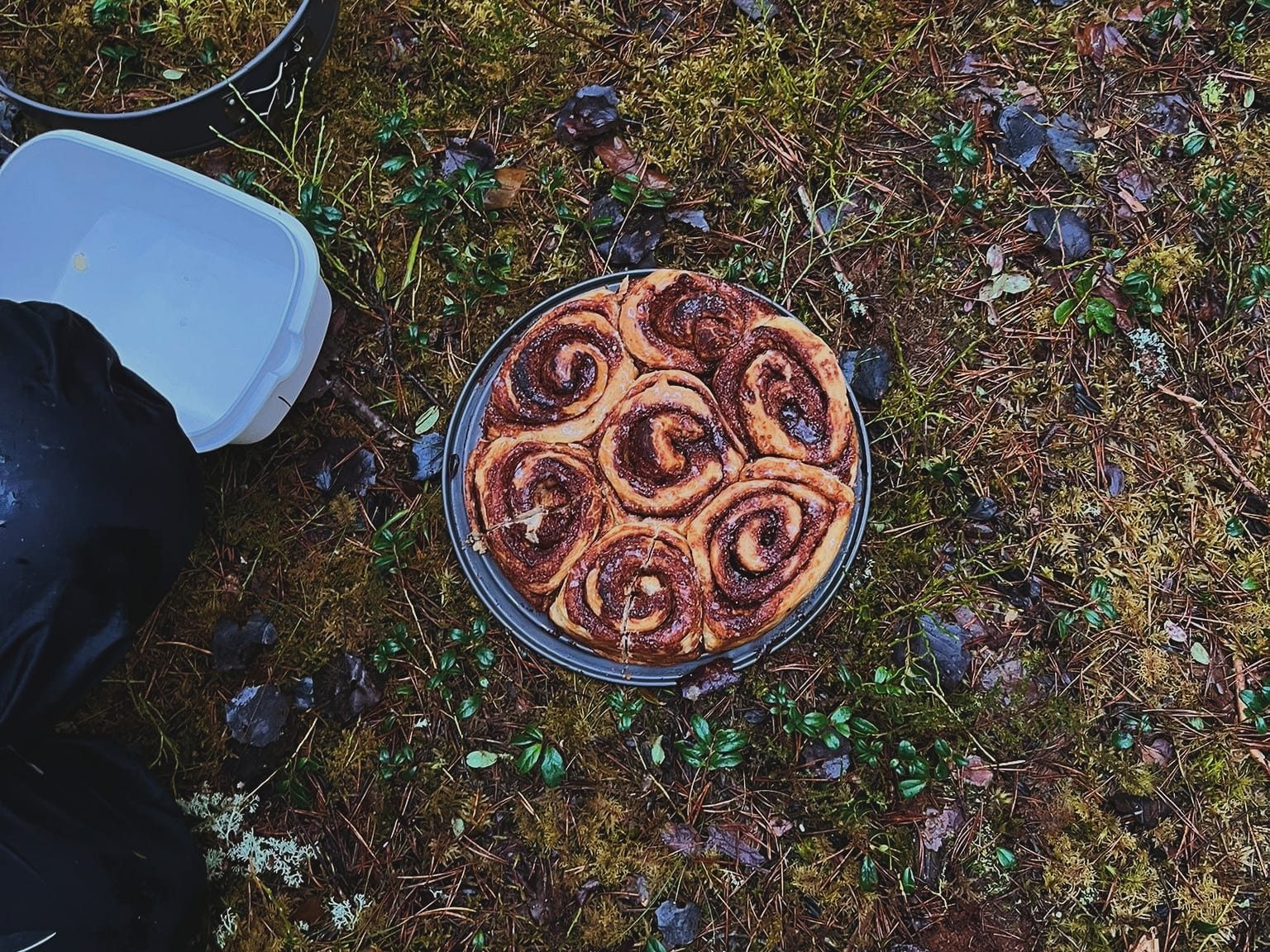
Cinnamon buns in Nature: extra yummy! Connection and Ecosomatics
Where our anthropocentric, reason-driven world thrives on the isolation and clinical categorisation of parts, individuals and disciplines, an ecocentric world is based on interrelations, connection and complexity. Ecocentrism recognises humans to be part of a larger whole, and understands that we, and all our societal systems, can only be as healthy as our environment — and vice versa.
Movement artist and scholar Raffaele Rufo researches how somatic art and movement practices can help us “regain ecological futures by challenging the supremacy of mind over body and the dominance of humans over other species and living systems” (Rufo, 2022, p. 2). On that same page he also phrases the following:
“We are part of the earth, not separate from it. […] To change our worldview, we need to change the way we perceive the world. And to change our perceptions we need to change the way we think about the world. So where do we start? Critical embodied practices can offer us the gateways needed for experiencing the continuum between human-and-natural worlds by reinhabiting our bodies as ecologies nested within larger (and smaller) more-than-human ecologies.”
Somatic practices can help us connect with our surroundings and embody our relation and relatedness with the natural world. Intuitive movement is one of these, as is mindful breathing, or consciously engaging our senses to pick up on the (mainly) non-verbal and non-visible language of Nature and her beings.
Practising embodiment
For a course this semester, me and three classmates hosted workshops that were meant to offer participants an introduction to ecocentrism. One of these workshops was focussed on the embodiment of the relation we harbour with our home planet. However small-scale this workshop was, participant reflections before and after the workshop offered evidence to how certain activities can help us tune into our bodies and the world around us. A lot of research was part of creating a format that compiled several practices that we deemed useful and, not unimportantly, fun to do in a forest in cold Sweden.
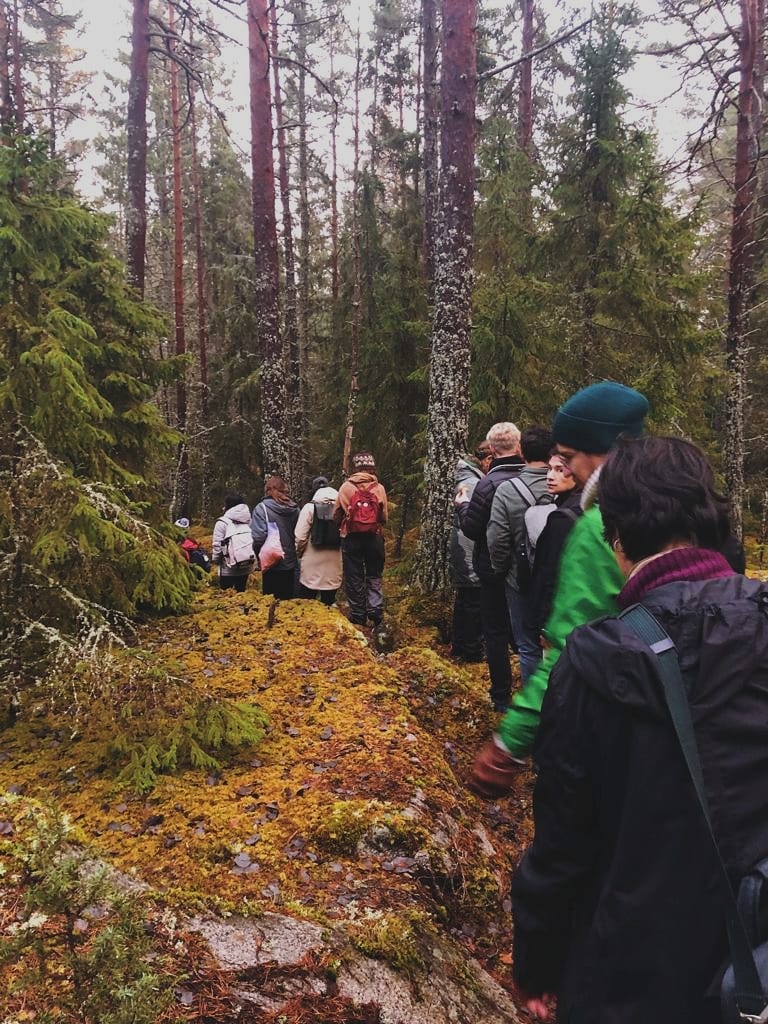
A silent walk into the forest where our workshop was held After assembling, we (sixteen students of varying backgrounds) had a fifteen-minute silent walk into the forest. For some this was uneasy at the start, especially for those who thought that ‘silent’ meant ‘anti-social’. We acknowledged passerbys with a smile or nod, but were otherwise not talking to one another which enabled us to quiet our over-active minds and tune into our surroundings.
Arriving at the forest spot, we had two activities planned: a playful one and a more meditative one. In-between we had some movement and mindful breathing exercises, to center in our bodies, stay present, and stay warm. For the playful exercise we aimed to lure people out of conventional thinking an relating to their environment, and asked for them to ‘walk in the skin’ of another animal or insect. We then had people search the environment for treasures, like something soft, something sharp, something beautiful, something delicious and something precious. This already sparked some conversation: do non-humans perceive things to be beautiful? If so, how? We concluded that a concept like ‘beautiful’ may be more than just esthetically and visually oriented.
The second exercise was a sensory meditation. Every participant was invited to move around, and, with a cup of warm pine needle tea, find a spot to settle down into comfortable silence. We then guided people into their senses one by one — their sense of taste, touch, sound, smell and sight. We allowed a few minute of stillness to allow people to settle in. After this we introduced gentle guidance and questions to help people explore their respective senses and their environment even more.
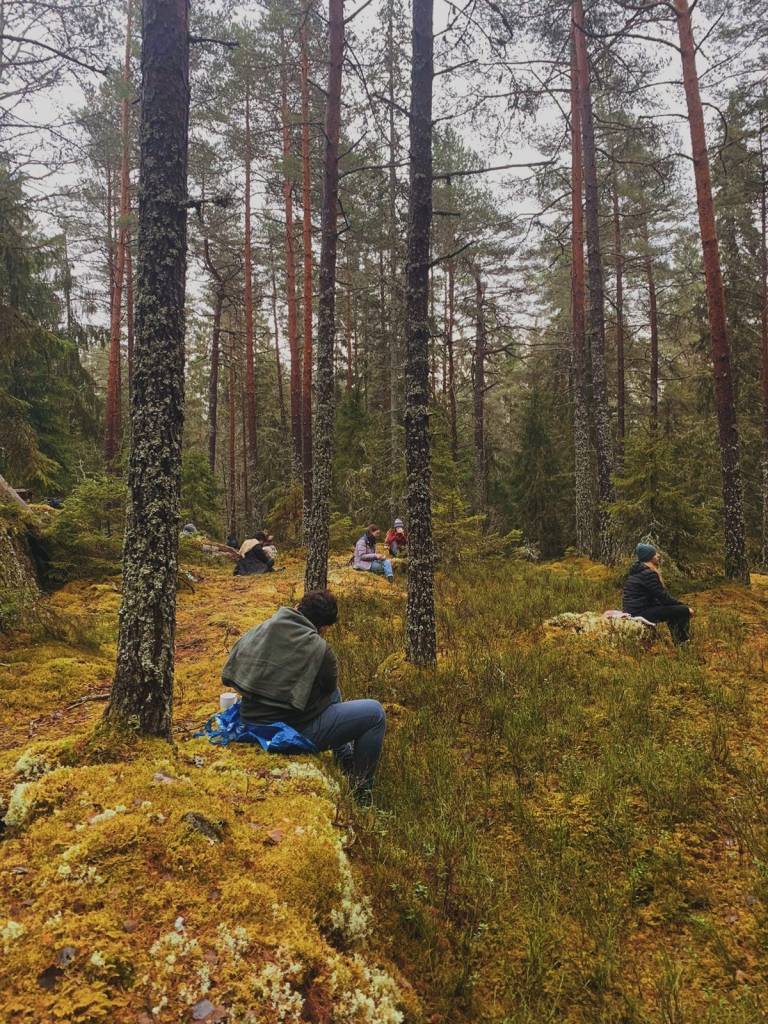
Lovely humans connecting to Nature Further exploration
The workshop was a valuable experience because of people’s insights and a general togetherness even when doing something meditative. It made me sure of wanting to continue down this overgrown and muddy track, and of wanting to work together in a team that has their noses pointed in the same direction.
Personally I have engaged in embodied and somatic practices for a while, and I only get more and more reason to keep at it. Apart from just pulling me out of my head, which always tries but not always succees to make sense of the world, it taught me a new way of sense-making, largely through using my senses (pun intended). Experiencing how much it can serve in connecting to others, whether human or non-human, is something that makes my heart overflow.
Further time, energy, blog-space, and even my thesis (!) will be dedicated to more of this. How far can I stretch the boundaries of the self? How much can I come to feel to be (in) my environment?
The world is calling to us — if only we all spoke the same language
Refence(s)
Rufo, Raffaele. “Somatic Arts and Liveable Futures: (Re-) Embodying Ecological Connections.” Part of the project ‘Natureculture Pedagogies’, 2022. DOI: 10.5281/zenodo.7629756
More Chapters
-
From Anthropocentrism to Ecocentrism
Here you can find the summary of (and link to) my published master thesis for Sustainable Development featuring the art of Arno Rafael Minkkinen. Summary This thesis researches main values… read more ꩜
-
Chapter 8: Earth, my home and body
This post means to wrap up a journey that started long before my studies in Sustainable Development; and one that will continue to become long after. It has been almost… read more ꩜
-
Chapter 7: Being with Change
“If you think of what we’re all going to encounter in the next ten, twenty years, in terms of environmental devastation, which we know is gonna happen, it’s very much… read more ꩜
-
Chapter 6: Embodying our relation with Earth
How much do you feel part of Nature? How essential do you think your body and its senses are in connecting to your environment? This article shares practices and insights… read more ꩜
-
Chapter 5: Eco-Everything
As we see the prefix ‘eco’ being added onto more and more things, I wonder when this will become superfluous in a new ‘normal’. Placing oneself amongst likeminded people, let’s… read more ꩜
-
Chapter 4: Destinations
How do you navigate through the world, what is your vehicle, and who drives it? Whether you believe in linear or non-linear timelines, singular or multiple dimensions, there is a… read more ꩜
-

 Sacred Beans