
We take a look at how language and stories shape the way we relate to the world, starting from a young age and throughout our entire life.
Narratives shape our daily lives and give them meaning. Meaning, as in knowing the value or purpose of our human existence. Meaning that will guide us through that human experience and bring spiritual, soul deep satisfaction. Meaning in the form of stories, religion or identity. Such stories have always played a major part in human lives: they are what hold societies together! If you allow me a nihilistic observation that will help us explore what feels true or false: such stories have largely been substituted by a shared understanding that we are nothing but cogs running a system; that this system operates fairly and unbiased; and that the accumulation of monetary wealth is a goal to subscribe to — for life.
The classes I have taken in ecopsychology (and art, and narratives) help uncover the root of many of our crises. They address the inanimate worldview we have made second nature. Ecopsychology examines how we position ourselves in relation to our natural environment, and seeks to expand the emotional connection between individuals and nature. This can help people develop more sustainable habits through remedying alienation from nature. It questions the belief that nature exists for our use and possession, and that its value depends solely on whether it offers a ‘service’ or can be turned into a ‘resource’. We speak about the wind, the soil, the trees and even animals as if they are ‘things’ which possess no spirit and are undeserving of the respect we feel entitled to. Yet we also talk of our oceans dying, the death of coral reefs and dead soil. Does this mean we believe our environment to be a live entity after all?
Ecolinguistics
Ecolinguistics, lovechild of language and ecology, is a subject related to ecopsychology and takes part in ‘discourse analysis’. This is a fancy term meaning the analysis of how we communicate with each other: words, terms and concepts we use. But also who created those, what assumptions they are based on, what they exclude, and other factors. Historically, ecolinguistics have focussed a lot on negative impacts language use has in, for example, encouraging ecologically destructive behaviour. There is also a search for new stories and dreams to base society on, this is called positive discourse analysis. New stories, narratives and concepts promote being more rather than having more, well-being rather than growth, and respecting rather than conquering nature (A. Stibbe, 2018). Or, taking it a step further: to love, care for, learn from and live as part of nature.
Here is an excerpt taken from the famous book Braiding Sweetgrass by Robin Wall Kimmerer that shares a different worldview of those most Westerners grow up with:
“In the Western tradition there is a recognized hierarchy of beings, with, of course, the human being on top—the pinnacle of evolution, the darling of Creation—and the plants at the bottom. But in Native ways of knowing, human people are often referred to as “the younger brothers of Creation.” We say that humans have the least experience with how to live and thus the most to learn—we must look to our teachers among the other species for guidance. Their wisdom is apparent in the way that they live. They teach us by example. They’ve been on the earth far longer than we have been, and have had time to figure things out. They live both above and below ground, joining Skyworld to the earth. Plants know how to make food and medicine from light and water, and then they give it away.”
For an art seminar, me and about twenty other students examined artworks and the stories they tell through using different perspectives. Some had a human-centred approach, as most of our mainstream art does. Other artists played with alternating dynamics, where humans and non-humans (animals, vegetation, natural phenomena, but also technology) sometimes appeared as equals, and at other times even blended into one another. We all picked an artwork that spoke to us, and then presented on our emotional engagement and understanding of the piece. It was mind blowing just how different we all perceive things, how someone else’s view can change your whole perception of something, and how we were able to allow each other space to feel touched by entirely different things. Have a look at my encounter with Arno Rafael Minkkinen’s photography, who plays with the ambiguity of our bodily selves.
Creation stories
Creation stories, like those in the bible or Qur’an, tell about the origin of our world, its beings and its people. They are a strong foundation on which society’s norms and values are based. I would like to share another part of Braiding Sweetgrass where Kimmerer compares creation stories. Specifically the Christian story of Eve, and that of Skywoman, an oral tale shared by the Potawatomi, native peoples of Wisconsin. She writes the following:
“Same species, same earth, different stories. Like Creation stories everywhere, cosmologies are a source of identity and orientation to the world. They tell us who we are. We are inevitably shaped by them no matter how distant they may be from our consciousness. One story leads to the generous embrace of the living world, the other to banishment. One woman is our ancestral gardener, a co creator of the good green world that would be the home of her descendants. The other was an exile, just passing through an alien world on a rough road to her real home in heaven. And then they met—the offspring of Skywoman and the children of Eve—and the land around us bears the scars of that meeting, the echoes of our stories.”
In Western countries, and even globally, Christianity has become a dominant religion. I lack grounds (and desire) to make this article a review of religions, but about one thing I am certain: our interpretation of one of the world’s youngest religions has not always inspired us to treat others with unconditional love; judgement is applied about who or what is worthy of our love and protection. At the same time, religion has in recent centuries taken a backseat compared to scientific knowledge in teaching us what we believe is ‘true’ and ‘worthy’. Magic and symbolism no longer awaken a language passed on throughout generations and we only dare to let ourselves be enchanted by imaginative stories as a form of entertainment.
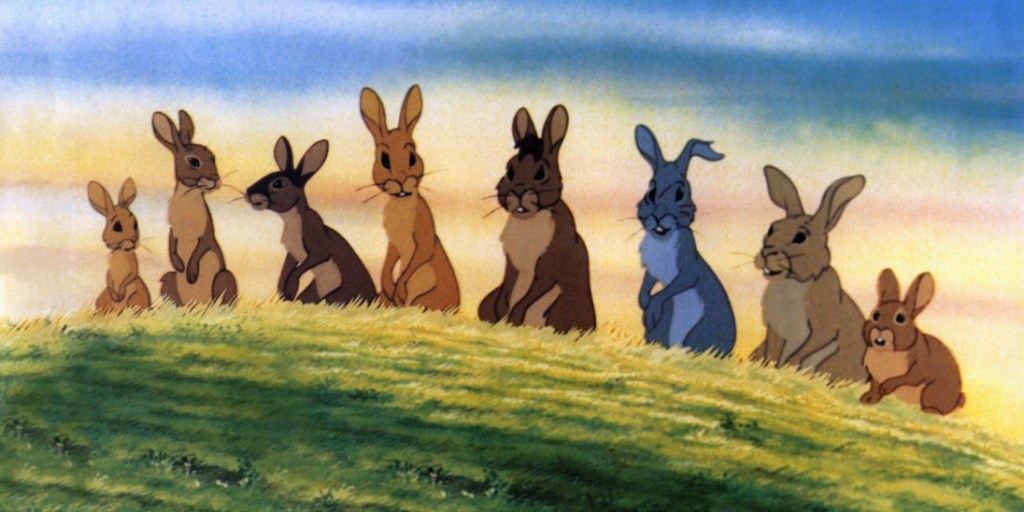
When I think of my childhood, the stories I remember best are the ones told, and later read, before bedtime. Fantasy movies also come to mind, magical stories about all-knowing trees and talking animals. These were my creation stories. They moved me to my core and awakened strong emotions in me. Dauntlessness, empathy, grief, respect the natural sequence of things, but also a love for the more-than-human. Later on, when questions about my ‘purpose on Earth’ began to make frequent appearances, I started to look for answers within that same realm: stories of magic, untamed nature and limitless love.
Creating new stories
We live in extremely changeable times. Everyone feels the effects of the many crises surrounding us, though most of us have to some extent adopted this to become our normal. Moving forward it is important to question what stories we do wish to identify with. Perhaps these are stories of connection, care and compassion. Contrasting or complimentary to the inanimate scientific language we have made our own. Call it a radical romanticising of the mundane, as poets and artists do best. They may be ideological, but do you not think it better to let ourselves be guided by ideologies than nightmares?
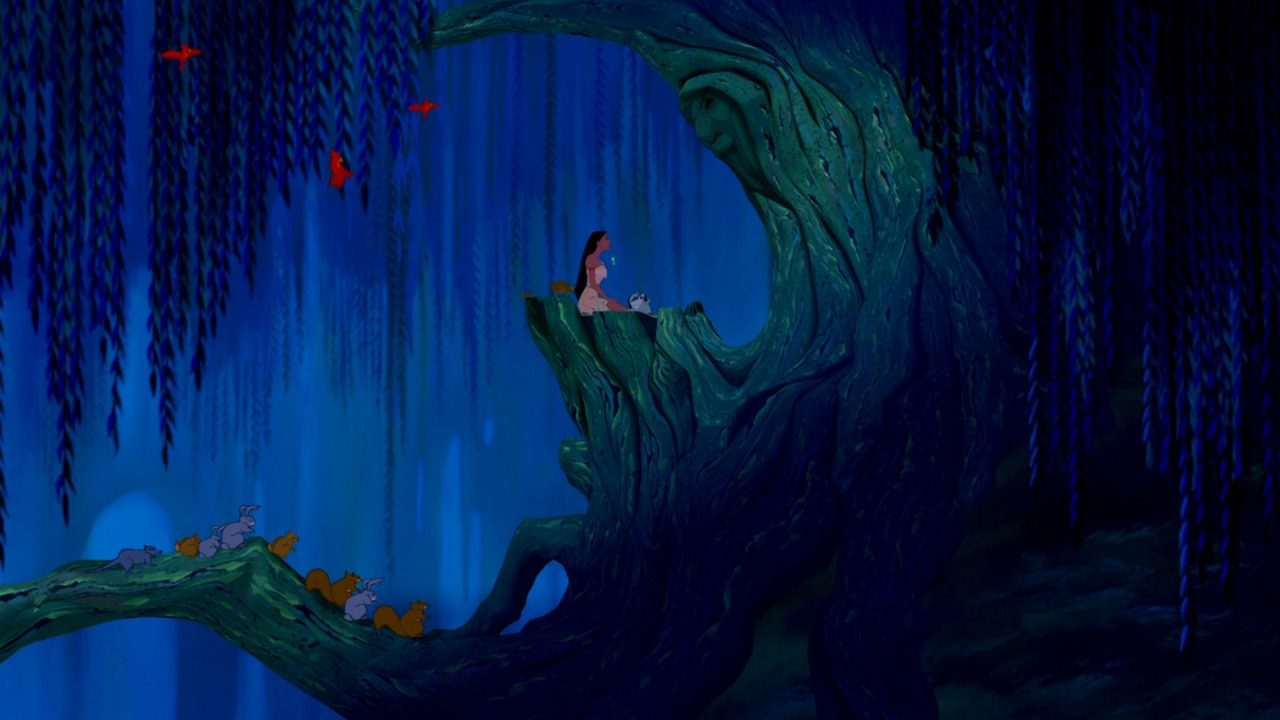
I used to think my imagination was something that could only ever serve myself through offering refuge from reality. Being fortunate enough to have made my hobby and passion my profession, I am now able to use my illustration skills for the benefit of others. But it was only during my studies in sustainable development that I learned how imagination is an important trait when envisioning alternative realities and future pathways. It is what sets humans apart from other species!
We can use imagination and creativity to transform our surroundings for the better. If we subscribe to the core belief we are all born deserving of a healthy life filled with love, and learn to question any story that only speaks to our lesser qualities, we can reclaim agency of our being. Healthy, nurturing and essential values can reflect qualities we all possess but have forgotten about because they are not often spoken to. Learning to view ourselves from a perspective in which we are whole will help us act from love; re-enchantment with our world will help us care for it. We are born on this planet, and together with fellow beings in this more-than-human world, it is our birthright to make home here — and it does not need to involve robbing others from that very same birthright.
Life is not a linear track. It ebbs and flows, sometimes moves too fast, and sometimes not at all. This is a natural rhythm that is not to be overcome but to surrender to: be alive to it all! Even amongst our human species there is so much diversity, which is something to savour and deeply fall in love with.
Mono no aware.
Reference(s)
Stibbe, A. (2017), ‘Positive Discourse Analysis – Rethinking Human Ecological Relationships’, in The Routledge Handbook of Ecolinguistics, Alwin F. Fill Hermine Penz (eds.). London: Routledge, pp. 165–178.
More Chapters
-
Chapter 3: The stories we tell
We take a look at how language and stories shape the way we relate to the world, starting from a young age and throughout our entire life. Narratives shape our… read more ꩜
-
Chapter 2: Fractured
In this post we dive into what it means to have a fragmented perception of ourselves and our surroundings, and trace the cracks to find out how deep these might… read more ꩜
-
Chapter 1: How on Earth did we get here?
An introduction to a new (or rather ancient) perspective on planetary health, and embarking on a joint journey of discovery. We find ourselves on a planet that has many secrets… read more ꩜

 Sacred Beans
Leave a comment