In this post we dive into what it means to have a fragmented perception of ourselves and our surroundings, and trace the cracks to find out how deep these might reach.
When is the moment we know to discard a belief that no longer serves us? Is it a hard boundary to be crossed? Or can the belief be so integral to our everyday existence that it has become our normal, and therefore we don’t question it? Previous years have been a hunt for answers to many questions life brings. And varying as these questions may be, looking past generalising or dismissive answers they seem to all highlight the same issue: an inability to recognise and work with complexity and interconnectedness. Much like an itch that cannot be scratched!
Our well-developed scientific fields have educated specialists that can identify all individual parts of a body or system, but not many that clearly see the woven web between the parts. Maybe they would not be called specialists. As we see a rising need for ‘system thinkers’ and ‘holistic practitioners’ in all fields, it is emphasised how our perfectly structured functions of society do not always function well during times of rapid transformations: they are rigid.
Reason for me to title this blog post ‘fractured’ is that it implies the fragmentation of something otherwise ‘whole’. I see fragmentation everywhere, also in myself, as it is part of the Human experience. It shows in how we perceive our internal world, and all aspects of the Self, which projects outward into our external world. If we would discard the dark and cracked glasses we are wearing, perhaps we could see that in many ways our ‘normal’ serves neither our planet’s or our own well-being.
The Bodymind
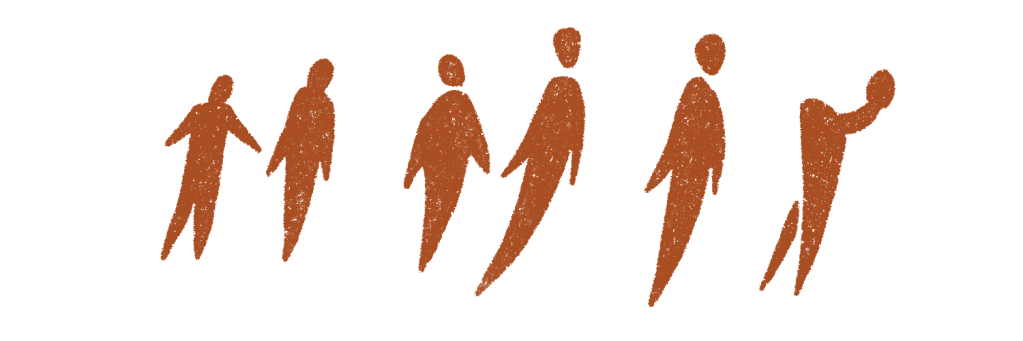
As mentioned in the first chapter of this explorative journey, perhaps the most obvious divide we subject ourselves to is that of ‘body’ and ‘mind’. Both are undeniably part of you. Doctors, researchers and physicians are primarily trained to focus on one or the other, and not much time is spent looking for inconvenient connections: current methods may prove insufficient! Could it be that our measuring, reasoning and knowing cannot account for ‘invisible’ things that are well and truly happening?
Our definition of being ‘of good health’ (originally meaning ‘whole’) is slowly shifting. Not many people are taught to listen to their body and speak its subtle language. We often suppress its whispers, override warnings, and essentially force our body to shout in order to be heard. When suffering from bodily symptoms of sickness we rarely look for a psychological or emotional cause, and vice versa. Our fractured sciences have only recently begun to examine if physical symptoms of disease could be an expression of chronic mental strain, or even suppressed emotions, and find out just how deep these are intertwined.
Below I quoted a part from The Myth of Normal by physician Gabor Maté:
“For me, the process of putting the pieces together began several decades ago when, on a hunch, I went beyond the standard repertoire of dry doctorly questions about symptom presentation and medical history to ask my patients about the larger context for their illnesses: their lives. I am grateful for what these men and women taught me through how they lived and died, suffered and recovered, and through the stories they shared with me. The core of it, which accords entirely with what the science shows, is this: health and illness are not random states in a particular body or body part. They are, in fact, an expression of an entire life lived, one that cannot, in turn, be understood in isolation: it is influenced by—or better yet, it arises from—a web of circumstances, relationships, events, and experiences.”
As modern science is catching up with a knowing as old as civilization, older cultures have never stopped practising the art of healing in a holistic way. Lacking our methods and framework they are not limited by them, and have other ways of knowing. When visiting an Ayurvedic healer they can apply therapies ranging from herbal medicine and specific diets, to meditation, yoga and massage. A Chinese medicine man or woman may work with similar remedies to restore balance. Both treat the person as a whole rather than just their illness.
(Our) Nature
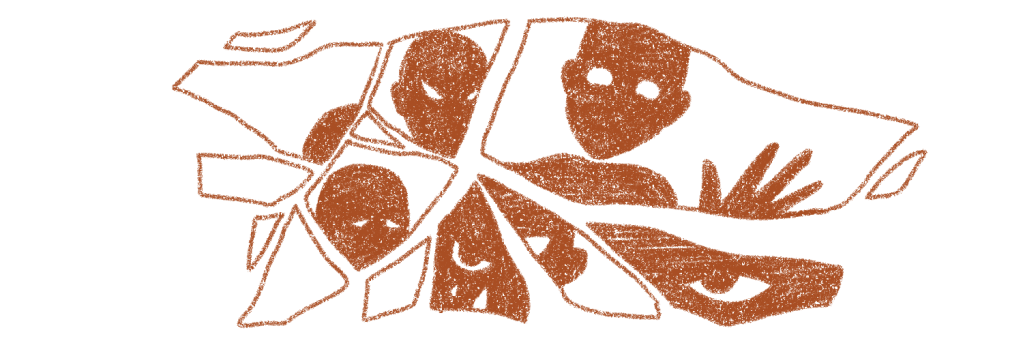
Further tracing the cracks of fragmentation we reach an even deeper level: that of your ego. This is your conscious realm, in which we dominantly believe the ‘self’ exists and where your identity is constructed. Rational society has a clear preference for qualities that will help a person become what is considered to be successful. Because of life’s experiences, some aspects of your personality may have become more prominent than others, whereas you tend to hide the parts of yourself that have caused you pain.
We appear far more complex than most man-made systems and surroundings are designed for. There is little time and space for our more loving, nurturing and vulnerable parts. In a similar way there is often no room at all for emotions that are deemed unpleasant or inappropriate, like fear, sadness, grief, anger or jealousy — so what remains? Instead of suppressing these emotions we would benefit from creating spaces that allow us to appear whole, and learn how to express our deepest fears and desires, so that repressed emotions do not manifest as either a mental or physical illness later in life.
In The Myth of Normal, Gabor Maté coins the theory of tension between the needs for attachment (being cared for and belonging) and authenticity (showing one’s true feelings):
“Although both needs are essential, there is a pecking order: in the first phase of life, attachment unfailingly tops the bill. So when the two come into conflict in a child’s life, the outcome is well-nigh predetermined. If the choice is between “hiding my feelings, even from myself, and getting the basic care I need” and “being myself
and going without,” I’m going to pick that first option every single time. Thus our real selves are leveraged bit by bit in a tragic transaction where we secure our physical or emotional survival by relinquishing who we are and how we feel.”
We come into this world as deeply feeling creatures. The ‘language’ we are born with is that of emotion and intuition. However, as soon as our intellect starts to develop we learn to override those. Is it possible that we have not just become estranged from Nature, but from our own nature as well?
We are our World
When thinking of the ‘self’, we usually assume this ‘self’ ends at our skin. A defined border. But experientially, the line between our ‘self’ and our ‘surroundings’ are much more ambiguous. Our existence is deeply relational. We are bodies and world shaping each other as we live and transform. Everything outside our skin defines us as much as what is kept inside. We like to believe we are self-made, but are much more our surroundings than we may want to admit. These surroundings are shaped by our practices, which are in turn shaped by our values, hopes and dreams. Or, in some cases, our worst fears.
Think for a moment about the qualities that are usually prescribed to ‘human nature’. In our part of the world these tend to be individualistic and self-centred rather than self-less and community-focussed qualities. Again, this is unique to our culture. We have evolved for billions of years to become the Homo sapiens we are today: a species made to connect and belong to a tight community. At the same time our nature is malleable. We are masters at adaptation; at suppressing parts of ourselves to get the care we need, which is what made us thrive and survive. But surviving does not mean living a fulfilling life.
Living through changeable times of anthropogenic climate change and global crises, natural and social sciences start merging into an understanding of what on Earth is happening. Are we hurting ourselves the same way we are hurting our world? What do our dominant beliefs — that Nature is to be controlled and conquered, and that something has to be useful in order to exist — say about how we see ourselves? There is an urgent need to view our human and planetary crises as connected rather than separate failing systems. To paraphrase Maté, it could be concluded that these are all normal functions to be expected from systems that are built on abnormal and unnatural ideologies.
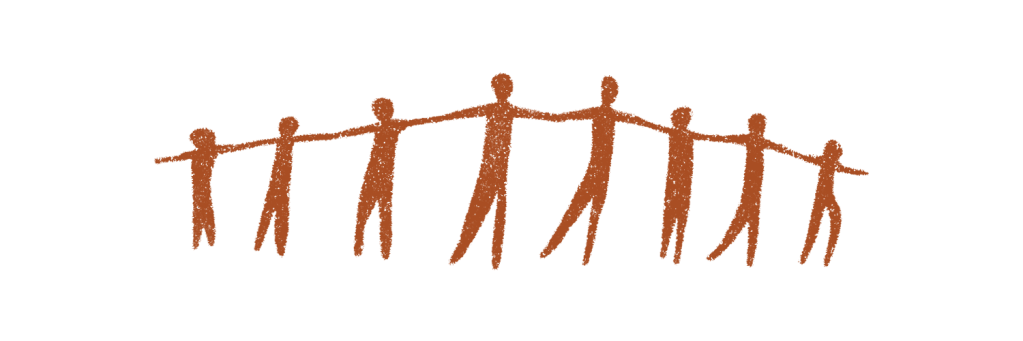
When looking for new truths and solutions to our problems, instead of only looking ahead (more development and growth) I believe we should not disregard where we came from. Older ways of being may still carry truth; old knowledge may have answers to modern problems. Cultures that view themselves as belonging to and of Nature know different ways of living, loving and caring. Historically we have labelled some of these ‘uncivilised’. Turning this around and looking at how we practise ‘civilisation’, it could very well be said that ‘to be civilised’ is to kill and suppress essential parts of ourselves; to cut us off from (our) Nature and to exclaim that, from here on, we are self-made! No longer living with life’s natural flows and cycles we found synthetic cures for isolated ailments, our quality of life is measured by the length of it, and death is our final defeat. This has me wondering how other ways of being may influence my lived and felt experience on Earth.
Kintsugi: The Art of Mending
Everything written above shines a light on the complexity, relationality and interconnectedness of our existence. It illuminates a woven web between seemingly individual bodies, but also poses new questions. How are the internal and external linked? How do we bridge these gaps in practice? A starting point would be to apply a systemic or holistic approach. Dare to question yourself and others from a place of love and curiosity. Keep an open mind. To solve complex issues, system thinkers learn to map out systems with all their parts, hierarchies and interrelations. These are always simplified and reduced versions of reality. A friend came up with a tasty analogy for interdisciplinary practice: collaboration to solve complex issues is much like a potluck dinner party where everyone brings a dish to the table; we all have different specialties, but together we make sure everyone eats!
Essentially we are moving from a fractured view, where we are reduced to (our) parts, to a holistic view in which we can be both whole as parts and simultaneously be part of a larger whole. This transcends the holistic principle and forms the base of newer concepts that overcome the dichotomy, or dualism, between ‘parts’ and ‘wholes’. An example I like is a ‘holon’ of which the following description can be found on Wikipedia:
A holon (Greek: ὅλον, from ὅλος, holos, ‘whole’ and -ον, -on, ‘part’) is something that is simultaneously a whole in and of itself, as well as a part of a larger whole. In other words, holons can be understood as the constituent part–wholes of a hierarchy. The term was coined by Arthur Koestler in The Ghost in the Machine (1967). In Koestler’s formulations, a holon is something that has integrity and identity while simultaneously being a part of a larger system; it is a subsystem of a greater system.
Changing the glasses through which you perceive the world can be a strenuous process, especially if you have worn them for as long as you can remember. It shatters what you thought to be true, and when you have recovered from that shock comes the search for new truths. Following chapters will explore some seeds that I believe to have much potential. I really hope to have you with me!
Love from a fellow wanderer,
Nina
More Chapters
-

Chapter 3: The stories we tell
We take a look at how language and stories shape the way we relate to the world, starting from a young age and throughout our entire life. Narratives shape our… read more ꩜
-
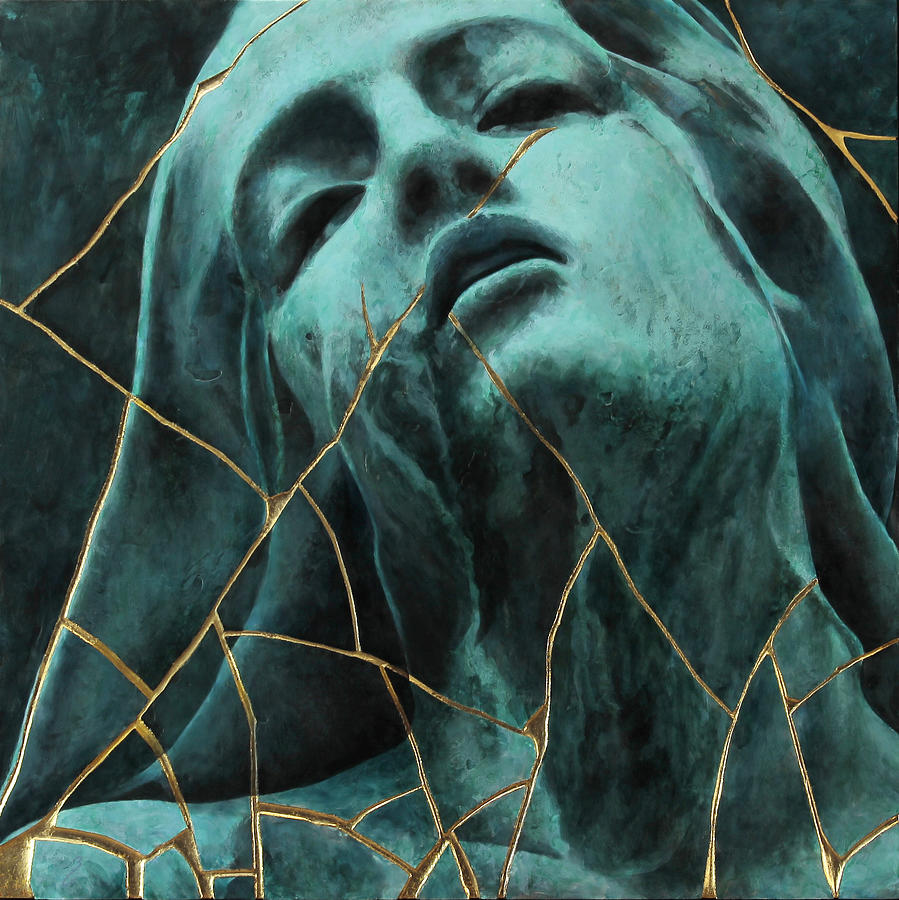
Chapter 2: Fractured
In this post we dive into what it means to have a fragmented perception of ourselves and our surroundings, and trace the cracks to find out how deep these might… read more ꩜
-
Chapter 1: How on Earth did we get here?
An introduction to a new (or rather ancient) perspective on planetary health, and embarking on a joint journey of discovery. We find ourselves on a planet that has many secrets… read more ꩜

 Sacred Beans
Leave a comment