
Stinging Nettle (Urtica dioica)
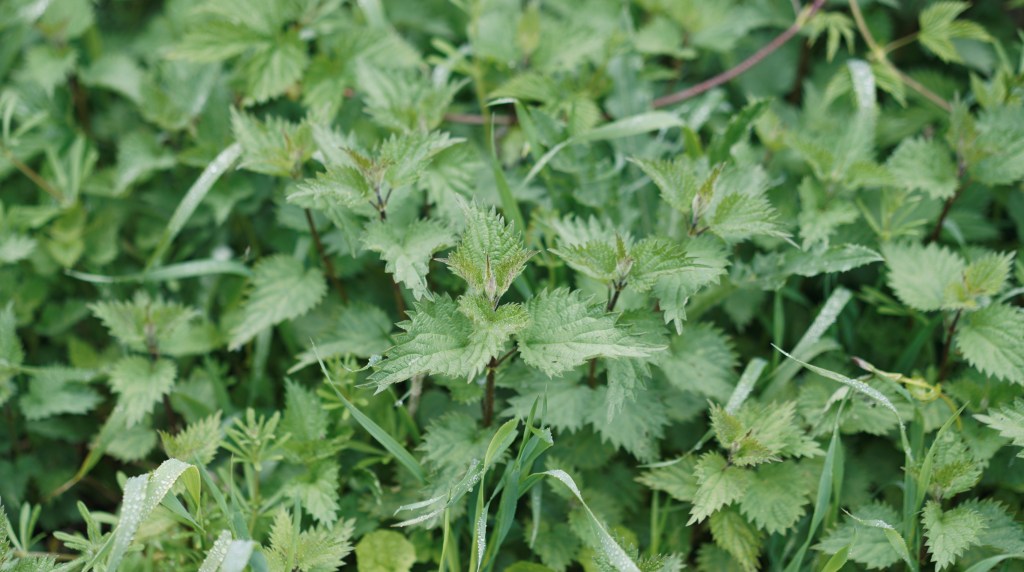
Spring has finally emerged and the stinging nettle has sprung up with it. The past week here in the east of the UK where I’m based has been an explosion of growth and my little house and the land I live on are completely surrounded by lush greenery and the pleasant scent of fresh nettles. After a long, tough, and dormant winter, this burst of energy is a big-time joy for my community and I. Nettle is showing up amongst us as a reminder of fierceness and vitality as well as gentleness and nourishment. They are one of our most abundant and well-defined plants, readily available for everyone to enjoy and serve us both as a highly nutritious food and powerful medicine. It makes so much sense to me why nature is gifting us this plant after a long winter and I would for that reason like to share some of my favourite uses and benefits of nettles in the hope of encouraging those who are not familiar with the plant to give it a try.
Benefits
Nettles are bursting with energy, minerals and vitamins right now that provide nourishment, tone and strength to the body. Rich in calcium, iron, silica, sulphur, protein and vitamin A, K, and C stinging nettle makes a true beauty herb excellent to strengthen hair, skin, and nails. Nettle has tonic and cleansing properties and improves the elimination of toxins in the body, improves circulation and nourishes the blood. When consumed regularly this can help us clear up dark circles under the eyes, treat acne and eczema, strengthen us and give us a general healthy boost of energy and a shimmering glow.
With its nutrient-dense qualities, I believe nettle is of great support leading up to and during a woman’s period. It gives us that extra boost of well-needed iron and is known to alleviate the symptoms of PMS and also menopause.
For those struggling with allergies such as hay fever stinging nettle may help relieve the common symptoms of sneezing, itching, and congestion as it reduces the amount of histamine the body produces in response to an allergen. If pollen is your enemy now, or before the season starts rather, is the perfect time to start drinking nettle tea or juice up to three times a day and keep it up until the season ends. This should reduce the severity of your symptoms.
With anti-inflammatory properties, nettle can help reduce inflammation in the body and is useful in treating conditions such as arthritis, gout, and other inflammatory conditions. With diuretic properties, it promotes urinary health and helps treat urinary tract infections, kidney stones, and other urinary problems. It has also been used to treat symptoms of an enlarged prostate, such as difficulty urinating and frequent urination. I won’t go over the depth of nettle’s medicinal powers for these conditions, however, information is easy to find in books and online and I can highly recommend you watch this video where herbalist Jim Mcdonald in his lovely free-spirited and story-telling ways teaches us more about nettle.
Stinging nettle is considered a safe herb for both internal and external use. However, if you would like to use it medicinally and/or in place of other medication you should always consult your physician beforehand.
Identify and Harvest
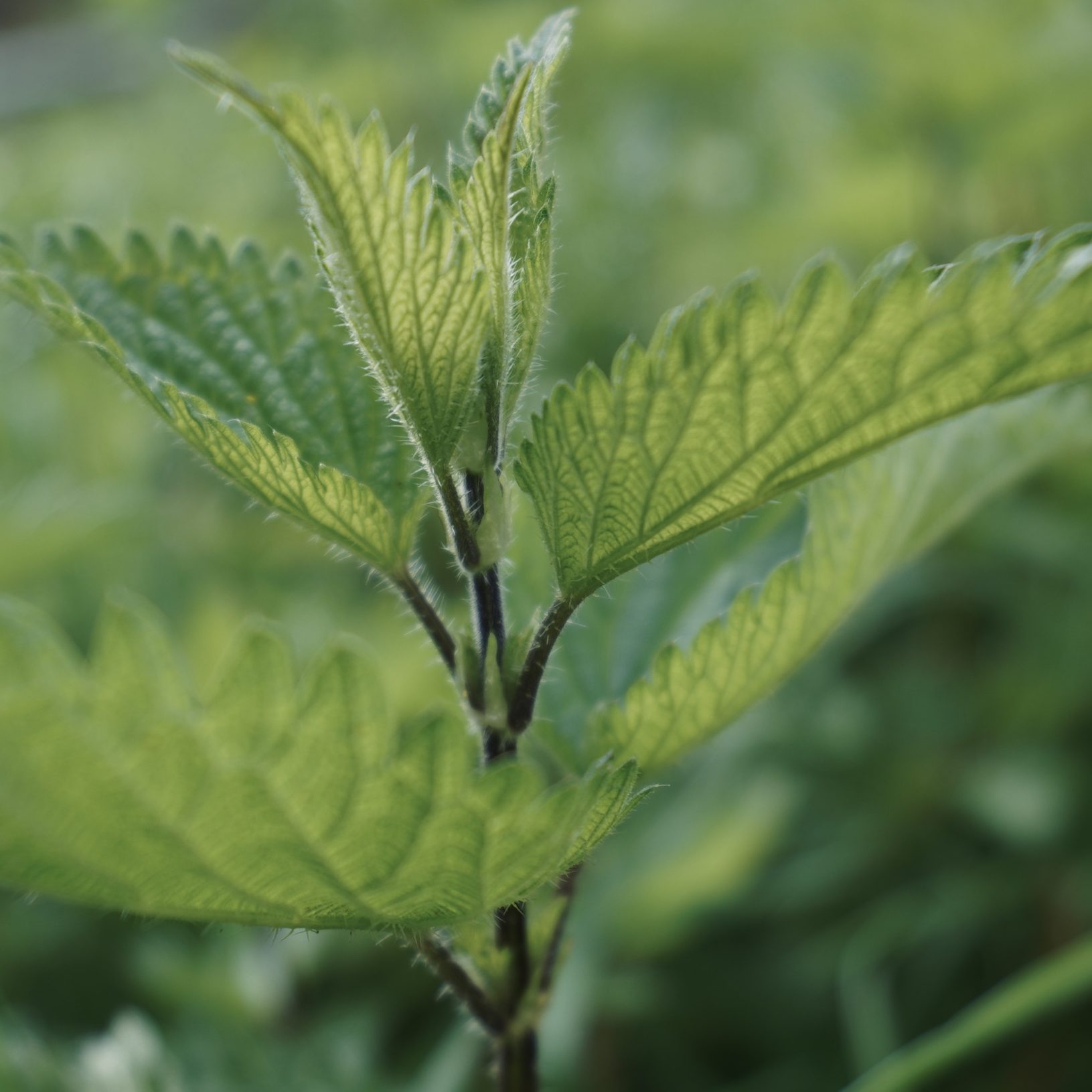
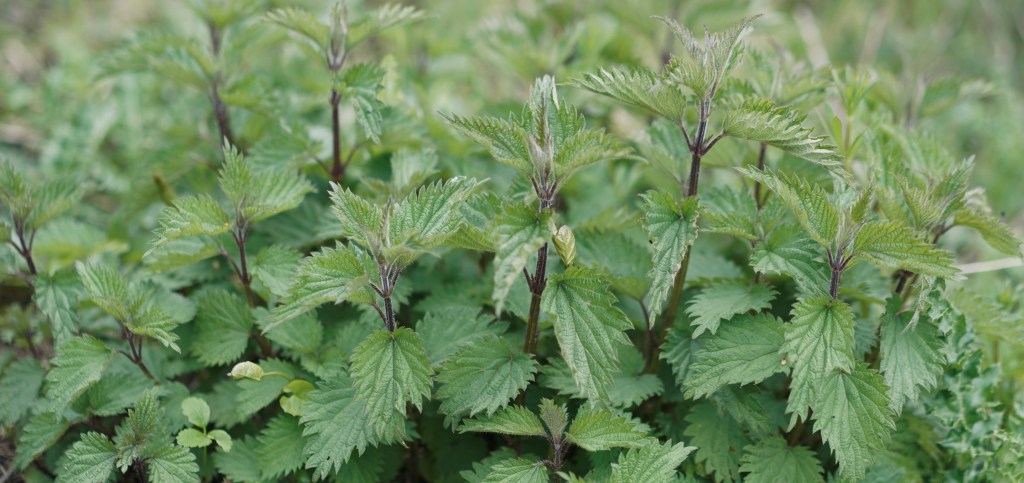
Touch it and it will tell you! Hehe.. It’s called stinging nettle for a reason. The stems and underside of the leaves are covered in tiny, hair-like structures that release a painful sting when touched. The leaves are serrated and heart-shaped with a pointed tip and although green in colour can sometimes show a tint of deep purple. Same goes for the stem, it’s very pretty. Now in spring, the plant is only about 30cm tall but can grow up to almost 2 metres in the summer.
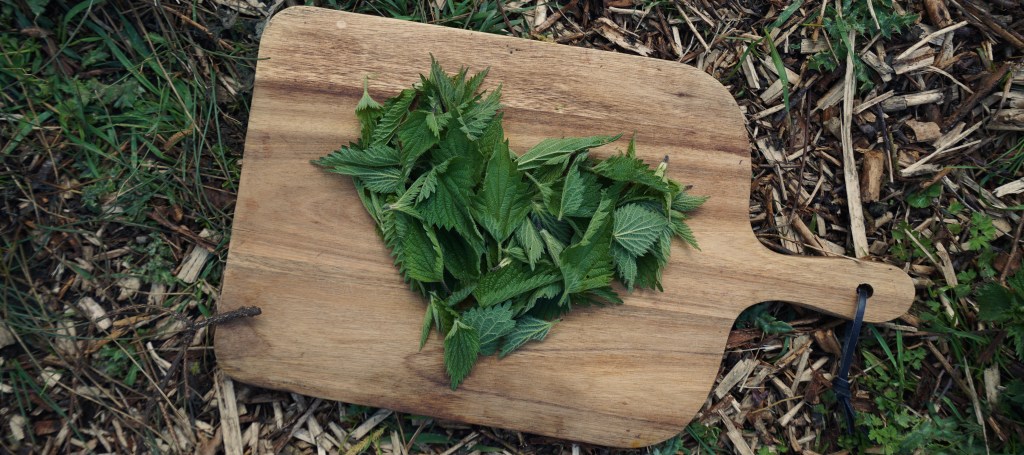
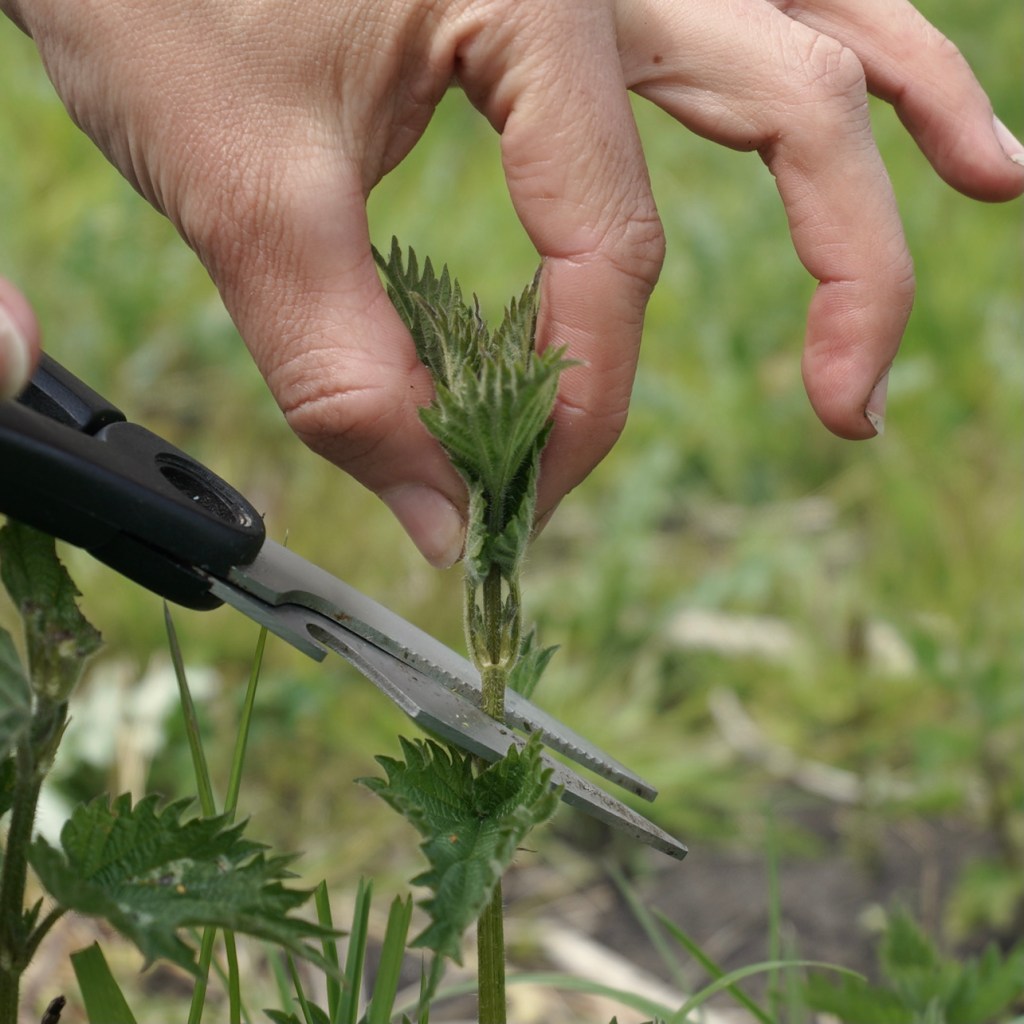
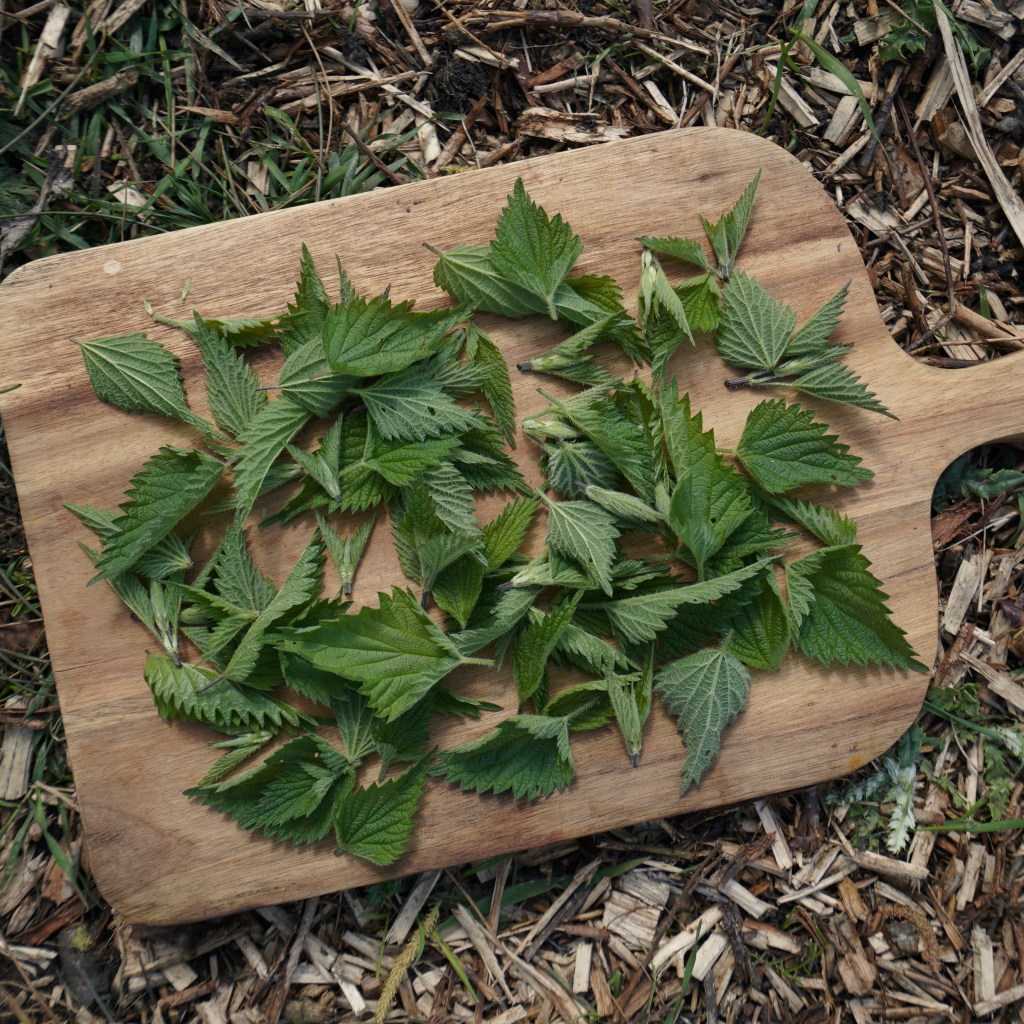
I prefer to harvest nettle in the late morning after all the morning dew has dried up, you never want to harvest a wet plant. Afternoons and evenings are also okay for harvesting though herbs tend to be more potent earlier in the day. Never get carried away and collect all nettle you find but remember to leave enough for others and for the plant to survive and reproduce. You may want to wear gloves to avoid being stung, however, I’ve found that if you with a gently firm grip grab a hold of its leaves and along its hairs, it won’t sting you. I tend to cut off the very top leaves and stems, about 10cm, with a pair of scissors for my harvest but the whole plant can be used. Before I start preparing medicine or food with my harvested nettles I make sure to spread them out on a tray or the like and leave them for a few minutes to allow any poor little insect that accidentally got harvested to crawl off and thrive elsewhere.
Creative Cooking
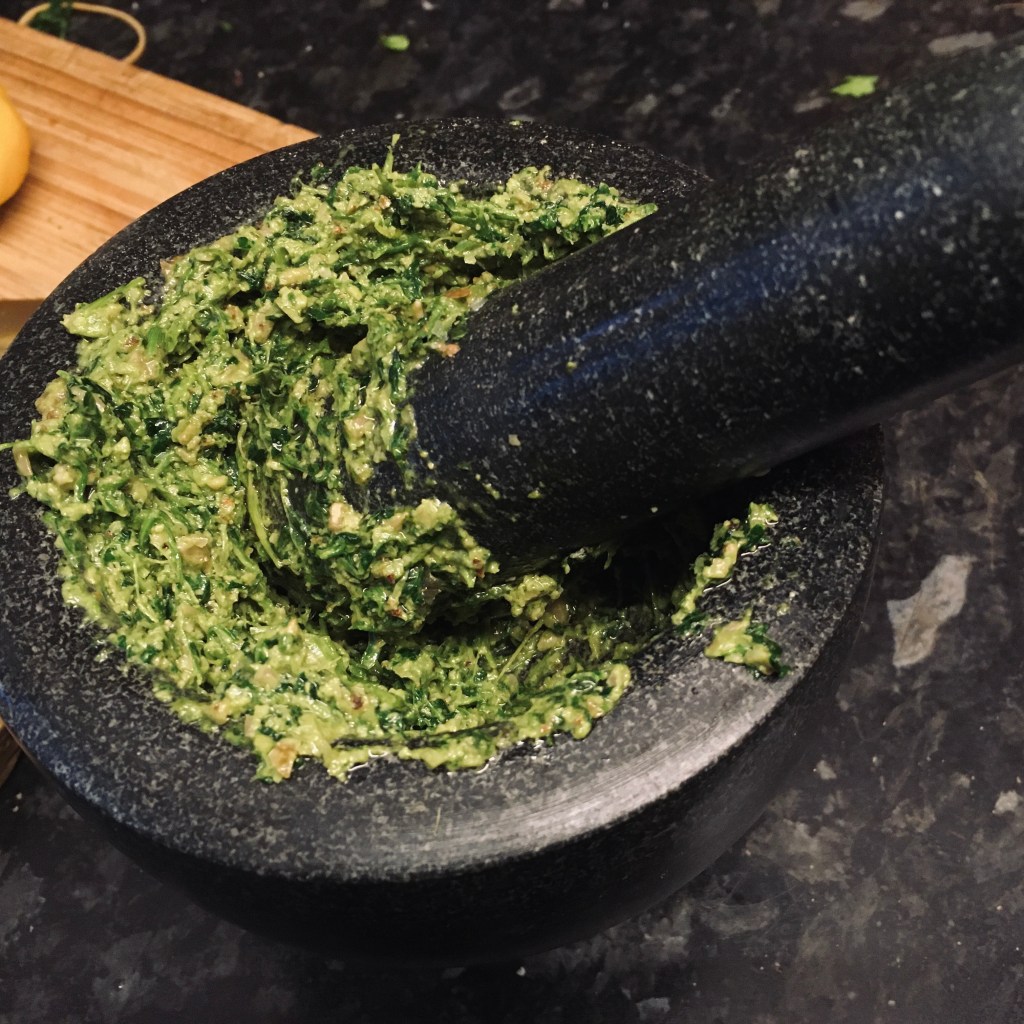
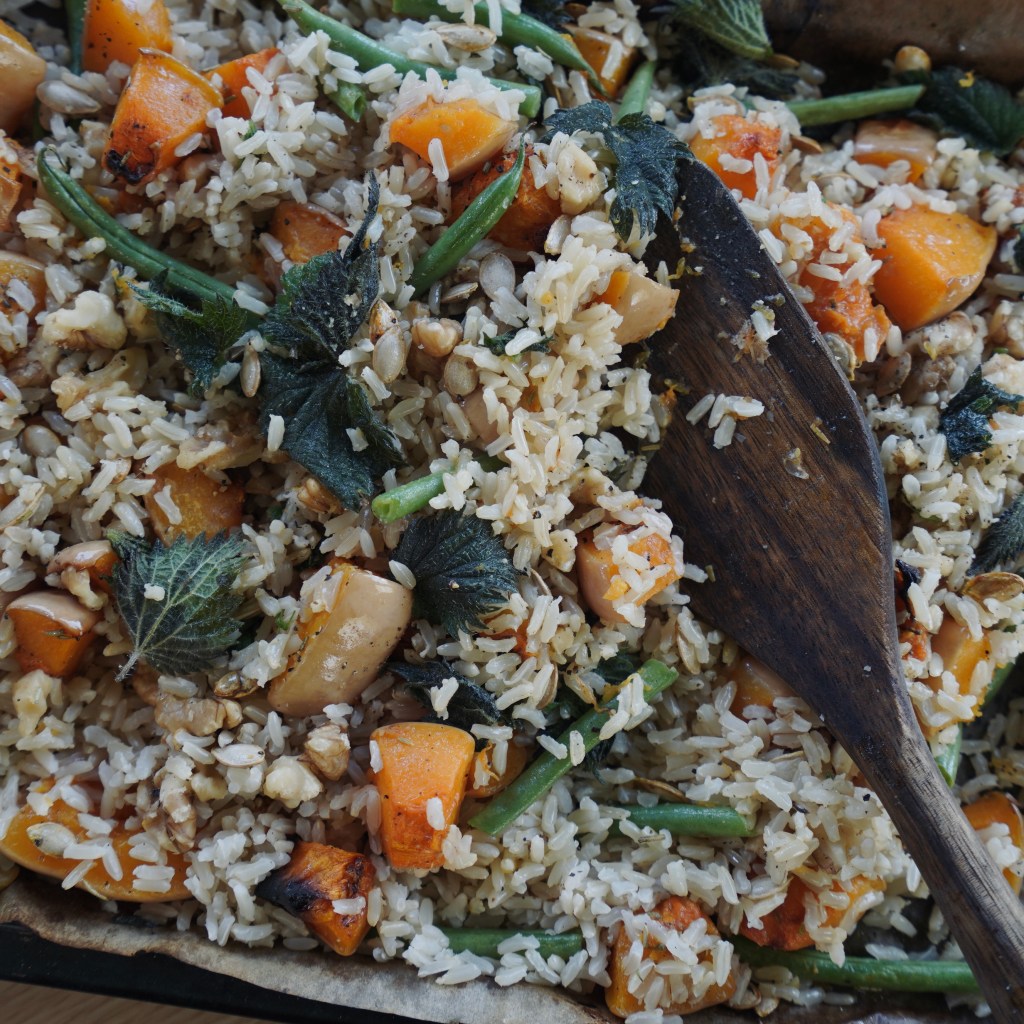
I personally think nettle leaves have a pleasant taste and would encourage everyone to add them to their cooking. As long as you make sure to blanch or cook thoroughly to kill the sting nettle leaves can be used to replace spinach in any recipe. You can also “kill” the sting by pinching the leaves and add them to salads. I like to add leaves to lasagna, pasta sauces, fried rice dishes, stews, quiches, bread or make nettle soup and pesto, the list never ends. I won’t be sharing any food recipes with you because, frankly, I don’t have any. I go by feel and the use of my senses when I cook with herbs. If you find this a little bit scary I would suggest you, as I already mentioned, start by replacing any cooked spinach recipes with nettle leaves. The internet is also, as always, a brilliant source for inspiring recipes.
Experimental Juicing
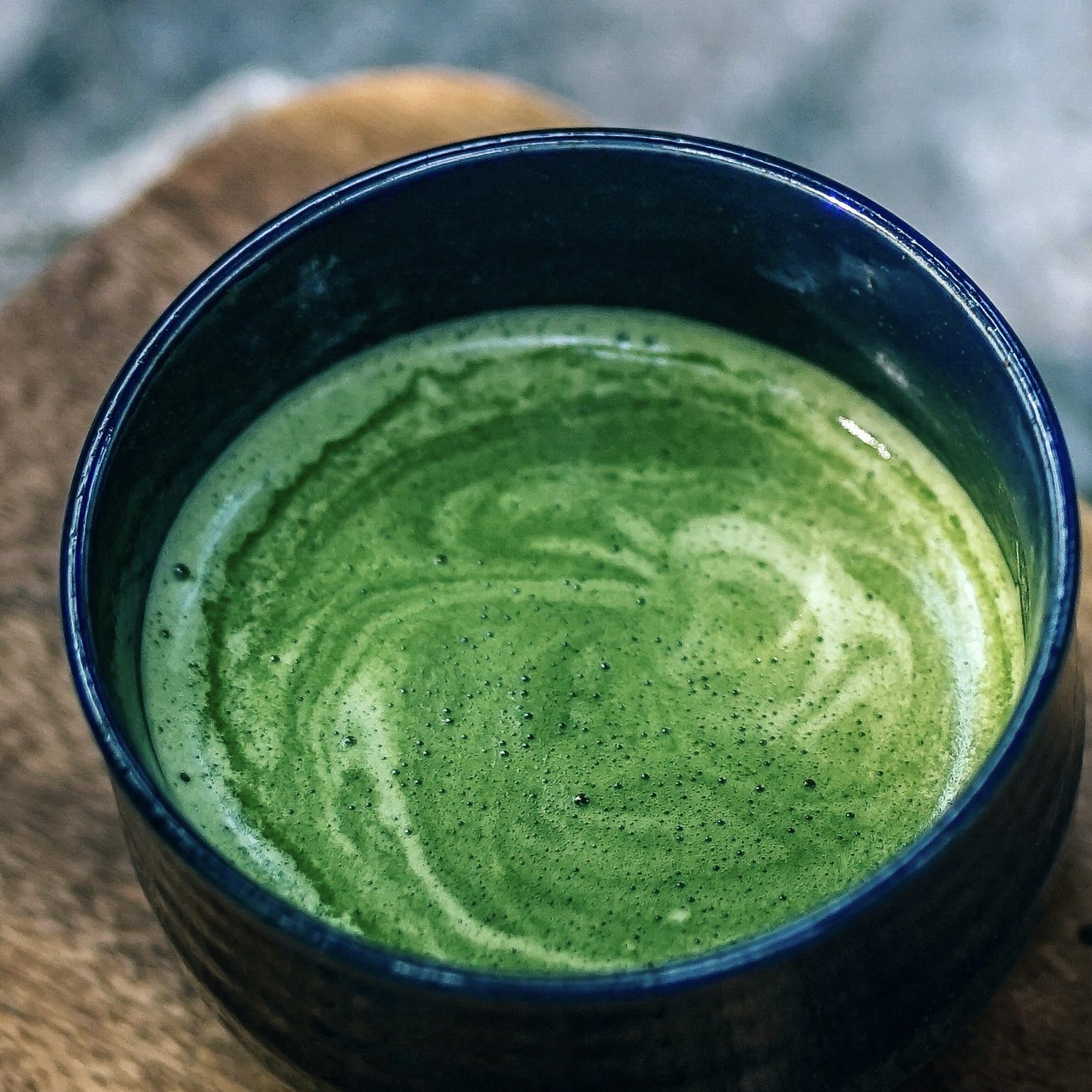
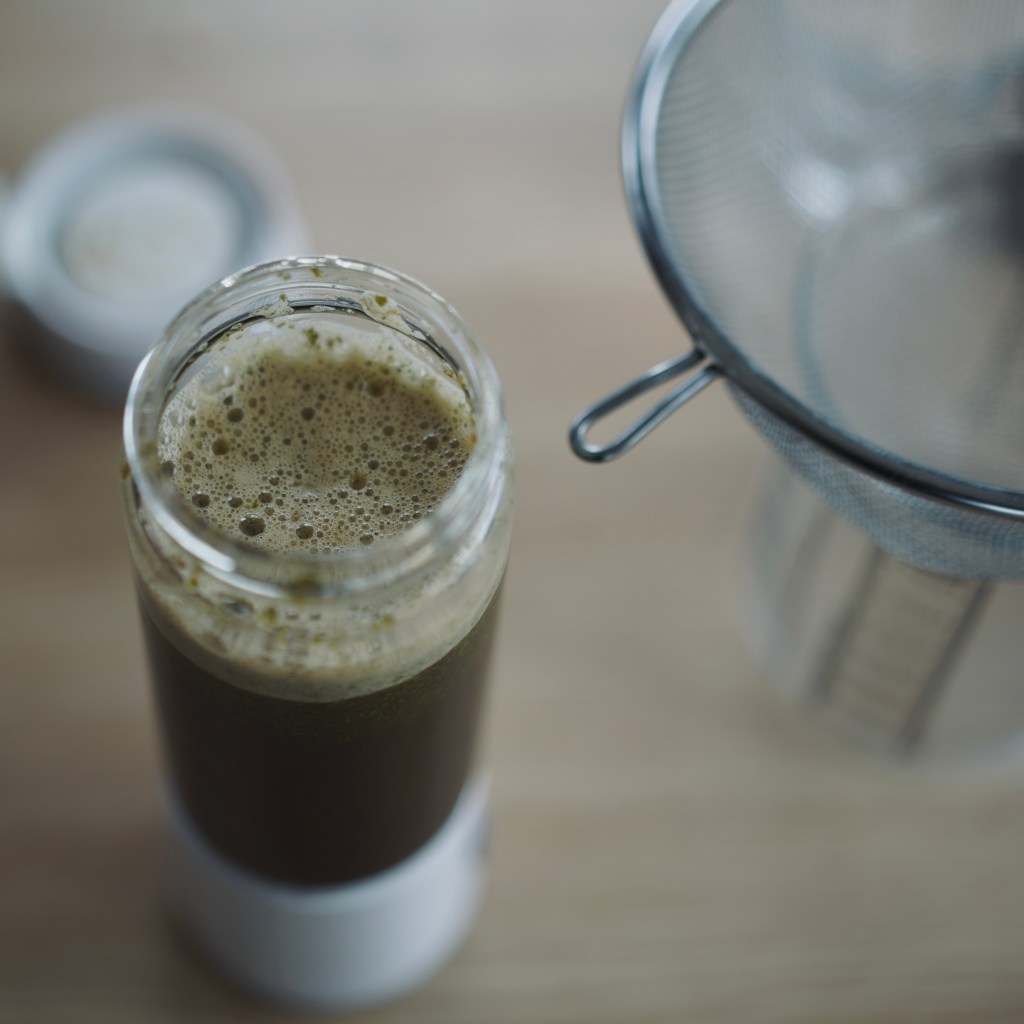
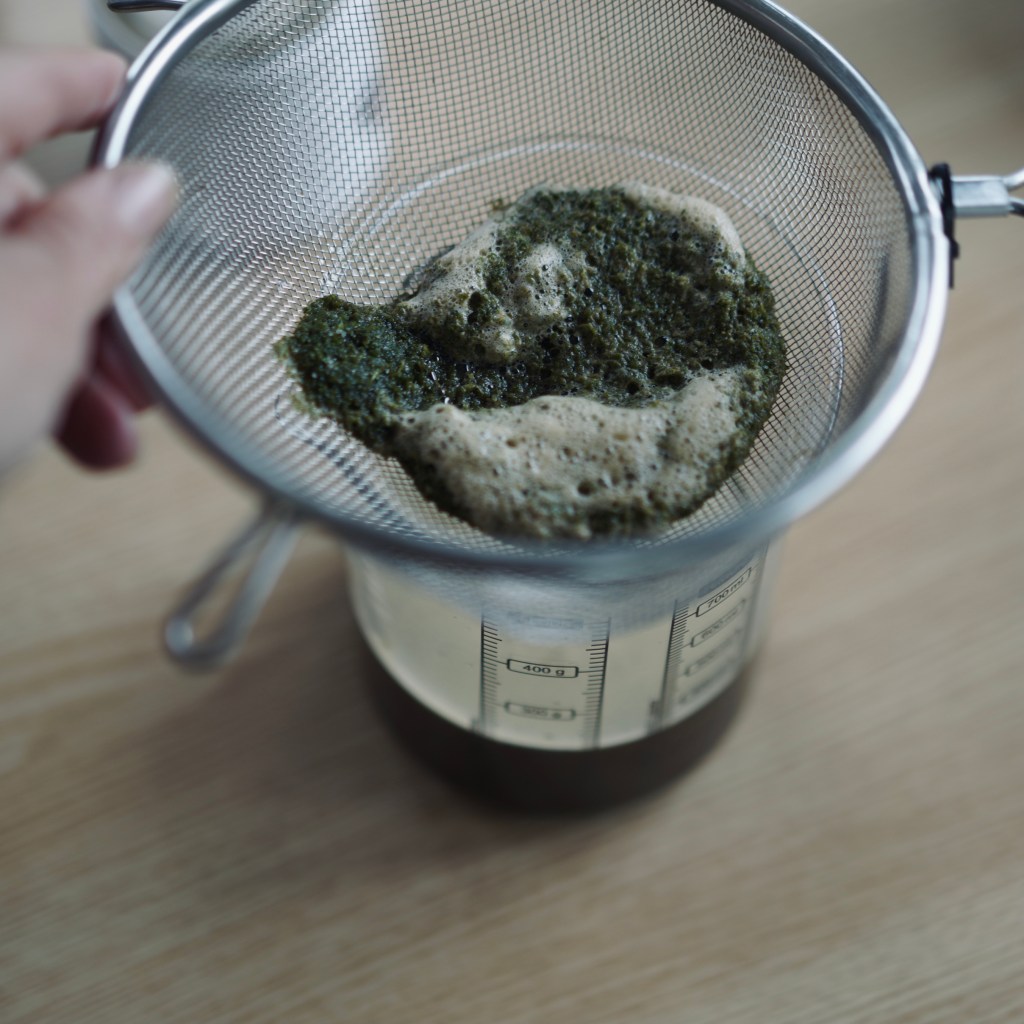
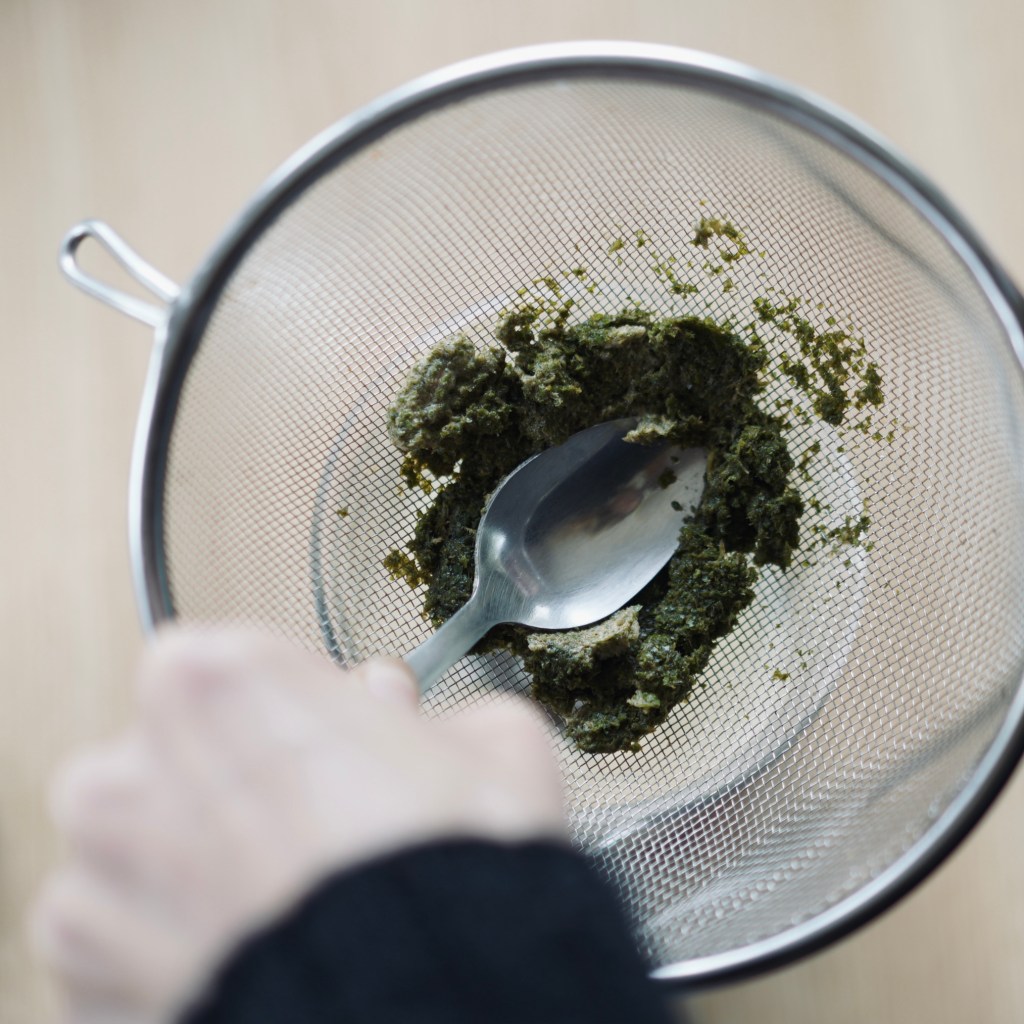
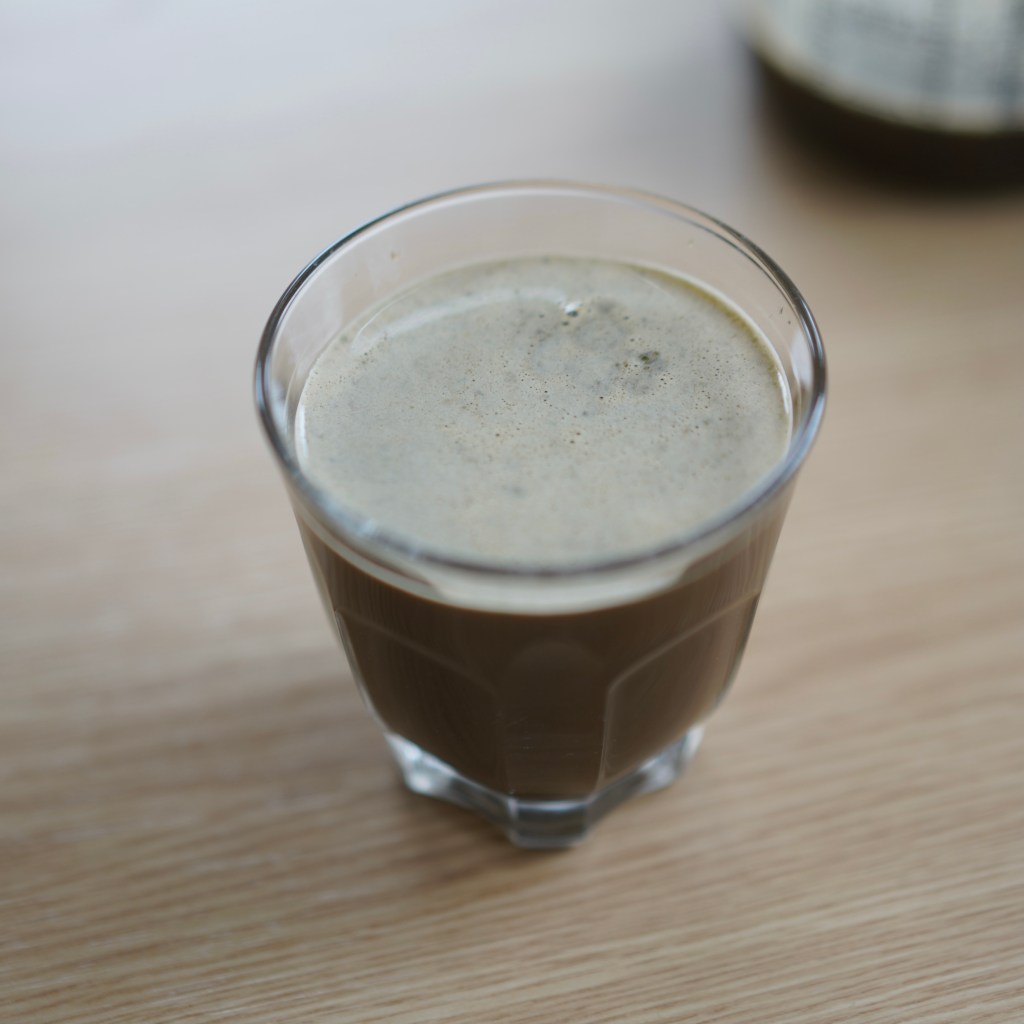
Making juice with spring greens is easy, fun, yummy and super healthy! I like to pick a mix of nettle leaves, lemon balm, black currant leaves, and hawthorn leaves which I then blend in a mixer with water and lemon, fresh apple juice or elderflower cordial and strain through a sieve making sure to press all the juice out. Sometimes I sweeten it with honey. It is so fresh and nourishing! You can be very experimental here and get juicing with whichever edible plant catches your eye. The more concentrated juice the more brown in colour it’ll be. A weaker juice will have a lovely vibrant green colour unlike in the photos below. If you’re into smoothies I‘m sure chucking in a few nettle leaves in your blend will have a similar effect.

Traditional Infusing
Infusions are a great way of enjoying and preserving our nettles and are how most herbal medicine was traditionally made and used. By macerating plant material into a solvent, we allow for the plant, in this case stinging nettle, to relieve its active ingredients into the solvent to ultimately carry its medicinal properties. I have three favourite solvents for nettle that I use on a regular basis and below I’ve listed how we can benefit from using them.
Water a.k.a Tea
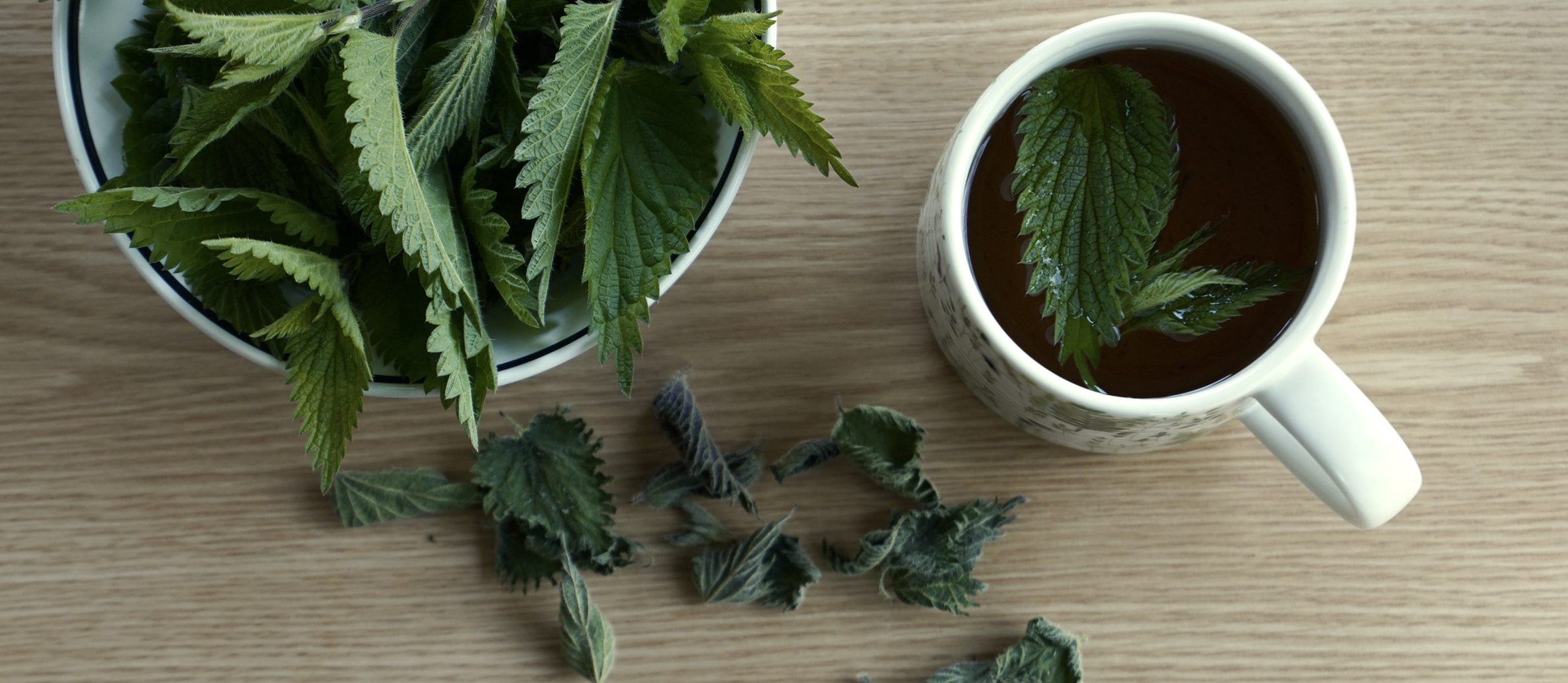
What we commonly refer to as herbal tea is actually a herbal infusion – herbs infused in hot water. This can be made with both fresh and dried nettle, however, I prefer to infuse fresh nettle now when they’re in season and save my dried leaves for the winter. I would use around four teaspoons of fresh nettles for every cup of hot water or half the amount of dried nettles as when dried is more concentrated. Let your nettle leaves infuse for at least 15 minutes to get all its goodness absorbed into your water. Drink nettle tea on a regular basis for nourishment and vitality or to relieve allergy symptoms, inflammation, skin problems and benefit from all its other properties .
Oil
If you know me somewhat, you will be aware of my passion for infusing herbs into oil, and nettle is no exception. Nettle infused oil can be used topically as a massage oil to relieve sore muscles and inflammation. It can be applied to itchy skin from bug bites or some cases of eczema and can be used on hair and scalp and beard for healthy growth and shine. Choose olive oil as your carrier oil and you can use it internally on salads or in cooking. If you’ve never made a herb infused oil before check out my step-by-step guide on how to make them.
Vinegar
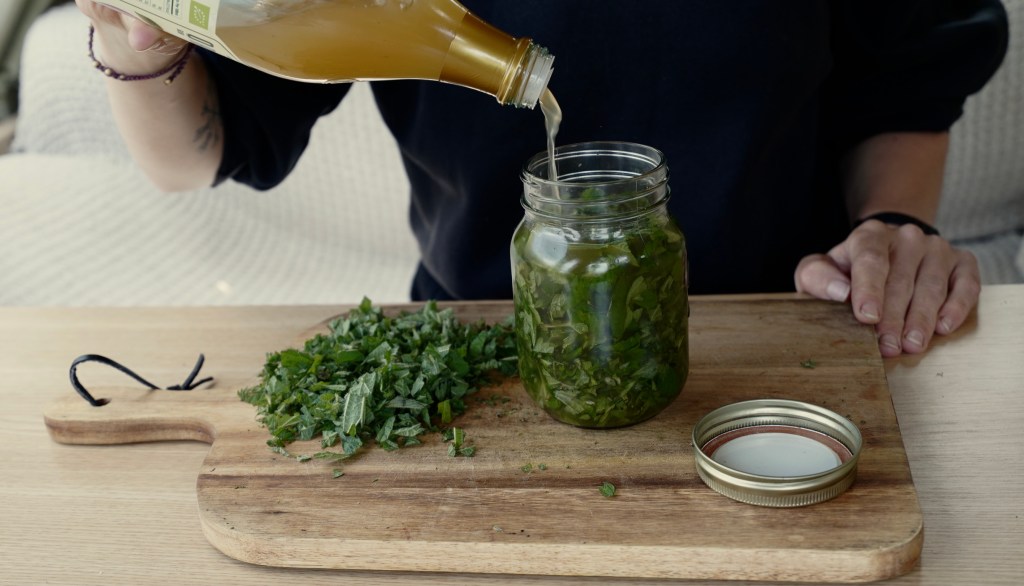
Infusing nettle in vinegar is a great choice for increasing and preserving its nourishing, cleansing and detoxifying properties as vinegar alone also holds these qualities. In my opinion organic apple cider vinegar with the mother is always the best option. Make a salad dressing with it, drink it in hot water or use it as a health boost morning shot. I always have nettle-infused vinegar on hand to rinse my hair and scalp with every fortnight. With a ratio of about two tablespoons of nettle vinegar to two cups of warm water I rinse my scalp and hair after having shampooed, leave it in for a few minutes and rinse it out. The vinegar helps remove buildup and restore the scalp’s natural acid mantle and may treat an itchy scalp, dandruff, and dull hair and give it shine. Nettle, with all its nourishing properties, improves hair growth and quality. It’s even known to restore hair loss in balding men. If you suffer from really dry and brittle hair I would not recommend vinegar rinses but use nettle tea the same way instead. Herb-infused vinegars are made the same way as herb-infused oils but using vinegar as the solvent instead of oil. Fresh, slightly wilted plant material works just as well as dry. You can add other herbs to this rinse for example rosemary for even more hair growth and fresh scent and chamomile to lighten blonde hair.
One Last Thing..
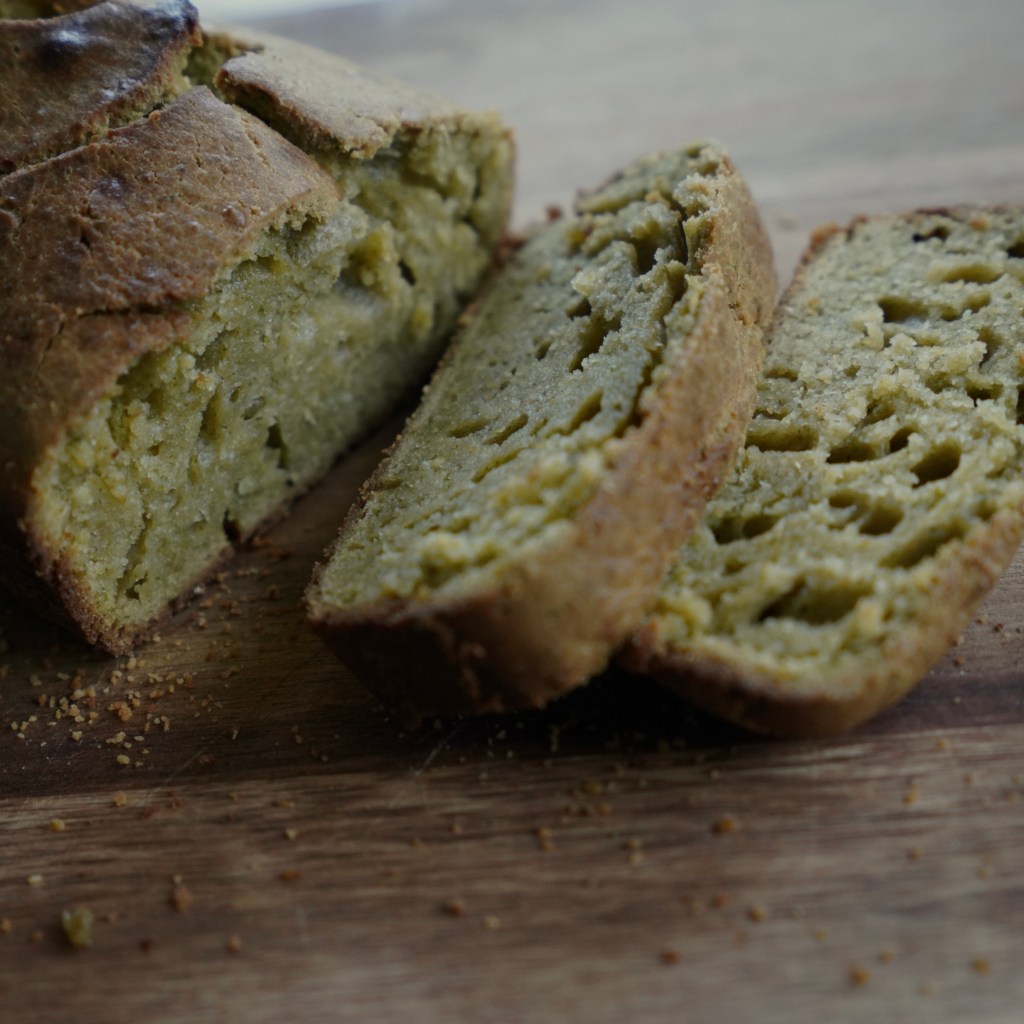
I must not forget! If you’ve dried your nettle leaves you can powder them and use as a supportive mineral supplement. The powder can be added to any cake, bread, pancake, energy ball or chocolate truffle recipe, used in cooking, made into herb salt, or sprinkled onto porridge or cereal. There really are no limits!
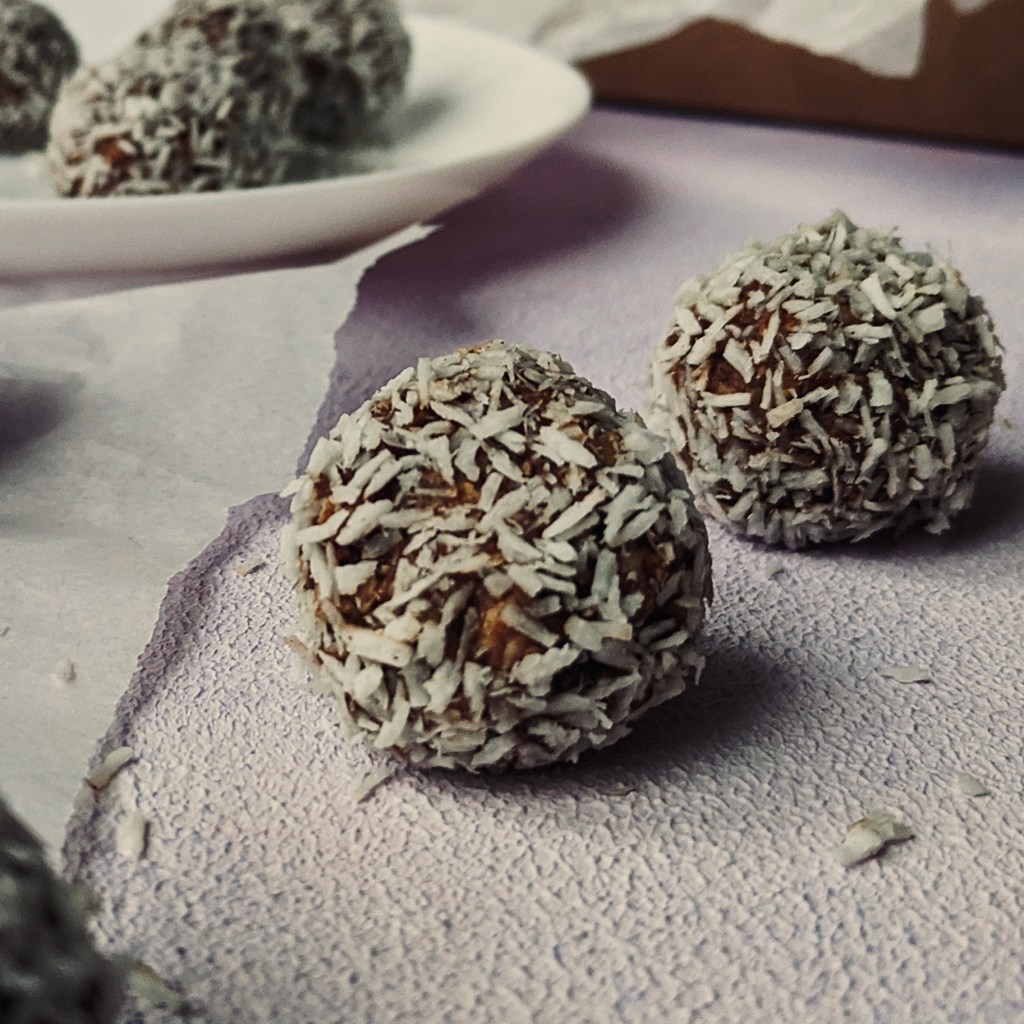
On that sweet note, I hope you feel just as inspired as I do to befriend the stinging nettles around you and let them help you bring yourself out of winter dormancy and into a new season full of energy, motivation, inspiration, love and joy!
With Love,
Sarah Águsta

 Sacred Beans
Leave a comment